




2015 City Express Cargo Van Publicly Unveiled
General Motors debuted its 2015 Chevrolet City Express compact van to the public at the Chicago Auto Show, after showing it to fleet buyers at several events in the past year.

GM's Ed Peper introduces the 2015 Chevrolet City Express. Photo by Robert Brown.
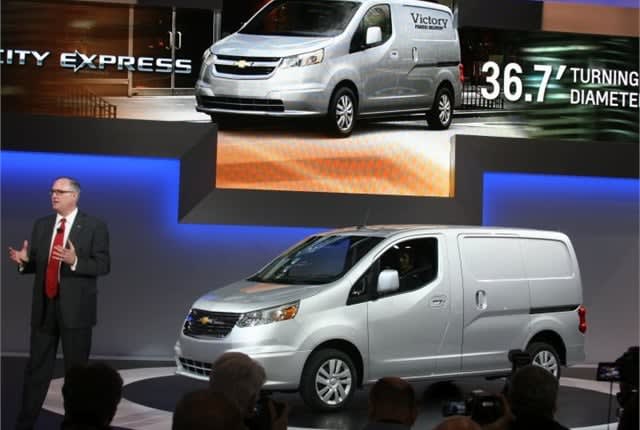
GM's Ed Peper introduces the 2015 Chevrolet City Express. Photo by Robert Brown.
Editor's note: View our "2015 Chevrolet City Express" photo gallery for detailed photos of the vehicle.
General Motors debuted its 2015 Chevrolet City Express compact van to the public at the Chicago Auto Show, after showing it to fleet buyers at several events in the past year.
GM will begin production in the fall and deliver the cargo van to commercial buyers and dealers around that time. GM has not announced plans for a passenger version. GM has not yet begun to take orders for the Chevrolet City Express, a GM spokesperson told AutomotiveFleet.com.
"The versatility and cargo carrying capabilities of the City Express make it a viable option for small businesses such as florists, HVAC and locksmiths, and large commercial fleets in industries like insurance and delivery service," said Ed Peper, vice president of GM Fleet and Commercial.
The City Express arrives under a partnership with Nissan allowing GM to offer a rebadged version of the NV200. GM's version will offer an optional glass package for the two sliding side doors to increase visibility for drivers that's not available on the NV200.
Like the NV200, the City Express offers 122.7 square feet of cargo space. By comparison, the Ford Transit Connect short wheelbase compact van offers 105.9 square feet, while the long wheelbase van offers 130.7 square feet.
The City Express is powered by a 2.0L four-cylinder engine that produces 131 horsepower and 139 lb.-ft. of torque. The vehicle is availabe in LS and LT trim levels. Pricing will be announced later.
General Motors initially showed the City Express at a fleet event in May of 2013 and released photos at the time of a van that was not a production vehicle.
More Operations

What Will Shape the Next Era of Fleet Management?
EVs, AI, and autonomous vehicles are reshaping fleet management. Discover what’s ahead—and how fleet leaders can prepare for the next era.
Read More →
How Fleets Can Recruit and Train Veterans for Technician Roles
Here's how the technician shortage has affected uptime for fleets, and what to do about it.
Read More →
Avis Budget Group Deploys Neology Toll Management Technology Across Major Brands
Neology’s neoFleet platform will manage toll transactions and toll-authority operations for vehicles across Avis, Budget, Payless, Budget Truck and Zipcar.
Read More →

Fleet Personal-Use Charges Edge Higher in 2026
Nearly eight in 10 surveyed fleets allow personal use of company vehicles, while just over half of respondents report charging employees for the privilege.
Read More →
The Future of Fleet + What’s Changing Right Now | AF News Recap
Could developments overseas offer a preview of what’s coming for U.S. fleets? This week, we’re looking at the future of AI, autonomy, and electrification, plus Ford Pro’s new certified pre-owned program, smarter vehicle offboarding, and a new way for fleets to manage toll expenses.
Read More →
How to Handle Vehicle Offboarding
What do fleet managers need to do when a driver leaves?
Read More →
Fleet Manager’s Ultimate Playbook: Navigating the New Standard in OEM Connectivity
Rising operating costs, driver safety concerns, and unplanned downtime are putting unprecedented pressure on modern fleets. Discover how fleet managers use embedded OEM connectivity and real-time vehicle data to cut TCO, prevent downtime, and protect drivers without aftermarket telematics hardware.
Read More →
U.S. Bank Adds Verra Mobility Toll Management to Voyager Fleet Platform
The integration allows U.S. Bank Voyager fleet customers to manage toll payments and violations alongside fuel, EV charging and maintenance expenses.
Read More →
ADAS Prevents Crashes. But Repairs Cost More | AF News Recap
ADAS-equipped vehicles may crash less often, but they can cost more when they do. This week, we’re breaking down what that tradeoff means for fleets, plus Subaru’s first Forester Wilderness Hybrid, Nissan’s new e-POWER Rogue, and why Calstart has become Catalyst Mobility.
Read More →
Moventum Fleet Management Names Mark Iorillo Head of Sales
Iorillo brings nearly 20 years of fleet management and sales experience to the role, including previous positions at Element Fleet Management, CEI, Donlen and Ryder.
Read More →