




Mercedes Says 2014 Sprinter Van to Come Standard With Four-Cylinder Diesel Engine
Mercedes Benz unveiled its new 2014-MY Sprinter Van, which the automaker said has a new design, is more economical, and more environmentally friendly. The company said this redesign comes after seven years of the current-generation Sprinter.

Mercedes said the redesigned 2014-MY Sprinter van will come with a four-cylinder diesel engine as standard. Photo courtesy Mercedes.

Mercedes said the redesigned 2014-MY Sprinter van will come with a four-cylinder diesel engine as standard. Photo courtesy Mercedes.
Mercedes Benz unveiled its new 2014-MY Sprinter Van, which the automaker said has a new design, is more economical, and more environmentally friendly. The company said this redesign comes after seven years of the current-generation Sprinter. The new full-size van is set to go on sale in the fall of this year.
Performance
For MY-2014, the Sprinter features a BlueTEC 2.1L four-cylinder diesel engine as standard equipment. The automaker said it can produce 161 hp and 265 lb-ft. of torque between 1,400 and 2,400 rpm. The vehicle uses exhaust gas recirculation and SCR technology to reduce emissions. Mercedes also offers an optional V-6 diesel motor capable of producing 188 hp and 325 lb.-ft. of torque.
Mercedes paired the 2.1L engine with a seven-speed automatic transmission that features a torque converter. Next, the company modified the rear axle to reduce friction in order to make it operate more economically. The automaker also optimized the generator management system so the alternator prioritizes battery charging while the vehicle is braking or coasting. Next, the electric fuel pump varies the fuel supply based on demand, and the optional air-conditioning system uses a freewheel so the compressor is only working when the air-conditioning is on.
The automaker has not yet released fuel-economy data for the new engine.
Exterior
Mercedes redesigned the Sprinter’s look for MY-2014, changing the vehicle’s front end, from the radiator and headlamps to the hood and bumper, along with its rear taillights. Up front, Mercedes changed the radiator louver design to improve airflow and establish a visual connection among the automaker’s vehicles. On Mercedes-Benz van models, the Mercedes star is on a highlighted base. On Freightliner models, the badge is at the top of the new grille.
The vehicle’s headlamps have sharper contours and a surround divides the headlamps into sections. The bottom of the headlamp housing has space for LED light strips. The automaker moved the hood higher and gave it more dramatic contours. The front bumper features more of an upward sweep and the air inlet is set further back.
Interior
Inside the 2014-MY Sprinter, Mercedes said the van features a spacious cabin and seats with good lateral support that are height adjustable. The automaker said it designed the cabin’s controls so they are easy to reach. For storage, Mercedes said it added a number of spaces to store a driver’s personal items.
Mercedes made the foam cores in the driver and passenger seats firmer, added wool fleece linings to the seats, and new seat cover fabric for breathability and durability. For electronics, the automaker added a standard 5.8-inch color display that features Bluetooth connectivity, a telephone keypad, phone book, an SD card slot, a USB 2.0 interface, and an AUX input. If the optional backup camera is installed, the display can show what the camera is viewing. Also, guide lines on the camera display help the driver maneuver.
Mercedes offers a Becker Map Pilot navigation unit. If selected, the system’s box is integrated into the Sprinter’s glove box. Map data for the customer’s region is installed by the factory. The navigation system’s box is removable and has a USB port, which allows customers to update the system. Mercedes added that a pre-installation kit for the Becker Map Pilot is available.

The automaker plans to offer a 3.0L V-6 turbodiesel engine as an option. Photo courtesy Mercedes.
Safety
Mercedes said it plans to offer four new major safety systems on the 2014-MY Sprinter. They include Collision Prevention Assist, Blind Spot Assist, Highbeam Assist, and Lane Keeping Assist. Collision Prevention Assist is designed to prevent rear-end collisions. It features a radar-based proximity warning function (and provides both visual and audio warnings) and the automaker’s adaptive Brake Assist system. The Brake Assist system warns the driver when the vehicle gets too close to another vehicle up ahead and applies additional braking force. If the driver brakes harder than the system, the driver’s applied braking force takes priority. Collision Prevention Assist operates at speeds of 12 mph or higher.
The Blind Spot Assist system in the 2014-MY Sprinter uses four close-range radar sensors to detect whether there is a vehicle in his or her blind spot. The system warns the driver with a warning signal on the right- or left-hand side exterior mirror (depending on where a vehicle in a nearby lane is located) and issues an audio warning if the driver has activated the turn signal indicator. The driver can deactivate this assistance function, according to Mercedes. The Blind Spot Assist system functions at speeds of 20 mph or greater.
Next up is the Mercedes’ Lane Keeping Assist system, which uses a camera behind the windshield to monitor road surface markings. If the vehicle starts to drift into another lane without the driver having activated the turn signal indicator or without changes to the accelerator or brake pedal positions, the system will warn the driver with an audio signal. The system functions at speeds of roughly 40 mph or greater. It also can detect yellow markings at construction sites, helping the driver maneuver in tight quarters. The driver can turn this system off, if necessary.
The fourth new system is Mercedes Highbeam Assist, which can turn the vehicle’s high beams on and off, depending on road conditions. The system can detect the road’s path, pedestrians, or potentially dangerous areas on a road. It uses a camera inside the front windshield and can distinguish between moving and stationary objects. The system is available for both halogen headlamps and the optional bi-xenon headlamps that Mercedes offers for the Sprinter. This system functions at speeds of 22 mph or greater, according to the automaker.
Other standard safety systems include fade-resistant disc brakes on all wheels, a bulb indicator failure indicator that lets the driver know whether any lights are out, and a seat belt reminder indicator.
The vehicle also features Mercedes’ Adaptive ESP (electronic stability control) system, which combines anti-lock brakes; acceleration slip regulation; electronic brake force distribution; hydraulic Brake Assist; Load Adaptive Control (LAC) load-dependent control system; Roll Over Mitigation roll-over protection and Roll Movement Intervention (ROM/RMI); Enhanced Understeering Control system; an automatic brake disc drying system (Brake Disc Wiping) when driving in the rain; and anticipatory preparation of the brake pads in critical driving situations (Electronic Brake Prefill).
Mercedes said if a customer selects a trailer coupling as an option, or the preinstallation option for a trailer coupling, the vehicle will also feature the Trailer Stability Assist (TSA) system as standard.
Other safety features include height-adjustable three-point seat belts with belt tensioner and belt force limiter, two-way head restraints, and front airbags.
Additional optional safety features include the previously mentioned bi-xenon headlamps; fog lights; a headlamp cleaning system; a heated windshield; a rear-view camera; a backup warning system; a rain sensor with Headlamp Assist (which automatically switches the headlamps and windshield wipers on and off); airbags and thorax airbags; and a tire pressure monitoring system.
Available rearview camera, backup warning system and the PARKTRONIC system facilitate maneuvering, while the standard Start-off Assist system helps when moving off on uphill slopes. The available rain sensor with Headlamp Assist relieves the driver of the task of switching the appropriate systems on and off. Available window airbags and thorax bags enhance passive safety, while the optional tire pressure monitoring system ensures the correct pressure on variants with single tires.
Upfitting
Mercedes aid special bodies and interior equipment are available from select and certified partners in the Sprinter Preferred Upfitter Program. The automaker said there are more than 80 approved upfitters in the program.
Models and Feature Overview
Mercedes provided an overview of the different Sprinter models it plans to offer. The automaker said it will release pricing information at a later date.
2014 Sprinter (new standard engine) - Price $TBD
2.1-liter 4-cylinder turbodiesel (161hp, 265 lb-ft)
7-speed automatic transmission
144-inch & 170-inch wheelbase
3 body lengths
GVWR 8,550/9,990/11,030
Available high-roof option
Configurations: Cargo, Crew, Passenger, MiniBus, Cab Chassis
2014 Sprinter V-6 (carryover) - Price $TBD
3.0L V-6 turbodiesel (188 hp, 325 lb-ft)
5-speed automatic transmission
144-inch & 170-inch wheelbase
3 body lengths
GVWR 8,550/9,990/11,030
Available high-roof option
Configurations: Cargo, Crew, Passenger, MiniBus, Cab Chassis
New Standard Feature Highlights:
New front grille, headlights, bumper, hood, badging
Redesigned steering wheel and shifter
New seat design
LED Daytime Running Lights
Headunit with 5.8-inch screen including Bluetooth, iPod and aux interface
3.692 rear axle
New Optional Feature Highlights:
Navigation system
Active Safety Plus Package
Blind Spot Assist (N/A Cab Chassis)
Lane Keeping Assist
Highbeam Assist
Collision Prevention Assist
Active Safety Plus Package w/PARKTRONIC (N/A Cab Chassis)
Blind Spot Assist
Lane Keeping Assist
Highbeam Assist
Collision Prevention Assist
PARKTRONIC
Low Roof (Chassis Cab models)
More Operations
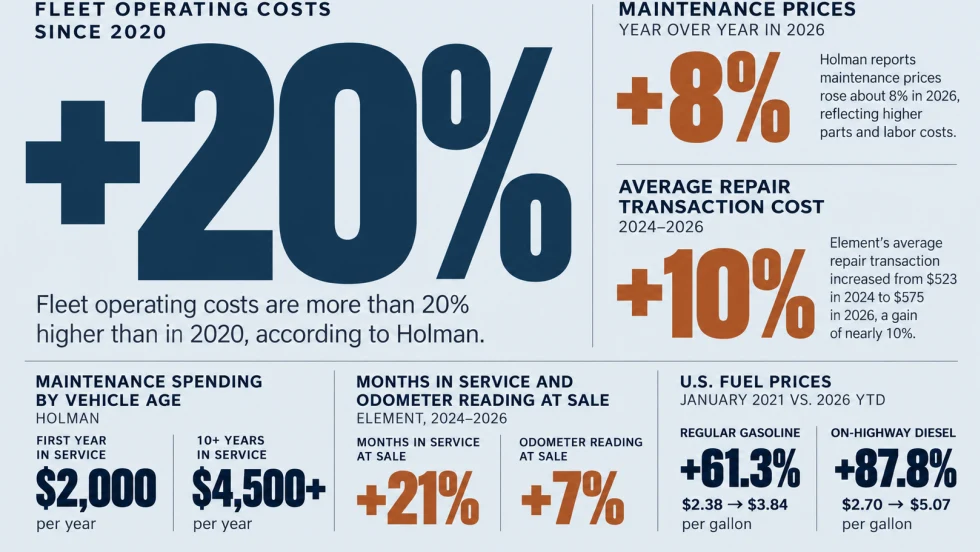
Managing Fleet Costs in an Era of Permanent Volatility
Fleet operating costs have risen more than 20% since 2020, raising a key question: When does extending a vehicle's service life stop making financial sense?
Read More →
The Next Evolution of Fleet Management: Autonomous Operations
This opening keynote session at the Fleet Forward Conference highlights the future of autonomous driving for fleets.
Read More →
How to Reduce the Total Cost of Risk From Catalytic Converter Theft
A stolen catalytic converter can cost fleets far more in downtime and lost productivity than in repairs. A total-cost-of-risk approach can help fleet managers quantify their exposure and prioritize theft prevention.
Read More →

Personal-Use Charges Rise as Vehicle Values Fall | AF News Recap
Personal-use charges are climbing, wholesale used-vehicle values are declining, and commercial fleet sales growth is slowing. This week, we're breaking down the latest fleet data, plus how Element Fleet Management is helping Waymo prepare for its first Canadian robotaxi market.
Read More →
Here's When You Should Make an Exception to Fleet Policy
Fleet policies are designed to create consistency, but not every driver or situation fits neatly within standard rules.
Read More →
AI-Native or AI-Acquired: What Should Fleet Managers Look for in an AI Platform?
Six questions can help fleet managers look beyond AI marketing claims to evaluate integration, data access, and real-world operational performance.
Read More →
A buyer's guide to fleet management software in 2027
Buying fleet management software in 2027 means looking beyond features and price. As fleet operations, technology and expectations evolve, this guide explores what today’s fleet professionals should consider when choosing a system that can deliver value now and adapt to what comes next.
Read More →
What Will Shape the Next Era of Fleet Management?
EVs, AI, and autonomous vehicles are reshaping fleet management. Discover what’s ahead—and how fleet leaders can prepare for the next era.
Read More →
How Fleets Can Recruit and Train Veterans for Technician Roles
Here's how the technician shortage has affected uptime for fleets, and what to do about it.
Read More →
Avis Budget Group Deploys Neology Toll Management Technology Across Major Brands
Neology’s neoFleet platform will manage toll transactions and toll-authority operations for vehicles across Avis, Budget, Payless, Budget Truck and Zipcar.
Read More →