




The R Words Powering Business Revenue
Recruitment, retention, and remarkable service aren’t just HR buzzwords; they can spur revenue growth for a business operation.

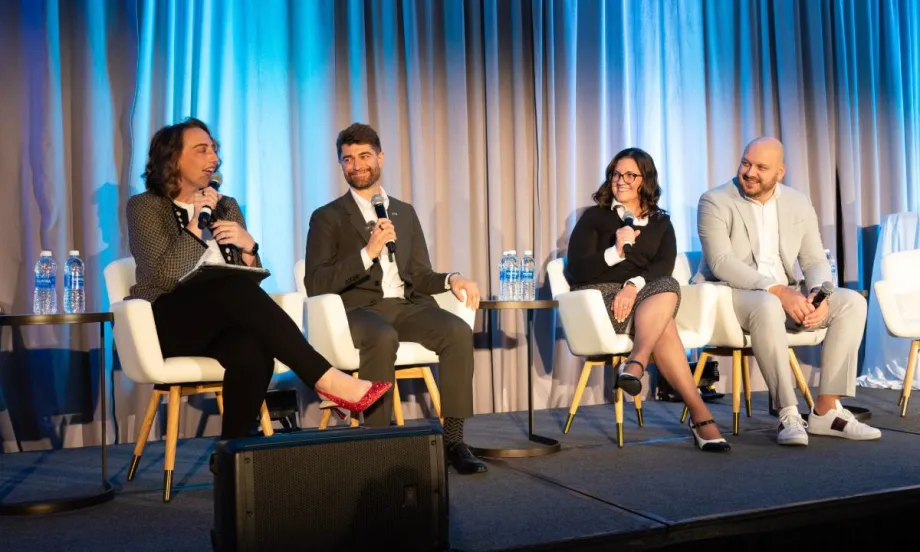
(L to R): Megan Mahon, head of sales enablement at Premier Truck Renal (PTR); Jimmy Douglas, founder and CEO of Plug; Kirsten Von Busch, director of product marketing at Experian Automotive; and Igor Skinder, executive director at ACV Auctions at the Conference of Automotive Remarketing in San Diego on March 20, 2025.
Photo: Ross Stewart / Stewart Digital Media
The signs of a successful business inevitably point to the health of finances. No profits, then losses. Too many losses, no more business.
However, what drives those results stems from what could be called the intangible measurements: employees, values, vision, training, culture, attitudes, and customer service.
At the 2025 Conference of Automotive Remarketing in San Diego, a session explored how workforce strategy and atmosphere directly steer business success. The "R-pillars" include recruitment, retention, and remarkable service.
Moderated by Megan Mahon, head of sales enablement at Premier Truck Renal (PTR), the March 20 panel brought insights from Jimmy Douglas, founder and CEO of Plug, Kirsten Von Busch, director of product marketing at Experian Automotive, and Igor Skinder, executive director at ACV Auctions.
“We all want to make more money,” Mahon said. “We all want to drive revenue. But where does that start? Does that start with the sales process? Does that start with the top of the funnel? It starts much sooner with recruitment.”
Finding the Right Starts and Fits
The roots of operational success lie in recruitment.
In vehicle remarketing, top-tier talent often stays in the industry for life, Douglas said. The goal isn’t just to fill roles but to attract individuals with long-term potential — those who align with the culture and understand the industry's nuanced value.
Von Busch highlighted the need to evolve recruitment practices. She noted that organizations should critically assess job descriptions — are four-year degrees or MBAs needed for every role? Companies can open the door to a more diverse and capable pool of candidates by reassessing rigid requirements.
Meanwhile, Skinder stressed that top remarketing performers are often recruited rather than found through job postings. Because the vehicle remarketing industry thrives on relationships, talent is often drawn into new roles through networking and shared mission rather than traditional channels, he said.
Keeping Your Best People
Once a business operation finds the right people, the next challenge is to keep them. Douglas advises creating a mission-driven workplace. Employees must feel they have ownership over outcomes and a meaningful role in the company’s work. At Plug, he ensures every team member not only receives equity but also understands their contribution to the company's goals.
“If you're in a mission aligned organization or a startup, or part of a team pursuing a goal broader than just economic outcomes, it's amazing what you can do by recruiting for conviction around that outcome and unifying a team while giving everybody a sense of ownership of it,” Douglas said.
Igor likened employment to a relationship — if values don’t align early, dissatisfaction follows. Drawing from his own experience, he pointed out that culture isn’t what a company says, but what employees feel.
Von Busch mentioned personalization. Retention strategies should reflect individual needs. Flexibility, recognition, and autonomy matter. It's not enough to say a workplace is flexible — employees need to experience that flexibility without hidden consequences.
Moreover, she warned against tolerating toxic high performers, arguing that it takes only one to spoil an entire team.
“It’s not only retaining great talent, but how is ‘desirable attrition’ dealt with? If there are situations in the company where a toxic individual or environment may be providing financial value, but to the detriment of the team, an organization that chooses to leave it in place also sends a message,” Von Busch said. “And it's a much different message to your top talent.”

Megan Mahon, decked in her signature red “Dorothy no-place-like-home” stage shoes, peeked behind the sales curtain to find the true identities of business money-makers.
Photo: Ross Stewart / Stewart Digital Media
Developing a Solid Workplace Culture
The panel unanimously agreed that a company's true character is reflected in how it treats employees daily, not just during performance reviews or milestones. Igor emphasized Open communication is the foundation of trust, Skinder said.
“People don't leave companies. People leave people. We are all people in positions. We have those that report to us. We report to somebody. And if we don't have that clear path of communication and comfort, so we feel empowered, it becomes difficult to keep the retention and loyalty we seek.”
Von Busch and Mahon recommended leaders aligning with the same values and messaging. Conflicting directives from CEOs, VPs, and middle managers erode culture and confuse teams. Clear, unified direction ensures all employees work toward the same company vision and know how their roles fit in.
Investing In Your Workforce
When asked how their companies keep teams engaged beyond surface-level perks, panelists detailed robust training and development activities.
Douglas, running a seed-stage startup, said training at Plug is less about static curricula and more about speed, transparency, and ownership. “If you see something that needs to change, and it could be something about the product, website, or customer journey, everybody in the organization can speak up and see make the change the same day.”
At Experian, the company’s 16,000-person global scale consists of a structure based on smaller business units that allow flexibility and “some nimbleness within the larger beast,” Von Busch said. But business units need to align with the larger scale of the company.
“Direction has to come from the top in setting those strategic goals, and if there are goals in conflict with each other, none of them get accomplished,” she said.
ACV’s onboarding process introduces new hires to key figures across departments, Skinder said. He said a company should praise its unsung heroes — such as vehicle condition inspectors — who power operations rain or shine. Real-time collaboration and technology can make a company more responsive and resilient.
“Continuous development and innovation allows our teammates to do their jobs in a much easier and better way.”
Remarkable Service Evolves From Engagement
The panel addressed the question of how employee satisfaction influences customer experience.
Skinder drew a parallel to bad service at a coffee shop — when employees are unhappy, customers feel it. A well-aligned, empowered team is likelier to be consistent and pleasant in handling customers.
“When you build something where your employees are happy and understand the company’s direction, you can then provide a clear path on how to get there. In those happier environments, if you take care of your employees, they will take care of your customers. That is half the battle to providing exceptional service.”
Douglas offered a specific example: When a transport error left vehicles stranded without keys on a Friday afternoon, his VP of sales drove through Los Angeles traffic to personally deliver them. She then gave the affected dealer a buying fee credit — without being asked.
“This was an effort to try and salvage a situation that could have turned really ugly,” Douglas said. “That instinct is to act on behalf of the customer in a way with the highest integrity, immediately, and no matter what.”
Aligning KPIs with People Strategy
Mahon asked the panel how recruitment and retention strategies tie back to revenue.
Von Busch suggested businesses analyze retention data with more clarity. The challenge lies in a business's softer skills or measurements.
“How do people view the organization? If someone is looking at your company, what do they see from social media? What do they see from a glass door? What do they see from online reviews? What led people to your organization? What did they view as positive, and what could be an opportunity they looked past?”
Mahon stressed companies should look behind the surface key performance indicators (KPIs). For example, if a sales team has high turnover, is it because of inadequate training? Lack of detailed product knowledge while selling in the field? Or do they lack the sales acumen or approach to succeed in sales? Is the company failing them, or are they a bad fit?
“You can't ask a fish to climb a tree. You must have the right person in the right role at the right company at the right time for everybody to be successful.”
Skinder said managers should try to understand team members’ personalities and communication styles to see how to play to their strengths.
“If you don't identify that an employee may be in the wrong role, but at the right company, there's a chance they might get frustrated enough to leave, and then you’ve just lost an employee that potentially could have been a rock star in another department doing something else.”
Focus On People, Build Businesses
In summing up how to succeed long-term, panelists offered the following tips:
Senior, more experienced professionals need to think like marketers and cultivate visibility outside their own companies. It’s commonly known as building a personal brand.
Cultivating relationships with executive recruiters and a consistent industry presence can help an employee stay top of mind when top-tier roles open, even if those positions are not publicly posted.
Investing in networking and planning your professional brand pays dividends, especially at senior levels.
The happiest employees do their best work. Creating a workplace that supports personal growth, encourages honest feedback, and celebrates alignment is not just good HR — it’s smart business.
The ROI in your people is higher revenue and a reputation that attracts the best talent in the industry.
More Operations

How Fleets Can Recruit and Train Veterans for Technician Roles
Here's how the technician shortage has affected uptime for fleets, and what to do about it.
Read More →
Avis Budget Group Deploys Neology Toll Management Technology Across Major Brands
Neology’s neoFleet platform will manage toll transactions and toll-authority operations for vehicles across Avis, Budget, Payless, Budget Truck and Zipcar.
Read More →
Fleet Personal-Use Charges Edge Higher in 2026
Nearly eight in 10 surveyed fleets allow personal use of company vehicles, while just over half of respondents report charging employees for the privilege.
Read More →
The Future of Fleet + What’s Changing Right Now | AF News Recap
Could developments overseas offer a preview of what’s coming for U.S. fleets? This week, we’re looking at the future of AI, autonomy, and electrification, plus Ford Pro’s new certified pre-owned program, smarter vehicle offboarding, and a new way for fleets to manage toll expenses.
Read More →
How to Handle Vehicle Offboarding
What do fleet managers need to do when a driver leaves?
Read More →
Fleet Manager’s Ultimate Playbook: Navigating the New Standard in OEM Connectivity
Rising operating costs, driver safety concerns, and unplanned downtime are putting unprecedented pressure on modern fleets. Discover how fleet managers use embedded OEM connectivity and real-time vehicle data to cut TCO, prevent downtime, and protect drivers without aftermarket telematics hardware.
Read More →
U.S. Bank Adds Verra Mobility Toll Management to Voyager Fleet Platform
The integration allows U.S. Bank Voyager fleet customers to manage toll payments and violations alongside fuel, EV charging and maintenance expenses.
Read More →
ADAS Prevents Crashes. But Repairs Cost More | AF News Recap
ADAS-equipped vehicles may crash less often, but they can cost more when they do. This week, we’re breaking down what that tradeoff means for fleets, plus Subaru’s first Forester Wilderness Hybrid, Nissan’s new e-POWER Rogue, and why Calstart has become Catalyst Mobility.
Read More →
Moventum Fleet Management Names Mark Iorillo Head of Sales
Iorillo brings nearly 20 years of fleet management and sales experience to the role, including previous positions at Element Fleet Management, CEI, Donlen and Ryder.
Read More →
Fleet Has a Talent Pipeline Problem. What Comes Next? | AF News Recap
Where will fleet’s next generation of leaders come from? This week, we’re looking at the industry’s talent pipeline, what certification can add to a fleet career, how to build an award-worthy track record, and the return of Automotive Fleet’s Personal Use Survey.
Read More →