





Learn More: Electrification Is Not For Every Fleet
EV Sales Score Their Highest February
Pricing trends showed a decrease in new EV transaction prices, aided by incentives, making them more affordable, while used EV prices increased slightly.
March 24, 2025
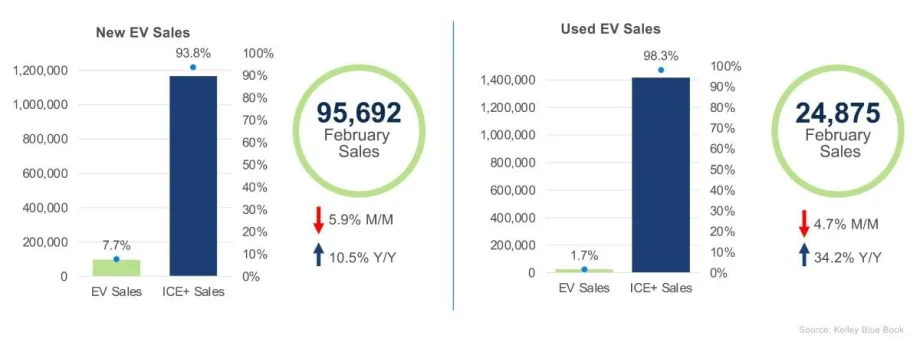
In February, the volume of new EV sales declined by 5.9% month over month to 95,692 units, although it was the highest volume ever reported for February.
Graphic: Cox Automotive
3 min to read
New electric vehicle (EV) sales slightly declined but reached a record high for February, with luxury brands performing well. Used EV sales also decreased monthly but grew by a lot year over year.
Days’ supply increased for both new and used EVs but remained significantly lower than the prior year. Pricing trends showed a decrease in new EV transaction prices, aided by incentives, making them more affordable, while used EV prices increased slightly.
New EV Sales: In February, the volume of new EV sales declined by 5.9% month over month to 95,692 units, although it was the highest volume ever reported for the month of February. The volume increased by 10.5% yearly, but market share declined to 7.7%. It was a good month for luxury brands, with both BMW and Rivian selling more than 4,000 units, representing increases of 20.9% and 34.0%, respectively, compared to the previous month. Tesla’s overall sales were down by 10.0%, driven by declines in the Cybertruck (down 32.5%), Model 3 (down 17.5%), and Model Y (down 3.1%). The top five selling models, ranked by sales volume, were the Tesla Model Y, Tesla Model 3, Ford Mustang Mach-E, Honda Prologue, and Rivian R1S.
Used EV Sales: In February, used electric vehicle sales declined by 4.7%, reaching 24,875 units. Despite this decline, there was a year-over-year growth of 34.2%. Tesla maintained its dominant position in the used EV market with a substantial 39.9% sales share despite a 9.2% decline in month-over-month sales volume.
New EV Days’ Supply: In February, the supply of new EV days increased by 16.8% month over month, reaching 104 days. This exceeded the ICE+ days’ supply after being below it last month. Year over year, the supply of new EV days is down 31.7%, indicating a significant improvement in inventory turnover compared to the previous year.
Used EV Days’ Supply: In February, the days’ supply of used electric vehicles reached 49 days, an increase of 5.9% month over month but a 21.5% year-over-year decrease. Last month, used EVs had a five-day lower supply than ICE+ vehicles. However, with ICE+ days’ supply declining by 6.5% month over month, the gap has now narrowed to just one day. The low days’ supply for EVs indicates a healthy and dynamic market driven by the increasing availability of more affordable options.
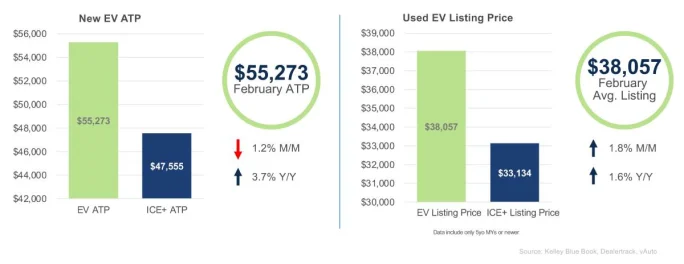
The average listing price for used EVs was $38,057, reflecting a 1.8% increase month-over-month and a 1.6% increase yearly.
Graphic: Cox Automotive
New EV Average Transaction Price: In February, the average transaction price (ATP) for new electric vehicles was $55,273, showing a 1.2% decline from the previous month and a 3.7% increase from the previous year. On average, EVs had a price premium of 16.2%. Incentive spending reached its highest level at 14.9% of ATP, which was 4.4% higher than the prior month.
Used EV Average Listing Price: The average listing price for used EVs was $38,057, reflecting a 1.8% increase month-over-month and a 1.6% increase year over year. Twelve brands had listing prices below those of their internal combustion engine (ICE+) models. Affordable options remain available, with 39% of units sold priced under $25,000.
More Green Fleet
Sponsored•October 1, 2026
New Propane Autogas Program Offers Fleet Compensation
Qualified commercial fleets can receive $7,500 per eligible propane autogas vehicle and up to $10,000 for new refueling site prep. Learn how the program works and see whether your fleet qualifies.
Read More →
EV Charging Use Is Outpacing Infrastructure Growth
ChargePoint’s 2026 Charging Forward Report points to rising charger use, higher-powered charging, commercial vehicle electrification, and energy-management technology. Here’s what fleets should know.
Read More →
Merchants Fleet Reports 290M EV Miles as Fleets Navigate Changing Electrification Market
From millions in operating savings to hundreds of millions of EV miles, Merchants Fleet’s latest report reveals what’s working and what’s changing in fleet electrification.
Read More →
The EV Breakdown Nobody's Talking About: Why Most Electric Vehicle Roadside Calls Aren't Mechanical Failures
Here's why EV breakdowns are widely misunderstood.
Read More →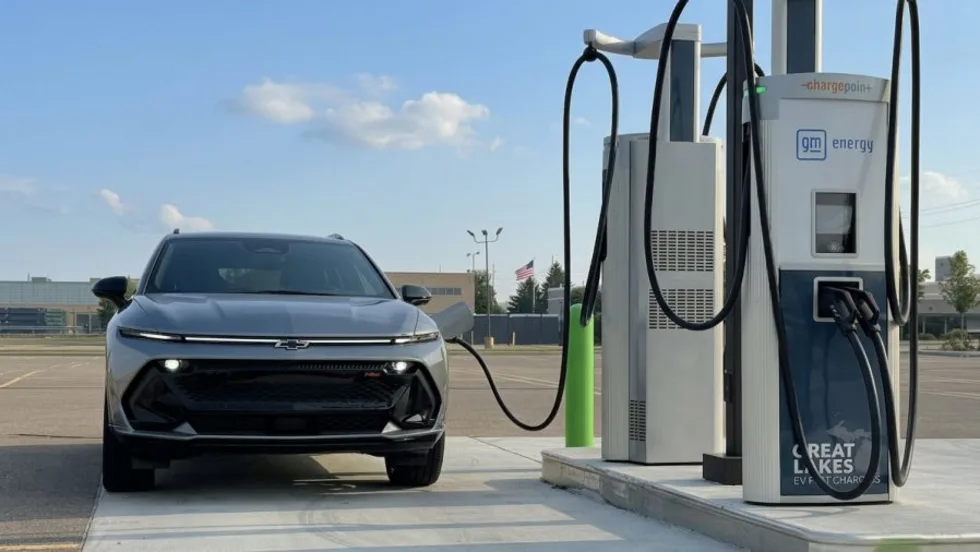
ChargePoint Now Available in Energy Pass
ChargePoint and additional planned charging network integrations were added to GM's Energy Pass.
Read More →

First Look: Slate Auto's Electric Fleet Pickup
Could an affordable, modular EV pickup make electrification more practical for fleets?
Read More →
Slate Debuts Colorful, Unique EV Models
A recent media and client event, studded with electric vehicles dressed up on platforms, planted a new position for the manufacturer in the wider EV market. Fleets will find cost-saving advantages.
Read More →
Slate Electric SUV, Pickup Switchable Model Aims For Light-Duty Fleets
Everything about this EV is counterintuitive and understated, making it stand out from the crowd.
Read More →
Inspiration Mobility Acquires Key Electrada Assets
Inspiration Mobility Group has acquired select assets of Electrada, adding the fleet electrification provider's team, technology, and charging infrastructure development capabilities to its energy management business.
Read More →