





Want More? What are Automakers Doing to Bridge the EV Charging Gap?
Tesla Recalls Over 239,000 Vehicles for Potential Rearview Camera Image Defect
The recall addresses a circuit board issue that may cause rearview camera failure, resolved with an OTA update or parts replacement if needed.
January 14, 2025
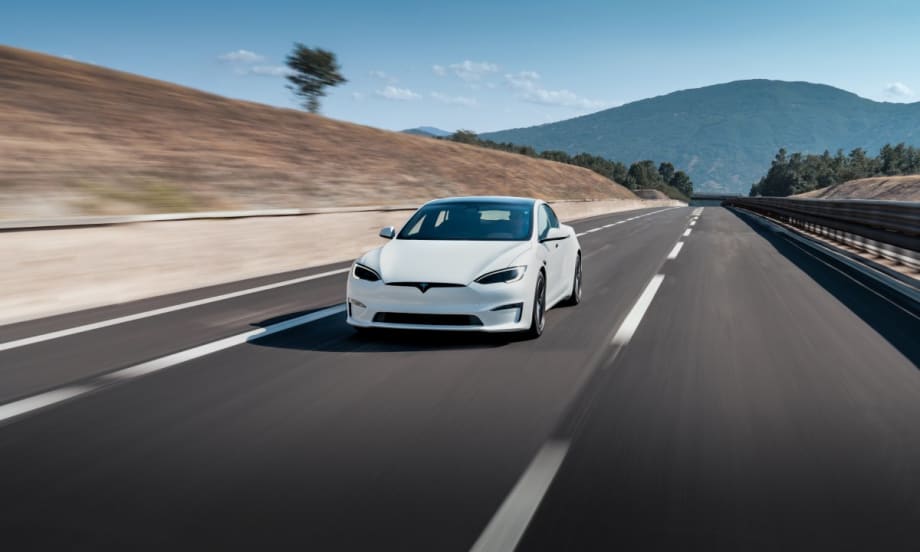
Tesla has recalled an estimated 239,382 Model 3, Model S (pictured), Model X, and Model Y vehicles from 2023-2025 model years.
Photo: Tesla
2 min to read
Tesla is recalling an estimated 239,382 units of certain 2024-2025 Model 3, Model S, 2023-2025 Model X, and 2023-2025 Model Y vehicles due to a potential computer issue resulting in the loss of the rearview camera image.
Beginning on or shortly after December 18, 2024, affected vehicles began receiving an over-the-air (OTA) software update that changes the vehicle power-up sequence to prevent the shorting failure condition to the primary and/or secondary power component.
Reason for the Recall
The computer circuit board may short, resulting in the loss of the rearview camera image. Due to this issue, these vehicles fail to comply with the requirements of Federal Motor Vehicle Safety Standard (FMVSS) number 111, "Rear Visibility."
With the condition present, the rearview camera display will appear blank when the vehicle is shifted to Reverse.
Loss of the rearview camera display may affect the driver’s rear visibility and increase the risk of a collision. The driver may continue to reverse the vehicle by performing a shoulder check and using their mirrors.
What Remedies Are Available?
As of December 30, 2024, Tesla has identified 887 warranty claims and 68 field reports related to the condition.
Beginning on December 18, 2024, at no cost to customers, affected vehicles began receiving an OTA software update to the vehicle’s power sequence. Tesla will also identify any vehicles that experienced a circuit board failure or stress that may lead to a circuit board failure and replace the affected computers.
Beginning on December 16, 2024, vehicles in production received the software remedy described above, while Model 3, Model S, and Model X vehicles in production also received different car computer variants.
No further action is necessary from owners of affected vehicles equipped with software release 2024.44.25.3, 2024.45.25.6, or a later release if an affected vehicle has not experienced the shorting failure condition or stress that may lead to the shorting failure condition.
Owner notification letters are expected to be mailed on March 7, 2025.
More Safety

Nominations Open for 2026 Fleet Safety Award
Nominations have officially opened for the 2026 Fleet Safety Award Winner.
Read More →
Sponsored•June 1, 2026
Turning Connected Vehicle Data Into Decisions That Matter
Fleet leaders have more data than ever, but turning that data into clear, actionable decisions remains a challenge. This white paper shows how leading organizations are using connected vehicle data to improve safety, reduce costs, and optimize fleet performance. Learn how to turn insight into action across your fleet.
Read More →
Sponsored•June 1, 2026
Cameras, Safety and Insurance: From Reactive Claims to Real-time Prevention
Commercial auto remains one of the most challenging and costly lines of coverage for fleet operators and insurers alike. Learn more about how to effectively address these issues from Onur Aksan, Enterprise Business Development Executive, Geotab.
Read More →

NAFA Fleet Safety Symposium to Collocate With 2026 Fleet Forward Conference
The daylong certificate program will precede the Fleet Forward Conference at the Gaylord National Harbor in Maryland.
Read More →
The Distractions You Can’t Turn Off: What Drivers Face Outside the Vehicle
Fleet drivers face constant visual, cognitive, and environmental interruptions the moment they hit the road. From roadside chaos to mental fatigue and digital overload, today’s biggest driving risks often come from outside the vehicle itself.
Read More →
FLASH Weather AI Launches First Deep-Learning Hail Prediction Model With High-Resolution Forecasting
FLASH Weather AI has launched a first-of-its-kind hail prediction model capable of forecasting hail size and arrival time at 1-kilometer resolution up to 55 minutes ahead, giving fleets and insurers critical time to prepare for severe storms.
Read More →
How Coca-Cola United Protects Its Fleet from Growing Legal Risk
As litigation risk rises, vehicles are increasingly targeted. This Coca-Cola bottler shares how it’s reducing exposure through driver training, technology, and a proactive risk management approach.
Read More →
How to Speak the Same Language on Fleet Safety
Drivers, supervisors, and data often speak different safety “languages.” Getting on the same page will drive better results.
Read More →
Fleet Cybersecurity 101: What You Need from Your Technology Vendors
From identity management to third-party certifications, the right technology partner should make security easier to manage. Here are the three building blocks that fleet managers need to stay in control as connected systems scale.
Read More →
Reducing Risk by Eliminating Phone Use Behind the Wheel
Distracted driving remains one of the most persistent risks in fleet operations. New approaches focus on removing mobile device use entirely while adding real-time safety support.
Read More →