





Keep Reading: New Forecast on Widespread Autonomous Technology by 2033
Average Age of Vehicles in the US Continues to Rise
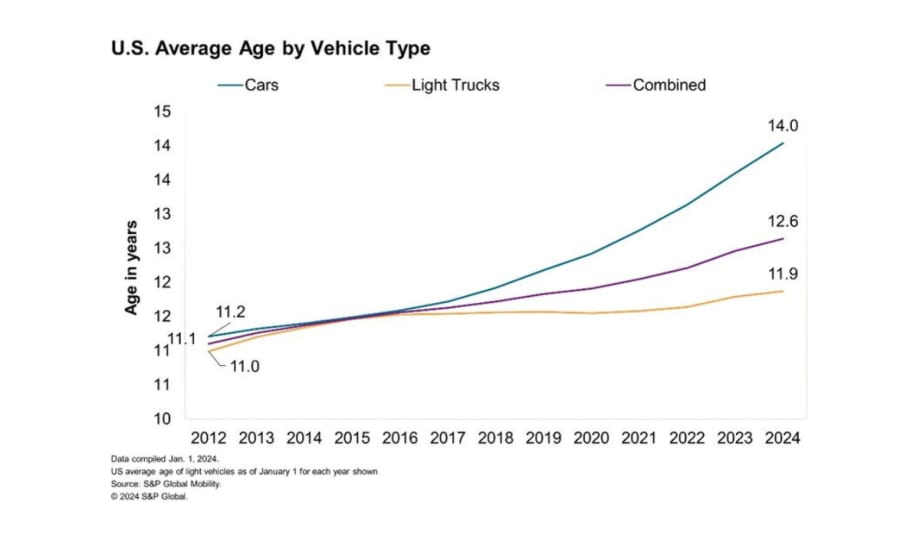
The new record age, reaching 12.6 years, shows signs of slowing as new registrations normalize.
May 24, 2024
"With average age growth, more vehicles are entering the prime range for aftermarket service, typically from 6 to 14 years of age," Todd Campau, aftermarket practice lead at S&P Global Mobility said.
Source: S&P Global Mobility
3 min to read
A new analysis by S&P Global Mobility shows registered vehicles on U.S. roadways are getting even older. In contrast, the age of electric vehicles has remained steady due to a slower-than-anticipated growth rate.
The average age of cars and light-duty trucks in the U.S. has risen again to a new record of 12.6 years in 2024, up by two months over 2023. The average age increase shows signs of slowing as new registrations normalize.
There is an increase in business opportunities for companies in the aftermarket and vehicle service sector in the U.S. as repair opportunities grow alongside vehicle age.
"With average age growth, more vehicles are entering the prime range for aftermarket service, typically from 6 to 14 years of age," Todd Campau, aftermarket practice lead at S&P Global Mobility said. "With more than 110 million vehicles in that sweet spot — reflecting nearly 38% of the fleet on the road — we expect continued growth in the volume of vehicles in that age range to rise to an estimated 40% through 2028."
Two Cars Scrapped For Every New Car Registration
Vehicle scrappage rates, which are vehicles exiting the active population, remain steady. As of January 2024, the scrappage rate was 4.6%, largely unchanged from 4.5% in January 2023.
More than 27 million passenger cars have left the U.S. vehicle population since 2020, while just over 13 million new passenger cars have been registered. At the same time, over 26 million light-duty trucks (including utilities) have been scrapped, and nearly 45 million have been registered.
"Consumers have continued to demonstrate a preference for utility vehicles, and manufacturers have adjusted their portfolio accordingly, which continues to reshape the composition of the fleet of vehicles in operation in the market," Campau said.
VIO Grows to 286M, While EV VIO Exceeds 3M
The U.S. vehicle fleet surged to 286 million vehicles in operation (VIO) in January, up two million over 2023, but the distribution of cars by age is changing.
Vehicles under 6 years of age accounted for 98 million in 2019, or about 35% of VIO. In 2024, they represent less than 90 million vehicles and are not expected to reach that threshold again until 2028, when they will represent about 30% of VIO, according to S&P Global Mobility estimates.
The estimation was driven by the impact of COVID-19 and subsequent supply chain shortages, which disrupted vehicle supply and registrations following historically high volumes in 2015-2019.
As a result, the primary driver of VIO growth will be vehicles in the aftermarket 'sweet spot' — vehicles 6-14 years of age and even older cars, which are expected to represent about 70% or more of VIO for the next five years, serve as a tailwind to aftermarket service opportunities.
The number of electric vehicles on the road continued to increase, with 3.2 million EVs in operation in January. For the first time, 2023 EV registrations surpassed one million units and increased by about 52% compared with 2022.
The rate of EV growth was slower than some automakers had anticipated, and there is potential for the average age of EVs to rise in the short term as consumer adoption slows. The average age of EVs in the U.S. is 3.5 years and has been holding largely steady since 2019, with new registrations representing a large share of overall EV VIO.
"We started to see headwinds in EV sales growth in late 2023, and though there will be some challenges on the road to EV adoption that could drive EV average age up, we still expect significant growth in the share of electric vehicles in operation over the next decade," Campau said.
More Vehicle Research

The Latest Fleet Vehicle Updates You Need to Know | AF News Recap
What's new with fleet this week? We're getting to know the people behind the industry and the latest must-know vehicle updates.
Read More →
Ram Gains Ground as Commercial Vehicle Competition Heats Up
Stellantis Pro One increased North American commercial vehicle sales 13% in the first half of 2026, with Ram recording growth across light- and heavy-duty pickups.
Read More →
Sponsored•July 23, 2026
The Top 300 Commercial Fleets
The Top 300 Commercial Fleets: See the List
Read More →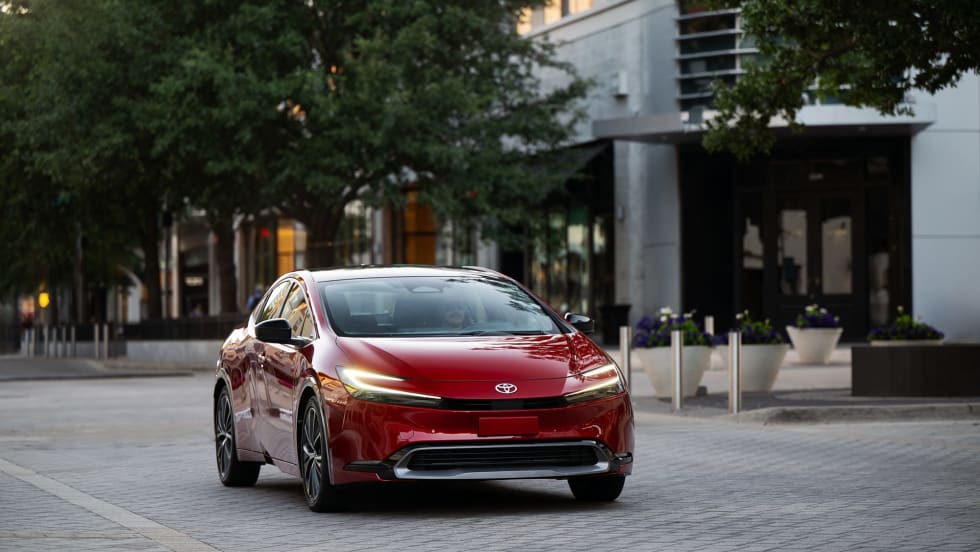
2027 Toyota Prius Receives Technology, Comfort Update
The hybrid adds dual-zone climate control for 2027 while retaining its fifth-generation hybrid system and Toyota Safety Sense 3.0.
Read More →
Leaders, Data, and the Future of Mobility | AF News Recaps
From Fleet Manager of the Year finalists to connected vehicle privacy and the future of urban mobility, this week's biggest fleet stories are all about where the industry is headed next. Here's your Weekly Cheat Sheet.
Read More →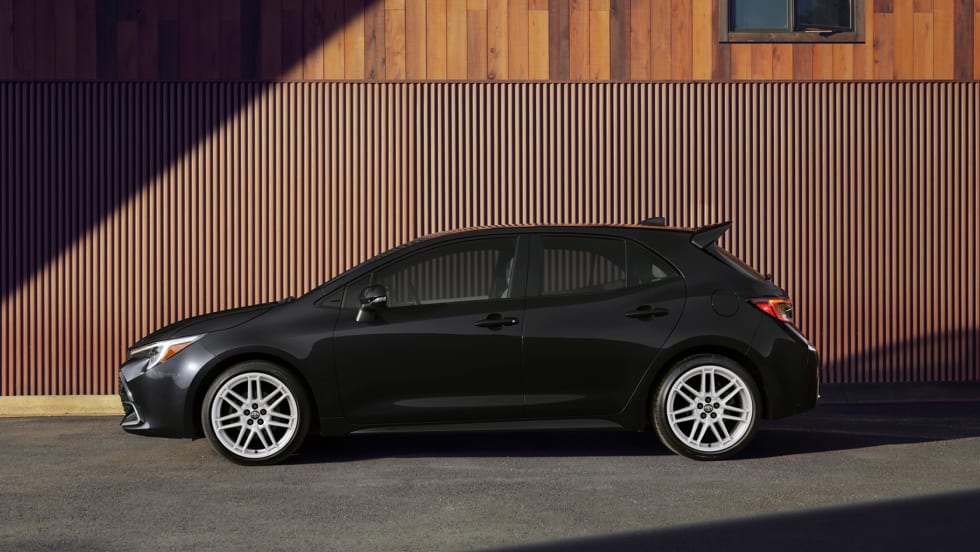
2027 Toyota Corolla Hatchback Adds Digital Displays, Technology Updates
Compact hatchback receives larger standard displays, new wheel and color options, and continues with a 169-hp four-cylinder engine.
Read More →

Teletrac Navman Begins Next Chapter as Standalone Private Company
What's new with Teletrac Navman and its new owner?
Read More →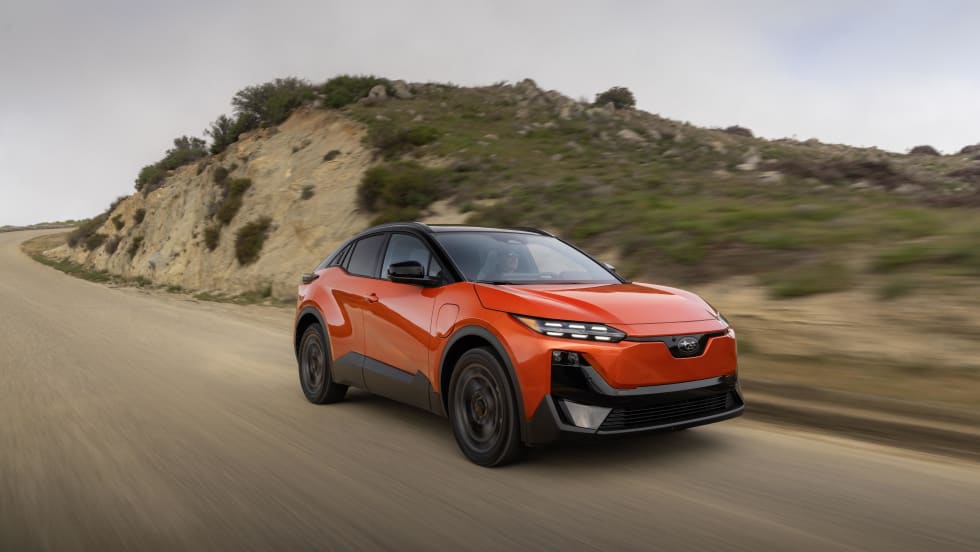
Subaru Announces Pricing for 2027 Subaru Uncharted
Subaru has announced pricing for the 2027 Uncharted EV, which returns with no price increase, an estimated range of more than 300 miles, and a starting MSRP of $34,995.
Read More →
What Should We Make of the Fiat Topolino?
This atypical low-speed vehicle is coming to the U.S. It's smaller than a Smart Fortwo and starts at $13,995.
Read More →