





Digging Deeper: Stretch Your Budget Dollars by Minimizing Waste
Analysis of Three Cost Containment Strategies
A cost-deferral strategy simply defers or moves expenditures to future fiscal years. Cost-saving measures seek to lower current spending levels. Cost-avoidance initiatives are actions that eliminate incurring a cost in the future.
August 1, 2023

Senior management exerts intense pressure on fleet managers to control and/or reduce vehicle acquisition and operating expenses. Fleet managers can pursue three different strategies: cost savings, cost deferral, or cost avoidance.
Photo: Geralt
3 min to read
To whom fleet reports influences the acuity of management-exerted cost-control pressures. For instance, there are two categories of business activity in any company — income and expense.
The income side includes:
Sales.
Service.
Any other activity charged with producing income for the company.
The expense side includes areas charged with managing the costs of doing business, such as:
Administration.
Operations.
Personnel.
If a fleet manager reports up through the expense side of the organization (operations, administration, etc.) there is an even greater urgency to achieve at the lowest cost possible the acquisition of fleet assets and third-party fleet services.
Cost Containment Strategies
Senior management exerts intense pressure on fleet managers to control and/or reduce vehicle acquisition and operating expenses. To accomplish this, fleet managers can pursue three different cost-control strategies: cost savings, cost deferral, or cost avoidance.
To implement a successful cost-control strategy you need to institutionalize the mechanisms to curb money-wasting behaviors.
1. Cost Deferral:
Cost deferral is the easiest way to reduce annual fleet costs. This cost-control strategy simply defers or moves expenditures to future fiscal years. Essentially, cost deferral kicks the proverbial “can” down the road to be dealt with in the future.
2. Cost-Saving Initiatives
Cost-saving measures are actions that lower current spending levels. Examples of cost-saving measures are reduced fuel expenditures, negotiation of price decreases for products and services, or the negotiation of a lower rental fees for infrequently used equipment. However, cost-saving initiatives are limited by the law of diminishing returns, especially with a well-managed fleet.
3. Cost Avoidance Strategies
On the other hand, cost-avoidance initiatives are actions that eliminate incurring a cost in the future. One example is the elimination of underutilized assets or rightsizing a fleet.
Achieving true cost savings involves more than just deferring expenditures, it requires eliminating costs.
Control Costs on the Front-End
A common misapplication of cost-control resources is that, all too often, managers attempt to control fleet costs on the back end. The best time to control cost is before it occurs and the way to do this is through establishing policies and procedures that inhibit unnecessary spending and establish the parameters as to how drivers operate and maintain an asset.
Fleet policy institutionalizes the mechanisms to curb money-wasting behaviors.
Constraints to Cost Reductions
A fundamental decision is where to focus your cost-control efforts. Typically, fleet cost-reduction programs focus on the fixed and operating costs of the asset; however, there’s a limit to how much a fleet manager can modify truck specifications without impacting the fleet mission.
You can’t change the fundamental requirements of your business. This necessitates minimum fleet equipment specifications that, as a result, pre-define the expense parameters for your assets from both a fixed and operating cost perspective. In addition, if you acquire vehicle assets that best fulfill your fleet application, then any supplemental cost reduction will only be based on incremental refinements, in essence, chasing pennies to further reduce costs.
Focus on Soft Costs
Fleet managers must think strategically when developing long-term cost-containment initiatives. The requisite foundation of any successful cost-reduction program is pre-existing operational efficiencies, which will allow you to focus on soft costs, such as vehicle/driver downtime and the resulting lost revenue.
Vehicle/driver productivity can produce impressive results when quantifying cost savings, particularly in a well-run fleet program where the law of diminishing returns limits the impact of fixed and variable cost savings.
Policy Compliance is Critical
In summary, the best strategy to practice cost avoidance and eliminate incurring unnecessary costs is through increased fleet policy compliance. This must be the cornerstone of an overall cost-control strategy.
Subscribe to Our Newsletter
More Operations
How to Manage Conflict for Your Fleet Operations
Conflict management is becoming a core leadership skill. Here are five strategies fleet leaders should know.
Read More →
Sponsored•June 1, 2026
Turning Connected Vehicle Data Into Decisions That Matter
Fleet leaders have more data than ever, but turning that data into clear, actionable decisions remains a challenge. This white paper shows how leading organizations are using connected vehicle data to improve safety, reduce costs, and optimize fleet performance. Learn how to turn insight into action across your fleet.
Read More →
Sponsored•June 1, 2026
Cameras, Safety and Insurance: From Reactive Claims to Real-time Prevention
Commercial auto remains one of the most challenging and costly lines of coverage for fleet operators and insurers alike. Learn more about how to effectively address these issues from Onur Aksan, Enterprise Business Development Executive, Geotab.
Read More →

Sponsored•May 29, 2026
Are You Tracking Your Fleet's True Total Cost of Ownership?
Bobit Business Media surveyed 190 fleet professionals and found that while most fleets are tracking costs, fragmented systems and data gaps are keeping true TCO visibility out of reach. With rising pressure to control spend in an increasingly volatile environment, the gap between what fleets think they know and what the data actually shows is wider than you might expect. See how your peers are managing costs today and where the industry still has room to improve.
Read More →
Sponsored•May 28, 2026
Turn Fleet Data Into Smarter Decisions
Fleet leaders have access to more operational data than ever, but disconnected systems and unclear metrics often slow decision-making instead of improving it. This article outlines five practical steps fleets can take to transform fragmented data into actionable insights that improve planning, safety, utilization, and long-term performance.
Read More →
Sponsored•May 15, 2026
Hybrids: Electrification Without the Challenges
For fleet managers, fuel is one of the biggest line items in the budget — and it's one hybrids can shrink without changing how your people work. Download the eBook to see the numbers, understand the technology, and get a step-by-step guide to making the switch.
Read More →
How NOV Uses Telematics to Improve Fleet Safety Across 160 Locations
James Victory of NOV discusses how the company manages fleet safety, maintenance, and telematics across more than 150 locations supporting oilfield operations throughout the U.S.
Read More →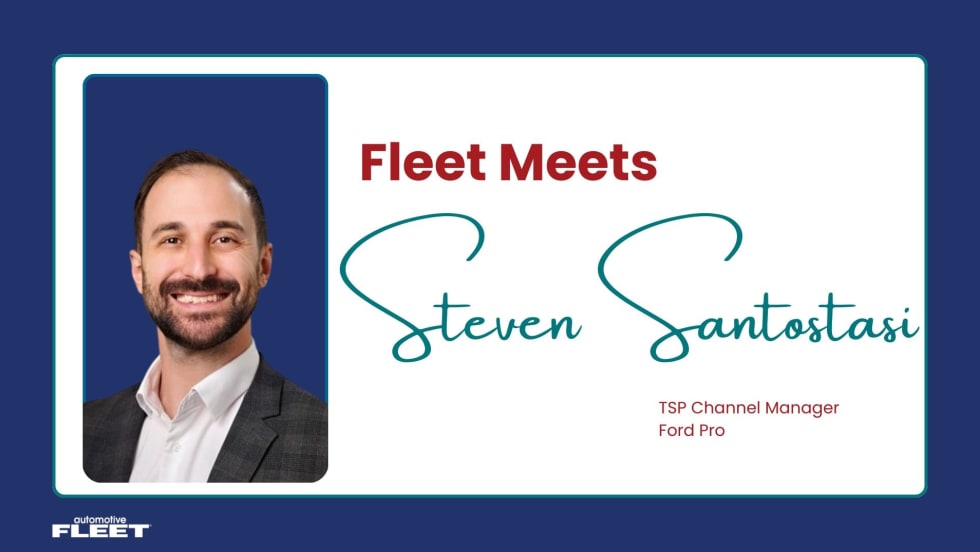
Fleet Meets: Steven Santostasi
This edition of the Fleet Meets series features Steven Santostasi, the current TSP channel manager for Ford Pro.
Read More →
Sponsored•May 13, 2026
Why Fleet Managers Are Replacing Departmental Vehicles with Shared Motor Pools
Departmentally assigned vehicles often create hidden costs through underutilization, poor visibility, and increased administrative burden. This white paper explores how shared motor pool strategies help fleets reduce costs, improve accountability, and optimize vehicle utilization.
Read More →
Soap Box Derby Challenge: Assembling the Crew
Meet Gabriel, Matthew, and Angel — the team helping bring this soap box derby build to life.
Read More →