





Did you know? How Selling a Truck at Auction Works
The 5 W's of Remarketing Upfits & Equipment
Fleet experts shared their insights on remarketing upfits and equipment in the work truck industry.
November 29, 2022
Remarketing isn’t just “sell it and move on.” The five W’s help fleets plan who’s selling what, when to do it, where to list it, and why it matters to TCO.
Credit: Work Truck
7 min to read
There are five different “W’s” when discussing work truck resale. The wonderful, worthwhile, winning, welcoming, wild world of remarketing may not be well-known.
But those aren’t the W’s we were talking about. Let’s dive into the who, what, when, where, and why fleets remarket upfits and equipment.
Fleet experts spoke with Work Truck about five different “W’s” when discussing remarketing upfits and equipment in the industry.
Why Remarket Light- & Medium-Duty Trucks?
The “who” in question here is fleet managers of light- and medium-duty fleets looking to sell off upfits and equipment when they see a vehicle’s service life end. The managers will look to sell the truck or the equipment to make a return, which answers the “what.”
There is a lot more to it, however.
To answer the questions of “when?” and “where?”, it’s essential to explore further why managers would remarket their vehicles. According to Josh Giles, principal automotive analyst at Black Book, remarketing upfits and equipment help maintain a healthy lifecycle for new equipment.
“It is all about the cost to operate a particular fleet,” Giles said. “The benefits include everything being under warranty, improved operator experience, and limited maintenance.”
Black Book provides fleet managers with a way to understand the value of trade-in vehicles through a team of data scientists.
Leading to less driver fatigue and reduced costs, from Giles’ experience, the operator experience improves through:
Fresh equipment.
Updated OEM lineups.
Chris Clarke, director of remarketing solutions at Holman, stressed the importance of treating remarketing vehicles as more than an “afterthought.”
“For some organizations, remarketing fleet vehicles is simply viewed as a way to dispose of a unit at the end of its useful life cycle and extract some resale value,” Clarke said. “However, for best-in-class fleet operators, the remarketing process is a vital component of minimizing their total cost of ownership (TCO), and their strategy for maximizing returns typically begins before the vehicle even hits the road.”
Holman provides a wide range of integrated automotive solutions, including fleet leasing and management services.
Clarke believes this approach will help managers optimize their remarketing strategy.
Rob Slavin, a senior valuation analyst at Ritchie Bros., explained how managers can extend the life of a work truck or van.
“Many customers buy equipment only used for a specific job,” Slavin said. “It is only used one or two times per week or month. With upfits, you can potentially expand the use and extend the life of your machine. Perhaps you purchase an older unit (six to eight years old), upfit it, and extend that item’s life and use.”
Ritchie Bros. is an asset management and disposition company offering customers solutions for buying and selling used heavy equipment, trucks, and other assets.
When Should Truck Fleets Utilize Remarketing?
Three questions down, and there are more to answer on the journey to understanding remarketing upfits and equipment.
The lifecycle of upfits and equipment was mentioned earlier, which raises the question: “When should a fleet try to remarket these items?”
According to Giles, rental companies keep their units for 2 to 5 years, depending on the market.
“Local and state agencies may keep their units in operation for eight or more years before remarketing efforts are even considered,” Giles said.
Giles added that the overall usage of the equipment should be considered. A fleet will know it’s time to remarket these items due to aging and higher mileage.
“More rough units will need to be remarketed sooner rather than later to maximize their value,” Giles said.
And, according to Clarke, another factor to keep in mind when considering the timing of remarketing is that the upfit components and equipment depreciate at a slower rate than the vehicle itself.
“Fleet operators often dispose of the unit with the upfitting intact, which certainly makes the unit more desirable to the right buyer, but if the equipment is extremely niche and/or difficult to remove, it may present a challenge during the resale process,” Clarke said.
Fleets may have an opportunity to reuse equipment from another vehicle within their fleet.
“If the upfit and equipment are easily interchangeable, it may make economic and logistical sense to remove the components before selling the vehicle,” Clarke said.
Another consideration surrounding the “when?” question is how some upfits components can only be certified for a certain number of years.
Another question to consider when evaluating remarketing upfits and equipment: How much of the equipment’s life has been spent sitting idle or in operation?
Another factor to consider, according to Slavin, is the number of hours the engine runs.
“If you look at most bucket trucks, many have very low mileage, but the engine hours are high because they were running more than eight hours a day, five to six days per week, resulting in engine wear and tear,” Slavin said.
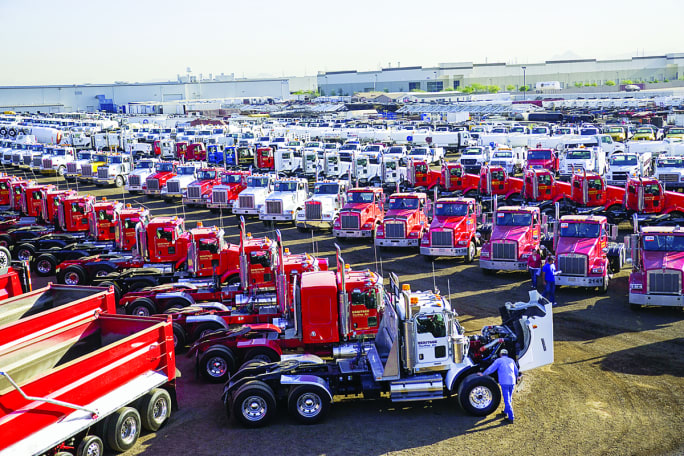
A full auction yard is the “where” in real life. Fleets move units here when timing, condition, and buyer demand line up and they’re ready to turn assets back into capital.
Credit: Ritchie Bros. Auctioneers
Where Should Fleets Remarket Work Trucks?
Managers looking to sell upfits and equipment will not have difficulty finding where to do so.
Look no further than more Ws: The World Wide Web. Auctions for upfits and equipment are held both in-person and online.
According to Giles, the best place to sell these items depends on the customer's needs.
“Reserve and non-reserve auctions are great ways to remarket your equipment,” Giles said. “Some fleets have retail websites and dealerships where they would send all of their commercial units in hopes to retail out of them before sending them to auction.”
Managers can also contact dealers directly to see if they are interested in purchasing the items.
According to Clarke, most organizations adopt a hybrid strategy to liquidate vehicles and assets at the end of their useful lifecycles, leveraging both traditional in-person auctions and online virtual platforms.
“These venues help fleet operators to find the right buyer for each unit, particularly highly specialized vocational vehicles and equipment that may only appeal to a limited number of buyers,” Clarke said. “Many auction venues specialize in certain types of units or focus on a particular region, allowing fleet operators to direct their vehicles and equipment to the most appropriate venue to maximize sales proceeds.”
Ritchie Bros. has multiple sales options for managers looking to remarket upfits and equipment. Some of these options include live site auctions with online bidding, weekly online featured auctions where equipment does not need to be transported to a central location (IronPlanet), a 24/7 online solutions Marketplace-E, and a new listing service called Ritchie List.
Knowing there are different avenues for selling upfits and equipment, a remarketing partner can help managers navigate the process.
“A savvy remarketing partner can help you assess your assets and the various venues available to ensure your vehicles and equipment are in front of the right audience to maximize the pool of potential buyers,” Clarke said. “Your remarketing partner can also help you tailor your disposal strategy to meet your organization’s specific needs as you decide whether it is most important to maximize resale returns, liquidate units as quickly as possible, or identify a sweet spot in the middle.”
Clarke offered more advice when remarketing upfits and equipment.
“While it is important to spec your vehicles appropriately for their intended function, when possible, think about the options and upfit in terms of what will appeal to the largest pool of potential buyers when it is time to sell,” Clarke said.
Having a remarketing solution in place before selling is another important reminder.
The solution will allow a fleet manager to liquidate these units as quickly as possible, generating capital that can be reinvested in the business or fleet operations.
“With that in mind, the best advice I can offer fleet operators is to conduct a thorough analysis of your current fleet operations to better understand precisely how your assets are utilized to support your business today,” Clarke said.
One other factor that could influence remarketing efforts is the vehicle's powertrain. Remarketing an alternative-fuel vehicle presents unique challenges. Upfits also pose unique challenges for remarketing efforts. A fleet manager’s goal is to get the most out of a work truck or van upfit. Optimizing resale and disposal completes that process.
Check out more from Work Truck and never miss a remarketing news item or feature when you sign up for our newsletters today.
Originally posted on Work Truck Online
Subscribe to Our Newsletter
More Remarketing
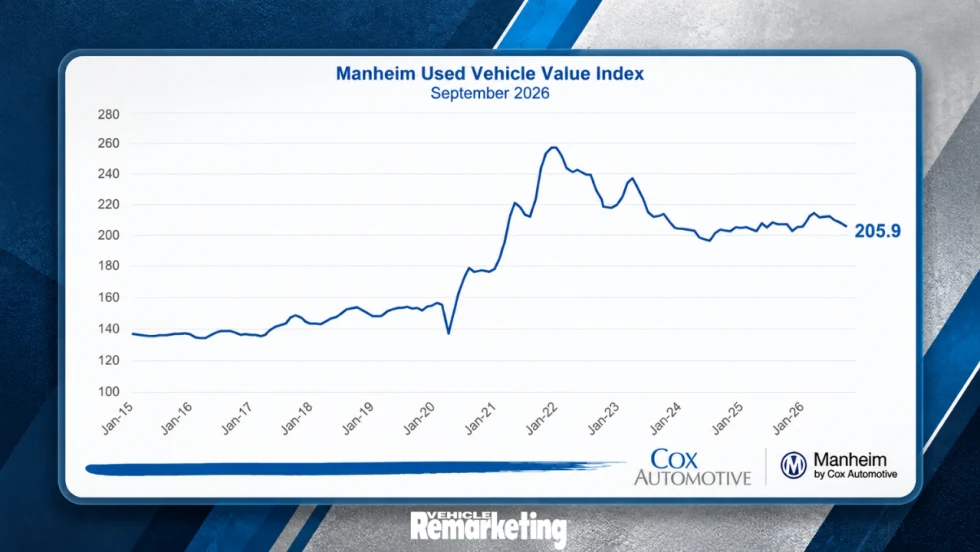
Wholesale Used-Vehicle Values Fall as Cox Automotive Cuts 2026 Forecast
Wholesale used-vehicle prices declined in September as depreciation accelerated, prompting Cox Automotive to lower its year-end forecast.
Read More →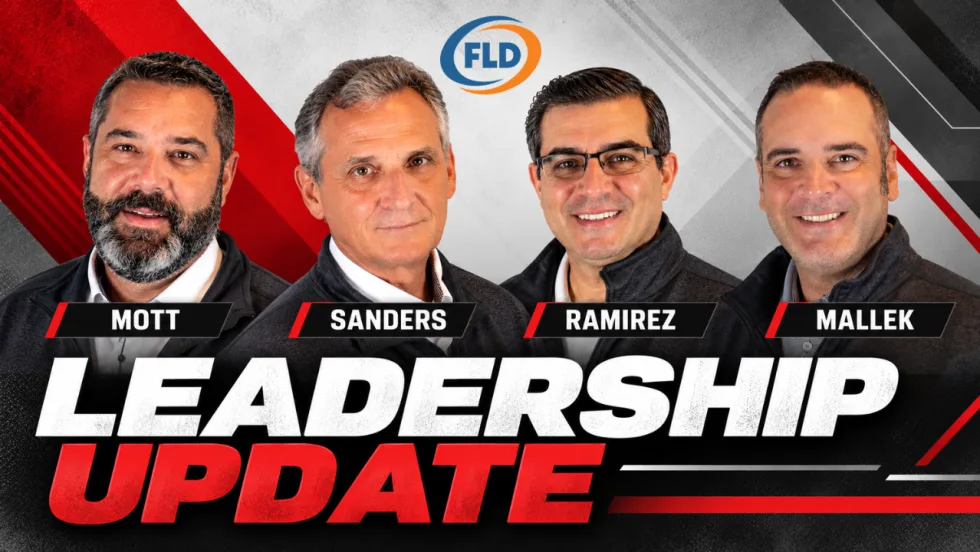
FLD Promotes Three Executives in Leadership Changes
FLD has promoted three longtime executives, naming Gary Mott CEO, Richard Mallek president, and Ron Sanders managing partner.
Read More →
Ford Pro Launches Certified Pre-Owned Program for Commercial Vehicles
Ford Pro Advantage will offer certified pre-owned Class 1-7 commercial vehicles through more than 700 Ford Pro Commercial Vehicle Centers.
Read More →
Copart to Acquire ACV in $1.9 Billion Deal
The acquisition would expand Copart beyond its traditional salvage business into dealer-to-dealer wholesale remarketing while adding ACV’s vehicle data, inspection, and valuation technology.
Read More →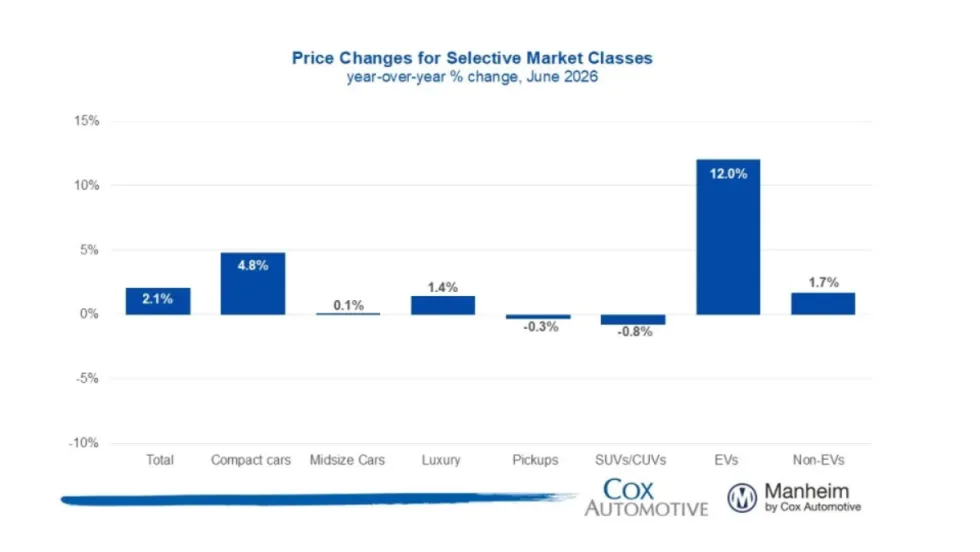
Manheim Index Shows Used-Vehicle Wholesale Prices Up 2.1% in June
The market is seeing stronger appreciation in older used vehicles this year, and the most affordable segments have been among the year’s best performers.
Read More →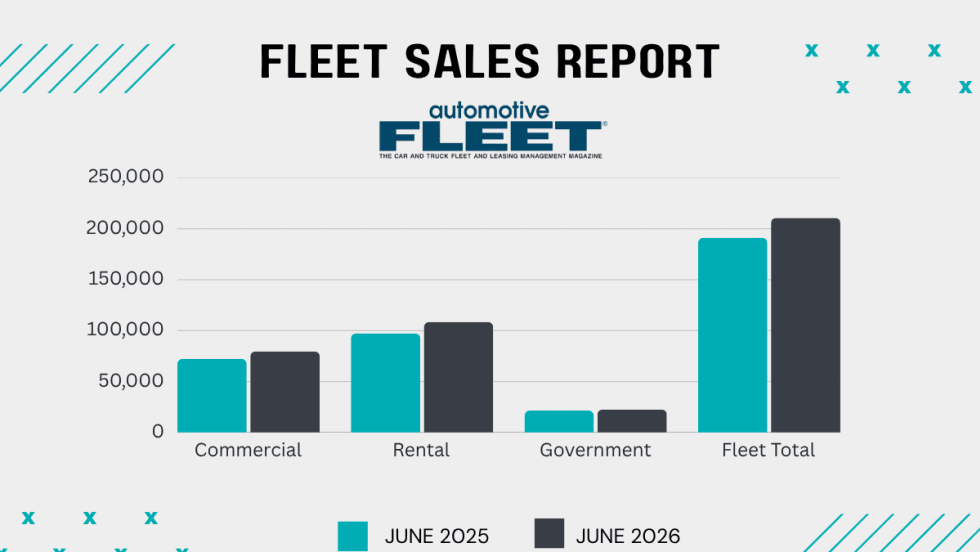
Commercial Fleet Sales Contribute To June, YTD Gains
The fleet sector has boosted its vehicle purchases at a reliable pace in the first half of this year compared with 1H 2025.
Read More →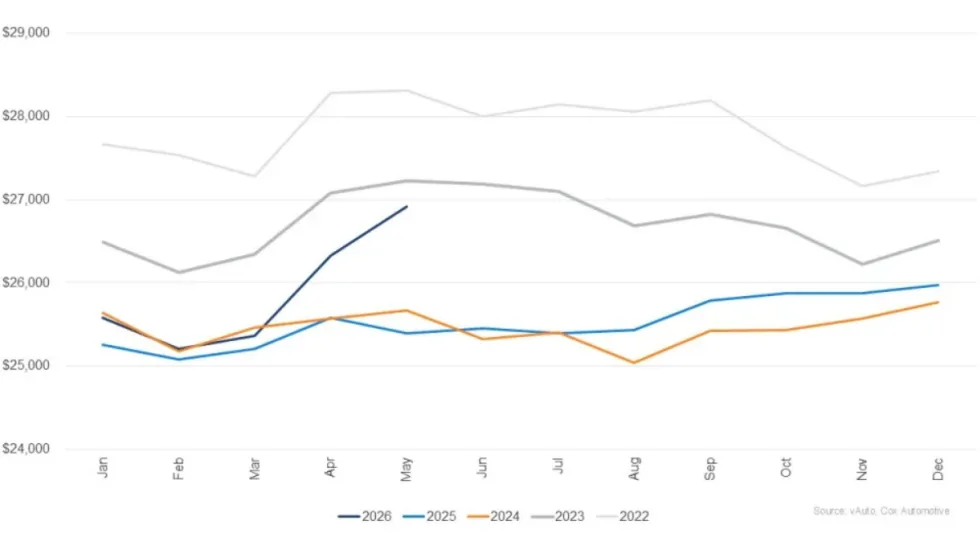
Used Vehicle Prices Climb Higher As Sales Pace Slows
The higher prices at used retail reflect strong wholesale values earlier in the spring, particularly for older, more affordable vehicles.
Read More →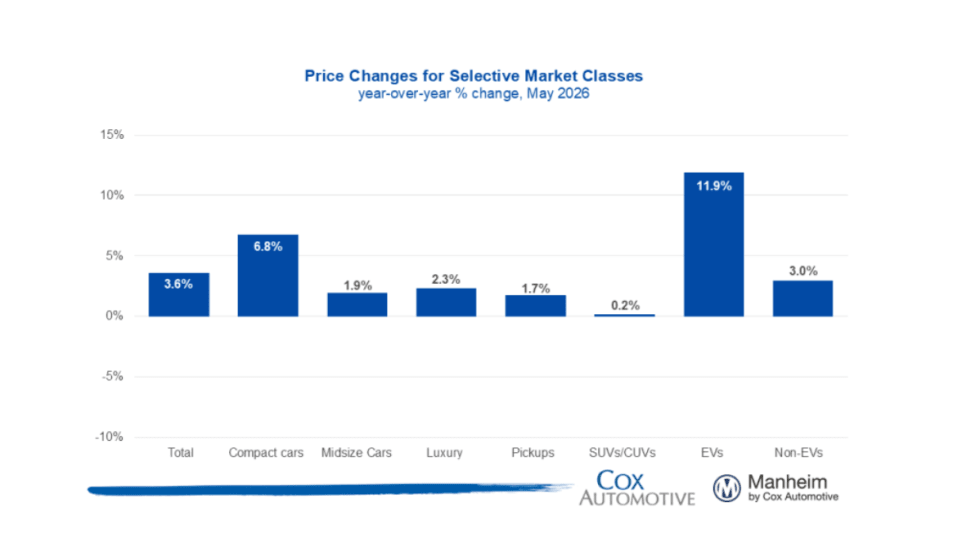
Wholesale Used Vehicle Market Sustains Moderate Rise In Values, Prices
Trends continue to normalize after a strong start to the year, as consumers contend with higher gas prices in the coming summer months.
Read More →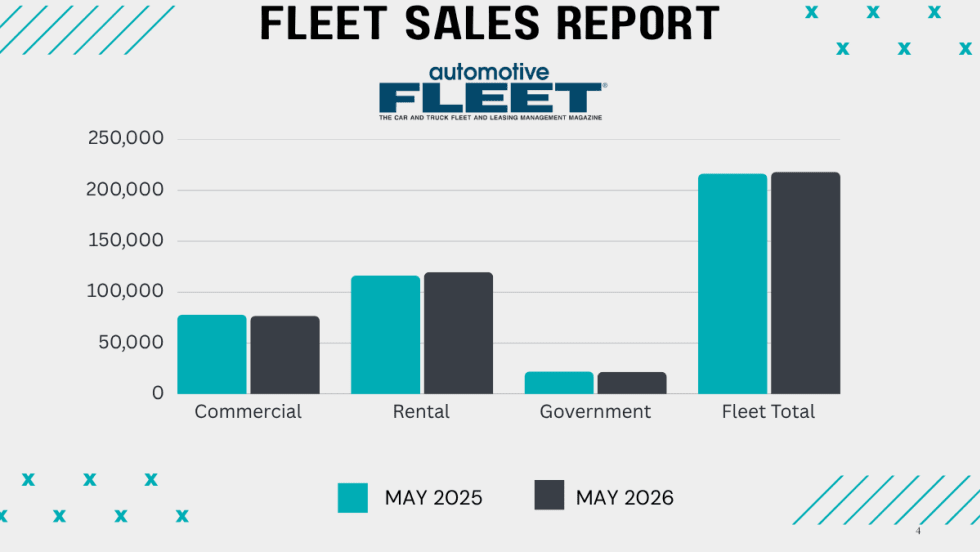
Commercial Fleet Sales Still Lead Sectors Despite May Mini Dip
The U.S. economy's continued growth and positive business investment are creating a favorable environment for fleet vehicle demand.
Read More →
How Connected Vehicle Data Is Lifting Fleet Resale Values
A vehicle health score could improve the value of fleet vehicles at remarketing. The path to a universal standard is forming, and fleets that understand the process early will be better positioned when it arrives.
Read More →