





See Also: Crossing the Threshold—Electric Crossovers & SUVs: 2022 & Beyond
Toyota Launches bZ4X SUV Battery-Electric Vehicle
Arriving this spring, the 2023 Toyota bZ4X brings an EPA-estimated range rating of up to 252 miles per charge, and an average estimated fuel cost savings over five years of up to $5,000.
April 18, 2022
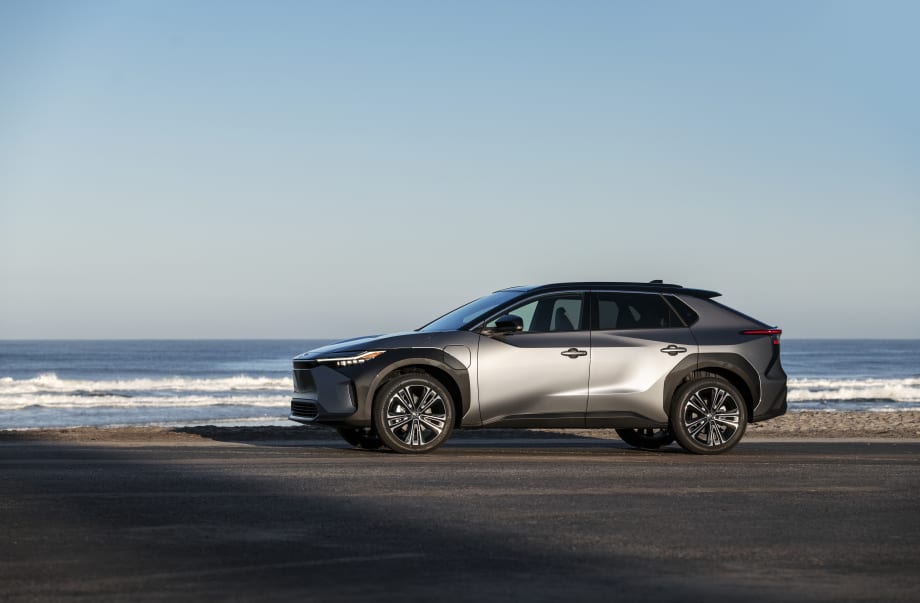
Over the next nine years, Toyota will invest $70+ billion in electrified vehicles as a whole with the target to launch 3.5 million BEVs globally in 2030.
Photo: Toyota
3 min to read
Toyota announced in a statement the launch of the all-electric bZ4X SUV. The Battery Electric Vehicle (BEV), will be coming to dealerships this spring. With an EPA-estimated range rating of up to 252 miles (for XLE front-wheel drive models, based on EPA’s testing procedure standards), the 2023 Toyota bZ4X will have a starting MSRP of $42,000. According to the statement, the average estimated fuel cost savings over five years for the 2023 bZ4X XLE FWD compared to the average new vehicle is up to $5,000.
The bZ4X is the first Toyota vehicle to be launched under the global bZ series, with more bZ vehicles on the horizon. “bZ,” which stands for “Beyond Zero,” joins a lineup of Toyota electrified vehicles that accounted for about a quarter of Toyota’s total sales volume in the U.S. last year. These include hydrogen fuel cell electrics, hybrids, plug-in hybrids, and now battery electric vehicles.
Offered in two grades, XLE and Limited, in both front wheel drive (FWD) and all-wheel drive (AWD), the bZ4X sits squarely in the middle of the compact SUV segment. The vehicle produces a horsepower rating of 201 for FWD and a horsepower rating of 214 for AWD.
The XLE FWD model has an EPA-estimated range rating of up to 252 miles. The XLE AWD model has an EPA-estimated range of up to 228 miles. The EPA-estimated fuel economy rating for XLE FWD is 131 MPGe city, 107 MPGe highway and 119 MPGe combined. The EPA-estimated fuel economy rating for XLE AWD is 114 MPGe city, 94 MPGe highway and 104 MPGe combined.
When it comes to powering up, bZ4X options include 120V and 240V chargers as well as DC fast-chargers. All bZ4X models are equipped with a J1772/CCS1 (Combined Charging System (CCS)) socket, which allows for both home and public charging. The 6.6 kW onboard charger allows the bZ4X to charge from low to full in about 9 hours with a Level 2 charger either at home or at a public charger (at optimal outside temperatures).
New bZ4X owners can include a ChargePoint home charging system into the cost of their new vehicle purchase or lease, as they will have the option to purchase a ChargePoint Home Flex Level 2 charger. The home charger can charge up to 25 miles of range per hour and fully charge the battery when plugged in overnight.
In terms of battery safety, Toyota added measures to help protect cell integrity. This includes:
A production process that helps reduce contamination of battery components to help bolster battery durability.
Redundant monitoring of battery voltage, current and temperature, designed to detect signs of abnormal heating to maintain optimal battery temperature and help prevent cell damage.
Utilization of a high-resistance coolant circulation system designed to help prevent fire from short circuits even in high battery load conditions, due to repeatedly switching between high-speed driving and rapid charging.
Integration of the high-capacity battery pack within the floor of the body frame structure designed with protection in mind in the event of a collision.
Pricing
More Fleet Forward

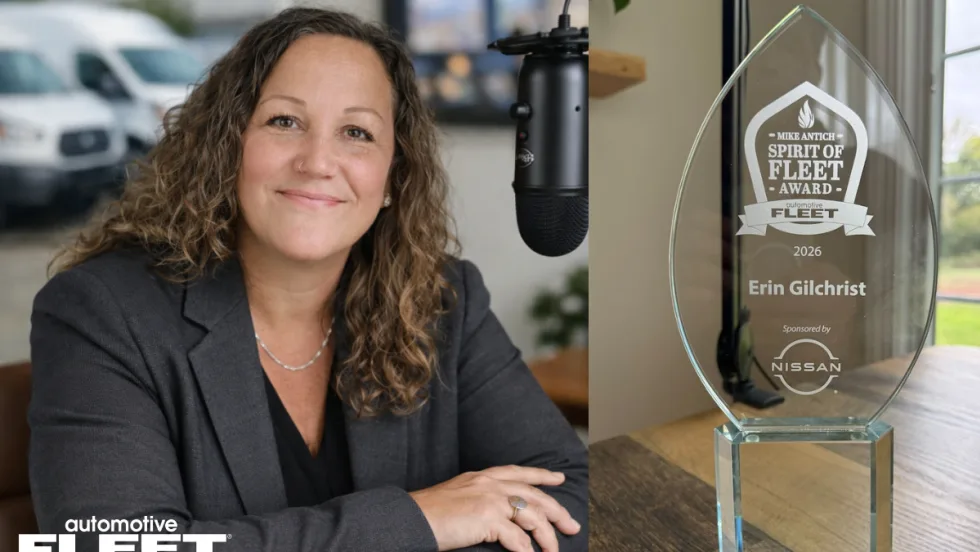
Erin Gilchrist Receives Mike Antich Spirit of Fleet Award
Last week at AFLA in Vegas, Erin Gilchrist received the inaugural, brand-new Spirit of Fleet Award.
Read More →
Dominika Leja Named the 2026 Fleet Manager of the Year
The AstraZeneca associate director of fleet was recognized for her leadership in fleet electrification, cost savings, and operational transformation.
Read More →
Jamie McKay Named the 2026 Fleet Visionary Award Winner
The Aptive Pest Control fleet manager was recognized for her approach to operations, data, lifecycle management, and driver needs.
Read More →
Fleet Forward Conference Introduces One-Day Passes for 2026
New one-day registration gives fleet professionals the flexibility to attend Tuesday, Wednesday, or Thursday, with passes available for $199 through Sept. 18.
Read More →
Vibe Coding: When Fleet Managers Become Software Builders
Five fleet professionals — none with programming skills — discuss how they’re using AI to build fleet solutions in-house and in a fraction of the time.
Read More →
Fleet Forward Conference Tackles Fleet Industry’s Growing Leadership Gap
This session will examine succession planning, knowledge transfer, and the skills the next generation of fleet leaders will need as veteran professionals leave the industry.
Read More →
2026 Fleet Manager of the Year Finalists Announced
Who are the 2026 Fleet Manager of the Year finalists?
Read More →
John Rossant to Deliver Opening Keynote at 2026 Fleet Forward Conference
The CoMotion founder will draw on developments across Europe, China, the Middle East, and other international markets to identify trends that could influence how U.S. fleets plan for the coming decade.
Read More →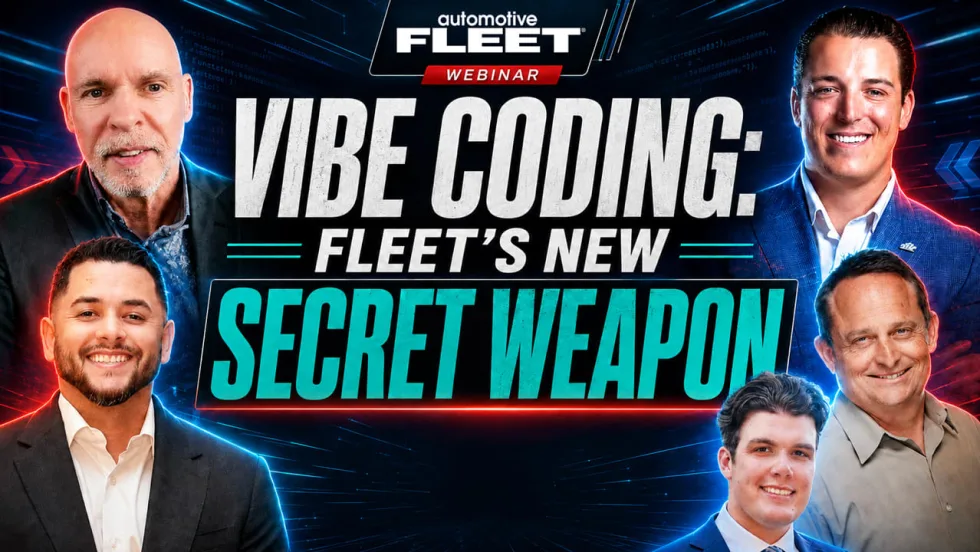
How to Build Custom Fleet Tools With AI and Vibe Coding [Webinar]
A new Automotive Fleet webinar explores how fleet managers are using AI and vibe coding to automate routine work and create simple operational tools without traditional programming skills.
Read More →