





Learn More: How Developments in Tire Technology Streamline Safety
Goodyear Develops 70% Sustainable-Material Tire
The company has made significant progress toward its goal of a 100% sustainable-material tire by 2030.
January 6, 2022
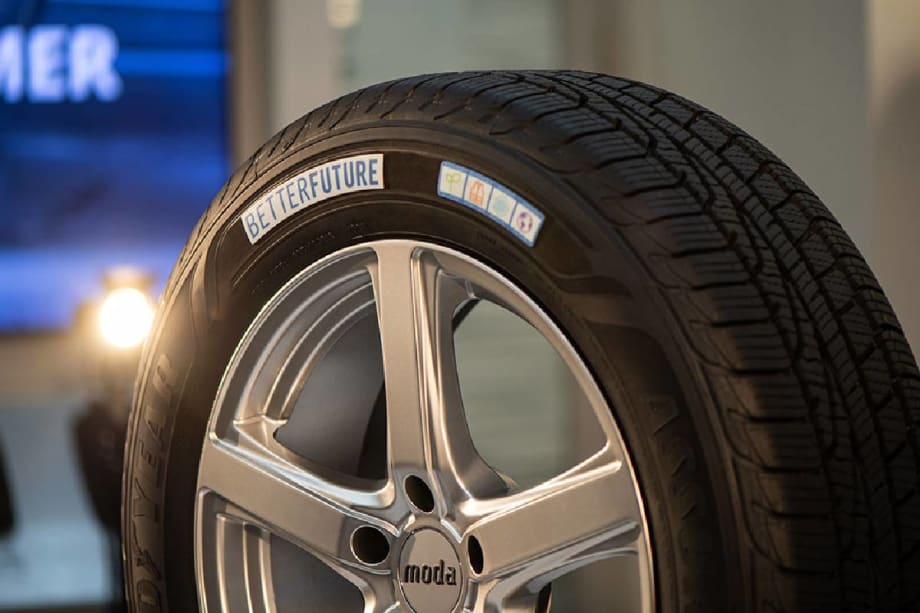
The company has made significant progress toward its goal of a 100% sustainable-material tire by 2030.
Photo: Goodyear
2 min to read
The Goodyear Tire & Rubber Company has announced the release of a demonstration tire with 70% sustainable-material content.
“We set an ambitious goal in 2020 to create a tire made 100% from sustainable materials in 10 years, and our scientists and engineers have made great progress toward that goal,” said Chris Helsel, senior vice president, global operations and chief technology officer.
The 70% sustainable-material tire includes 13 featured ingredients across nine different tire components, including those described below. Company performance indicators have shown the component properties to deliver strong overall tire performance.
Carbon black is included in tires for compound reinforcement and to help increase their life and has traditionally been made by burning various types of petroleum products. Goodyear’s new tire features three different carbon blacks produced from methane, carbon dioxide, and plant-based oil. Initial life cycle assessments demonstrate either reduced carbon emissions compared with current methods of carbon black production or the use of bio-based or waste feedstock sources.
The use of soybean oil in tires helps keep a tire’s rubber compound pliable in changing temperatures. Soybean oil is a bio-based resource that reduces Goodyear’s use of petroleum-based products. While nearly 100% of soy protein is used in food/animal feed applications, a significant surplus of oil is left over and available for use in industrial applications.
Silica is an ingredient often used in tires to help improve grip and reduce fuel consumption. Goodyear’s new tire contains a unique variety of silica produced from rice husk ash, a byproduct of rice processing that is often discarded and put into landfills. A high-quality silica has been produced from this waste ash.
Polyester is recycled from plastic bottles and other plastic waste by reverting the polyester into its base chemicals and reforming them into technical grade polyester feasible for tire cords.
The 70% sustainable-material tire has been produced as a demonstration tire.
Originally posted on Work Truck Online
More Operations

How Fleets Can Recruit and Train Veterans for Technician Roles
Here's how the technician shortage has affected uptime for fleets, and what to do about it.
Read More →
Avis Budget Group Deploys Neology Toll Management Technology Across Major Brands
Neology’s neoFleet platform will manage toll transactions and toll-authority operations for vehicles across Avis, Budget, Payless, Budget Truck and Zipcar.
Read More →
Fleet Personal-Use Charges Edge Higher in 2026
Nearly eight in 10 surveyed fleets allow personal use of company vehicles, while just over half of respondents report charging employees for the privilege.
Read More →
The Future of Fleet + What’s Changing Right Now | AF News Recap
Could developments overseas offer a preview of what’s coming for U.S. fleets? This week, we’re looking at the future of AI, autonomy, and electrification, plus Ford Pro’s new certified pre-owned program, smarter vehicle offboarding, and a new way for fleets to manage toll expenses.
Read More →
How to Handle Vehicle Offboarding
What do fleet managers need to do when a driver leaves?
Read More →
Sponsored•October 1, 2026
Fleet Manager’s Ultimate Playbook: Navigating the New Standard in OEM Connectivity
Rising operating costs, driver safety concerns, and unplanned downtime are putting unprecedented pressure on modern fleets. Discover how fleet managers use embedded OEM connectivity and real-time vehicle data to cut TCO, prevent downtime, and protect drivers without aftermarket telematics hardware.
Read More →
U.S. Bank Adds Verra Mobility Toll Management to Voyager Fleet Platform
The integration allows U.S. Bank Voyager fleet customers to manage toll payments and violations alongside fuel, EV charging and maintenance expenses.
Read More →
ADAS Prevents Crashes. But Repairs Cost More | AF News Recap
ADAS-equipped vehicles may crash less often, but they can cost more when they do. This week, we’re breaking down what that tradeoff means for fleets, plus Subaru’s first Forester Wilderness Hybrid, Nissan’s new e-POWER Rogue, and why Calstart has become Catalyst Mobility.
Read More →
Moventum Fleet Management Names Mark Iorillo Head of Sales
Iorillo brings nearly 20 years of fleet management and sales experience to the role, including previous positions at Element Fleet Management, CEI, Donlen and Ryder.
Read More →
Fleet Has a Talent Pipeline Problem. What Comes Next? | AF News Recap
Where will fleet’s next generation of leaders come from? This week, we’re looking at the industry’s talent pipeline, what certification can add to a fleet career, how to build an award-worthy track record, and the return of Automotive Fleet’s Personal Use Survey.
Read More →