




Looking for even more driver safety tips and resources? Check out the 2021 Fleet Safety Experience agenda to find the sessions to help you! The event runs Sept. 21 to Sept. 23.
4 Essential Safety Training Courses for Inexperienced Drivers
When it comes to new drivers, a lack of professional experience behind the wheel means increased risk to your business. Here's how to train for success.
by John Kuder, Avatar Fleet
September 17, 2021
A good safety training curriculum conveys how crucial it is to understand and minimize risk. Be specific about expectations around defensive driving, safe following distance, and navigating intersections.
Image by Ernesto Eslava from Pixabay
5 min to read
Every driver you hire, you take on risk. You put them behind the wheel for your company and entrust them with your goods, services, vehicles, customers, and reputation. You also entrust them with others' lives. This risk doubles with inexperienced drivers. If you want to reduce your accidents and cost of loss, there are several safety training courses that are necessary for educating your new drivers.
What Risk Do Inexperienced Drivers Pose?
By inexperienced drivers, we mean someone who has little to no professional driving experience. They have no special licensing and likely have never been paid to drive. This means that, even if someone has had their license for years, they could still pose a severe risk to your company.
For example, this study looking at crashes involving truck drivers found that new drivers were more likely to cause accidents regardless of age.
We’ve found similar trends in working with non-CDL vocational fleets. Companies face the most risk from newly-hired drivers, regardless of accident history, age, and MVR data.
There’s a simple solution to this issue: train them.
When you train your new drivers, you reduce your risk of collisions. You lower your cost of loss. Most importantly, you save lives.
Here are four courses that we suggest ALL of your new drivers go through, regardless of vehicle type or industry:
Understanding safety & risk
Core defensive driving principles
Following distance
Navigating intersections
Understanding Safety & Risk
One of your biggest hurdles with new drivers is getting them to understand the risk they face.
Whether you have utility workers fixing downed power lines or pest control specialists spraying chemicals, the most dangerous thing your employees do is drive. And if you require your employees to drive in order to complete essential job functions, you have professional drivers.
The problem is, your drivers don’t see it this way. They see themselves as repairmen, utility workers, sales agents, service providers, or whatever else their primary job functions are. You need a way to educate them on the risks they face while behind the wheel.
We recommend you teach a course on the foundations of safety, risk, and accidents. Your drivers need to understand:
What safety is
What risk is
Where risk comes from
What accidents are and what causes them
How to avoid accidents, reduce risk, and become safer
The goal is to lay the foundation for understanding why driving is dangerous and how they can reduce the risk of accidents, injuries, and personal harm.
Core Principles to Defensive Driving
Especially with new drivers, you need an easy and effective way to communicate the millions of behaviors involved in defensive driving. Defensive driving is a broad category. It’s not enough to say things like “be safe out there” or “watch out for the other guy.” You need specifics.
For example, many companies use LLLC: The Four Principles of Driving Safely.
LLLC stands for Look Ahead, Look Around, Leave Room, and Communicate.
Every single defensive driving behavior fits into one of these four categories. Using this approach, it’s much easier for the student to learn, memorize, and put to use what they learn in their training.
Following Distance
I can almost guarantee that failure to maintain a safe following distance accounts for more of your accidents than any other unsafe behavior.
When drivers follow too closely, they increase their risk of:
Rear-end collisions
Sideswipes
Rollovers by trying to avoid a rear-end collision
Being struck from behind when they suddenly stop
These accidents can all be minor or severe, and they’re common in every industry. The kicker is that they’re so easy to prevent. Your drivers just need to leave more room in front of them.
When your drivers maintain a safe following distance, your company will see an immediate and significant decrease in accidents. You need to educate your drivers on the importance of a safe following distance and how much room to leave for their specific vehicles.
Navigating Intersections
Intersections are the most dangerous environment your drivers face. Pedestrians, cyclists, other vehicles, changing traffic patterns, and much more add up to create a major risk of accidents. That’s why you must educate your drivers on how to safely navigate intersections.
You need to teach your new drivers how to:
Look ahead for risk as they approach intersections
Slow down and be prepared to stop
Look ahead for the status of the light
Look around for risk as they proceed through the intersection
Make safe turns
Intersections account for a large percentage of accidents for any vehicle type. Educate your drivers on safely navigating intersections to reduce your cost of loss and save lives.
Implement an Effective Safety Training Program
Left to their own devices, your drivers will cause accidents. They mean well, but we’ve seen it before. They just don’t know any better.
You need an effective, repeatable process for educating both new and current drivers on essential safe behaviors. We recommend following this model for best results:
Self-directed training online at point of hire covering these four courses and more
In-person safety training and orientation within their first week
Monthly safety meetings throughout the year for all drivers
When you follow this procedure, all of your drivers will work to prevent accidents. You will save yourself time and headaches dealing with accidents. Your company will save money with greatly reduced cost of loss. Most importantly, your company will be saving lives.
About the Author: John Kuder is a senior instructional designer at Avatar Fleet, the creators of the non-CDL safety training course, The Fleet Safety Course.
Topics:Safety
Subscribe to Our Newsletter
More Safety

Sponsored•October 1, 2026
Fleet Manager’s Ultimate Playbook: Navigating the New Standard in OEM Connectivity
Rising operating costs, driver safety concerns, and unplanned downtime are putting unprecedented pressure on modern fleets. Discover how fleet managers use embedded OEM connectivity and real-time vehicle data to cut TCO, prevent downtime, and protect drivers without aftermarket telematics hardware.
Read More →
From Driver Well-Being to EV Charging | AF News Recap
Mental health belongs in the fleet safety conversation. This week, we’re looking at five ways fleets can support employee well-being before a crisis, plus Holman’s expansion in Mexico, new one-day Fleet Forward passes, and why EV charging demand is outpacing infrastructure growth.
Read More →
Nexar-Nauto Merger Aims to Give Fleets Better Safety Intelligence Through Larger Driving Dataset
Stefan Heck tells Automotive Fleet that combining more than 10 billion miles of driving history with Nexar's AI models will give fleets deeper insights into driver risk and roadway conditions than either company could provide independently.
Read More →
Don't Wait for a Crisis: 5 Ways to Build Mental Health Into Your Fleet Safety Program
For Suicide Prevention Month, fleet and safety leaders have an opportunity to put mental health where it belongs: at the center of workplace safety.
Read More →
How Camera Data Can Strengthen a Fleet’s Insurance Renewal
Insights from a commercial insurance carrier and a broker show how fleets can turn video telematic data, driver coaching, and improved claims results into a stronger case at insurance renewal.
Read More →
The Safest Fleets Aren’t the Ones with the Most Technology
You’ve made the telematics investment. Here’s how to capture the other half of its value and build the safest fleet on the road.
Read More →
Sponsored•August 7, 2026
Hidden in Plain Sight: Fleet Compliance Risks
Fleet compliance isn't just about having policies — it's about consistently enforcing them. This practical guide reveals six hidden compliance risks common in public sector and shared fleet operations and outlines proven strategies to improve visibility, accountability, and audit readiness
Read More →
NETS Sets 2026 Fleet Safety Benchmark Conference for Indianapolis
The Sept. 15–17 program will feature fleet benchmarking data, case studies, emerging technologies, and implementation strategies while running alongside the NSC Safety Congress & Expo.
Read More →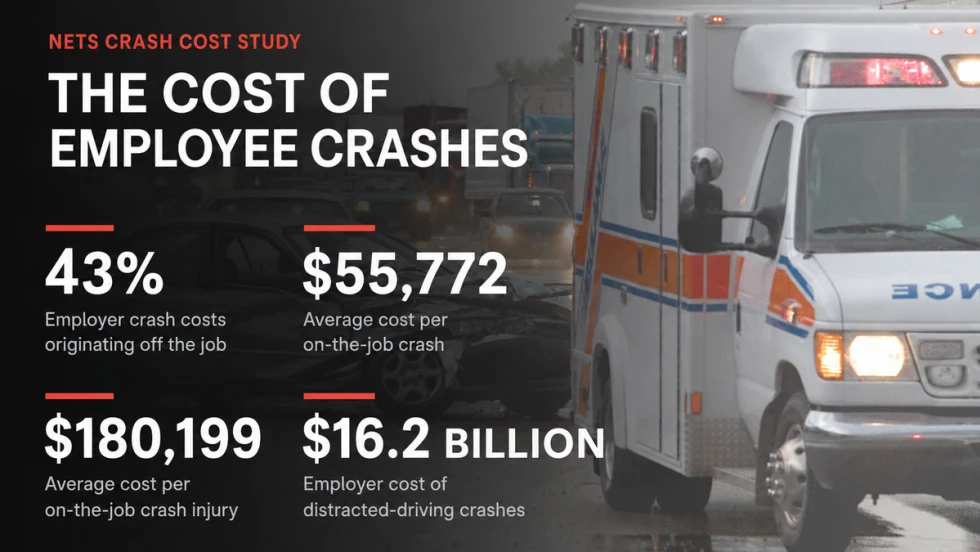
Off-the-Job Crashes Account for 43% of Employers’ $61.7 Billion Crash Burden
NETS quantifies costs dispersed across fleet, risk, HR, and other departments while providing new per-crash benchmarks for employers.
Read More →
Ram Recalls More Than 1.27 Million 1500 Pickups for Seat Belt Anchor Issue
The recall affects certain 2019-2026 Ram 1500 pickups that may have improperly attached second-row seat belt buckle anchors.
Read More →