




How Often Should You Conduct Safety Training?
Realizing the benefits of accident reduction will only occur with regular reinforcement of safety best practices. Here are tips to communicate your safety message, from daily emails and monthly meetings to meaningful special events.

Once a year, pull out the orange cones, bring everyone together, and conduct a skills course. Don’t make it just another hum-drum day at work, though. Make it a fun, special event.
Image via Pixabay/Rudy and Peter Skitterians.
You can guarantee accident reduction by conducting safety training more frequently.
If you want to get in shape and stay in shape, it’s not enough to spend a week lifting weights and running. You need to keep-up with an exercise routine to hit your goals, maintain your desired level of fitness, and avoid regression.
It works the same way with non-CDL defensive driving training.
When you first train a new hire, they’ll take the safety messages to heart, but without any follow-up training, they’ll be sure to slip into unsafe habits. That puts you, them, and everyone on the road with them at risk. You need to make safety training a regular part of driving for your company.
But what’s the best way to conduct on-going safety training? And how often should you do it?
If you want to protect your people and reduce accidents, safety training must be a continuous process. It’s not just an onboarding event.
An effective safety training program:
Uses monthly safety meetings to reduce your biggest loss-leaders
Delivers important safety messages on a daily basis
Features larger training events throughout the year
Monthly Safety Meetings Done Right
Monthly safety meetings are a set time where your drivers gather to discuss pressing safety topics.
These meetings and their topics are set in advance, mandatory, and must be treated as extremely important by everyone in your company. They are non-negotiables for your drivers.
The meetings focus on a singular topic that is a loss-leading indicator for your company. For example, if your company experiences many rear-end collisions, you would cover maintaining a safe following distance.
For best results, you should focus on the topic the entire month — not just the meeting. Follow-up with your drivers throughout the month. Ask them how they have been applying what they learned in the meeting. Ask them questions to test their understanding of the topic.
Then, use media such as posters, safety pledges, and short videos throughout the month to keep your drivers engaged on the topic. Most learning management systems make this easy — they have the ability to push out two- to three-minute videos to your entire company.
Communicate Safety Messages Daily
Paired with your monthly safety meetings, you should communicate safety messages on a daily basis. Afterall, safe workplace behaviors and driving practices don’t begin and end with a safety meeting. They should be ingrained in every moment spent at work.
Here are some tried and true ways to make safety a part of everyday life at your company:
Start each and every day with a safety briefing. Gather your employees and spend five minutes talking about a pertinent safety topic.
Send out daily safety messages over the dispatch radio to all of your drivers.
Spend time every day chatting with some of your drivers one-on-one about safe driving practices.
Send out daily safety tips via email to all of your drivers. Include a quiz or survey to make sure that folks actually read them.
Hang physical safety messages throughout your company. These could be flyers, posters, pictures, etc. However, you don’t want to leave them up for too long. They become wallpaper afterwhile and people will walk right by them without a second thought. Swap them out for best results.
For the most clear and effective safety messaging, you should pair these strategies with the topic covered in your monthly safety meetings. Focus your conversations, physical media, and daily safety tips on what your drivers learn in your safety meeting.
Training as a Special Event
With recurring training such as monthly safety meetings and daily safety messages set, it’s time to plan some larger events.
Throughout the year, we recommend scheduling two to three special training events to focus on larger concepts. Hosting these special events will accomplish several things:
Your drivers will see the focus you put on training and consider it more important themselves.
Your drivers will appreciate the resources put into their safety, making them want to stay with your company.
Your accident rates will plummet by spending time tackling complex safety issues.
Here are two ideas to get you started:
Annual Driving Skills Test
Once a year, pull out the orange cones, bring everyone together, and conduct a skills course. Don’t make it just another hum-drum day at work, though. Make it a fun, special event.
Host competitions with rewards to see who can successfully complete the most challenges. Set-up tables for a picnic and order food for everyone. Give people a chance to talk, catch-up, and interact in person. Conducting it this way makes it feel like a reward rather than just training.
Best of all, while your employees connect and improve your company culture, they’ll be learning in the process.
Manager Ride Alongs
You should conduct manager ride alongs to ensure drivers put their training to use.
Twice a year, each driver should have a supervisor spend a few hours with them in the vehicle. This one-on-one coaching session is a great way for drivers to receive specific tips on how they can improve their driving. It’s also a chance for them to engage with their manager, improve their relationship, and talk to their manager about any challenges they have at work.
Your drivers will appreciate the time and attention while improving their driving habits.
Year-Round Training
Just like you can’t stay in shape for a year by working out for a week, you can’t expect your accident numbers to go down if you only train your employees upon hire.
Host monthly safety meetings to reduce your biggest loss leaders. Make safety training a part of everyday work life with daily safety tips and briefings to start the day. Host larger training events a few times a year to dig into complex safety issues.
If you implement these strategies together, your accident rates will drop, your people will get home safe every day, and your bottom line will drastically improve.
About the Author: John Kuder is a senior instructional designer at Avatar Fleet, the creators of the non-CDL safety training course, The Fleet Safety Course.
Originally posted on Work Truck Online
More Safety

Fleet Manager’s Ultimate Playbook: Navigating the New Standard in OEM Connectivity
Rising operating costs, driver safety concerns, and unplanned downtime are putting unprecedented pressure on modern fleets. Discover how fleet managers use embedded OEM connectivity and real-time vehicle data to cut TCO, prevent downtime, and protect drivers without aftermarket telematics hardware.
Read More →
From Driver Well-Being to EV Charging | AF News Recap
Mental health belongs in the fleet safety conversation. This week, we’re looking at five ways fleets can support employee well-being before a crisis, plus Holman’s expansion in Mexico, new one-day Fleet Forward passes, and why EV charging demand is outpacing infrastructure growth.
Read More →
Nexar-Nauto Merger Aims to Give Fleets Better Safety Intelligence Through Larger Driving Dataset
Stefan Heck tells Automotive Fleet that combining more than 10 billion miles of driving history with Nexar's AI models will give fleets deeper insights into driver risk and roadway conditions than either company could provide independently.
Read More →
Don't Wait for a Crisis: 5 Ways to Build Mental Health Into Your Fleet Safety Program
For Suicide Prevention Month, fleet and safety leaders have an opportunity to put mental health where it belongs: at the center of workplace safety.
Read More →
How Camera Data Can Strengthen a Fleet’s Insurance Renewal
Insights from a commercial insurance carrier and a broker show how fleets can turn video telematic data, driver coaching, and improved claims results into a stronger case at insurance renewal.
Read More →
The Safest Fleets Aren’t the Ones with the Most Technology
You’ve made the telematics investment. Here’s how to capture the other half of its value and build the safest fleet on the road.
Read More →
Hidden in Plain Sight: Fleet Compliance Risks
Fleet compliance isn't just about having policies — it's about consistently enforcing them. This practical guide reveals six hidden compliance risks common in public sector and shared fleet operations and outlines proven strategies to improve visibility, accountability, and audit readiness
Read More →
NETS Sets 2026 Fleet Safety Benchmark Conference for Indianapolis
The Sept. 15–17 program will feature fleet benchmarking data, case studies, emerging technologies, and implementation strategies while running alongside the NSC Safety Congress & Expo.
Read More →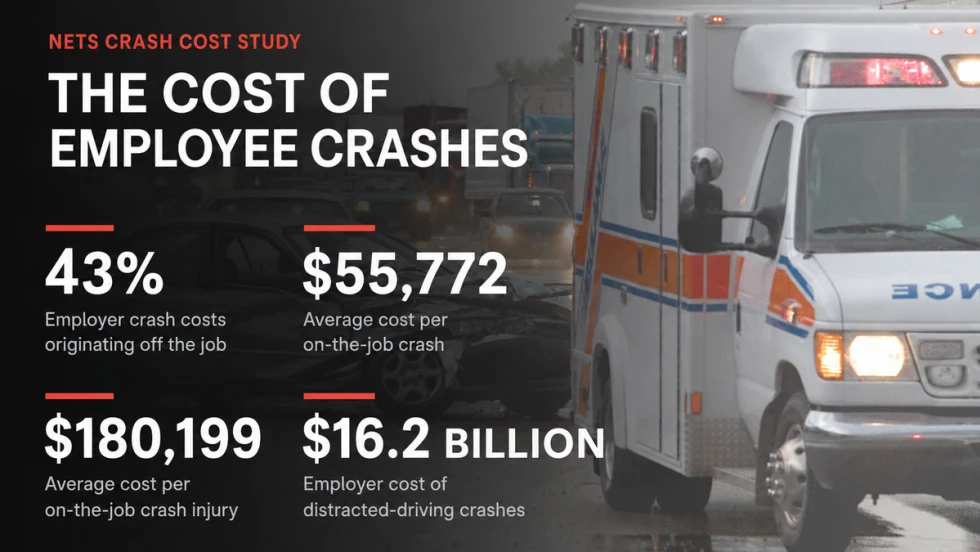
Off-the-Job Crashes Account for 43% of Employers’ $61.7 Billion Crash Burden
NETS quantifies costs dispersed across fleet, risk, HR, and other departments while providing new per-crash benchmarks for employers.
Read More →
Ram Recalls More Than 1.27 Million 1500 Pickups for Seat Belt Anchor Issue
The recall affects certain 2019-2026 Ram 1500 pickups that may have improperly attached second-row seat belt buckle anchors.
Read More →