




AYRO Launches Electric Powered Vaccination Vehicle
Element Fleet Management will offer sales, financing solutions and vehicle management services throughout the vehicle lifecycle to EVV fleet operators.

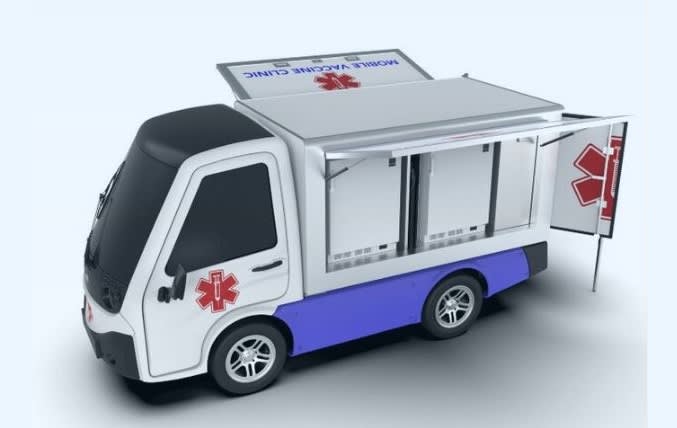
AYRO, Inc. announced the launch of the Electric Vaccine Vehicle (EVV), which is designed to mobilize a flexible, safe and efficient means of delivering vaccines and testing to millions of people in 2021 and beyond, according to the company.
With the announcement, AYRO, which is a designer and manufacturer of light-duty, short-haul, and last-mile delivery electric vehicles (EVs), said Element Fleet Management will offer sales, financing solutions and vehicle management services throughout the vehicle lifecycle to EVV fleet operators.
Meanwhile, Club Car will provide sales and service support for the vehicles to Element and its clients. Each company will leverage its national footprint and expertise to facilitate the deployment of EVVs and meet urgent demand.
“Element is pleased to bring our broad network, scalable operating platform and industry-leading strategic consulting services to support our existing and prospective clients interested in the EVV,” said David Madrigal, executive vice president and CCO for Element. “We look forward to being part of the Club Car, AYRO and Gallery teams helping to bring an innovative solution to vaccine distribution.”
The EVV is a self-contained, all-electric transportation solution that has been optimized to store, transport, and deliver testing and vaccines to a large population, according to the company.
It is designed to make safe and rapid COVID-19 testing and vaccine distribution possible by reaching patients in need and managing demand at aggregation centers. It can traverse tight areas and help reduce wait times at central distribution locations by meeting patients at their place in line, the company said. When configured as a street-legal vehicle it can serve populations unable to get to vaccination sites because they don’t have access to transportation —including millions of high-risk older adults and low-income households.
The EVV is outfitted with an ultra-low temperature freezer and refrigeration units with Bluetooth-enabled data loggers and temperature monitoring devices to virtually track and log live inside readings and pharmaceutical conditions, which follows CDC guidelines to safely store and distribute vaccines.
It also has a 50-mile driving range plus approximately 6-8 hours of equipment operation on a single charge (depending on EVV configuration and driving conditions), or can provide all-day operations if plugged in, the company said. Each vehicle can be charged and/or operated using a standard 110V/20amp outlet, so no EV charging infrastructure is required.
Additionally, each vehicle as a vaccine station takes up less than 100 square feet, allowing for easy group deployments. Vaccine administration can also happen while the patient is still inside his or her own vehicle or directly outside of the EVV for a rapid, drive-through experience.
Select EVV configurations can be registered and licensed to operate at 25 MPH on city streets with posted speeds up to 35 MPH, the company said. The low-speed EV can also maneuver through car-free zones bringing essential services directly to patients that need them.
More Operations

Personal-Use Charges Rise as Vehicle Values Fall | AF News Recap
Personal-use charges are climbing, wholesale used-vehicle values are declining, and commercial fleet sales growth is slowing. This week, we're breaking down the latest fleet data, plus how Element Fleet Management is helping Waymo prepare for its first Canadian robotaxi market.
Read More →
Here's When You Should Make an Exception to Fleet Policy
Fleet policies are designed to create consistency, but not every driver or situation fits neatly within standard rules.
Read More →
AI-Native or AI-Acquired: What Should Fleet Managers Look for in an AI Platform?
Six questions can help fleet managers look beyond AI marketing claims to evaluate integration, data access, and real-world operational performance.
Read More →

A buyer's guide to fleet management software in 2027
Buying fleet management software in 2027 means looking beyond features and price. As fleet operations, technology and expectations evolve, this guide explores what today’s fleet professionals should consider when choosing a system that can deliver value now and adapt to what comes next.
Read More →
What Will Shape the Next Era of Fleet Management?
EVs, AI, and autonomous vehicles are reshaping fleet management. Discover what’s ahead—and how fleet leaders can prepare for the next era.
Read More →
How Fleets Can Recruit and Train Veterans for Technician Roles
Here's how the technician shortage has affected uptime for fleets, and what to do about it.
Read More →
Avis Budget Group Deploys Neology Toll Management Technology Across Major Brands
Neology’s neoFleet platform will manage toll transactions and toll-authority operations for vehicles across Avis, Budget, Payless, Budget Truck and Zipcar.
Read More →
Fleet Personal-Use Charges Edge Higher in 2026
Nearly eight in 10 surveyed fleets allow personal use of company vehicles, while just over half of respondents report charging employees for the privilege.
Read More →
The Future of Fleet + What’s Changing Right Now | AF News Recap
Could developments overseas offer a preview of what’s coming for U.S. fleets? This week, we’re looking at the future of AI, autonomy, and electrification, plus Ford Pro’s new certified pre-owned program, smarter vehicle offboarding, and a new way for fleets to manage toll expenses.
Read More →
How to Handle Vehicle Offboarding
What do fleet managers need to do when a driver leaves?
Read More →