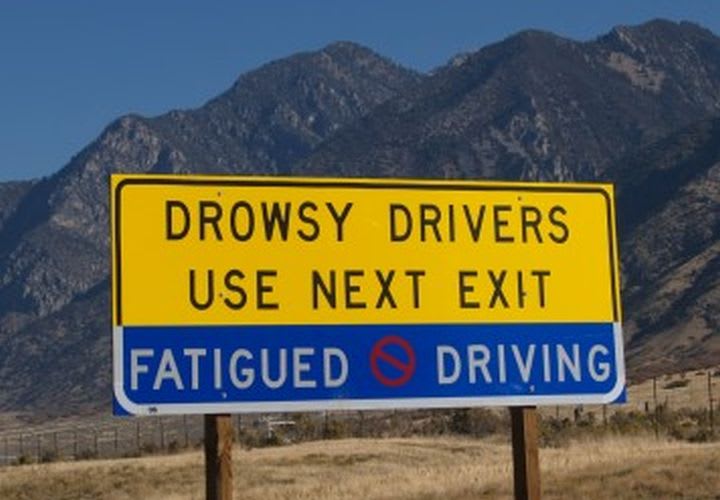
In today's 24/7 world, foregoing an hour or two of sleep every night isn't that uncommon. For some, going without a full eight hours of sleep is worn as a badge of honor. But, the consequences can be deadly, particularly for fleet drivers, according to Matt Uhles, R.PSGT, director, technology and operations for the Clayton Sleep Institute (CSI) Clinics and co-director of the CSI Research Center.
"You're more likely to die from drowsy driving than from texting while driving, distracted driving, or drunk driving combined," he said.
Ad Loading...
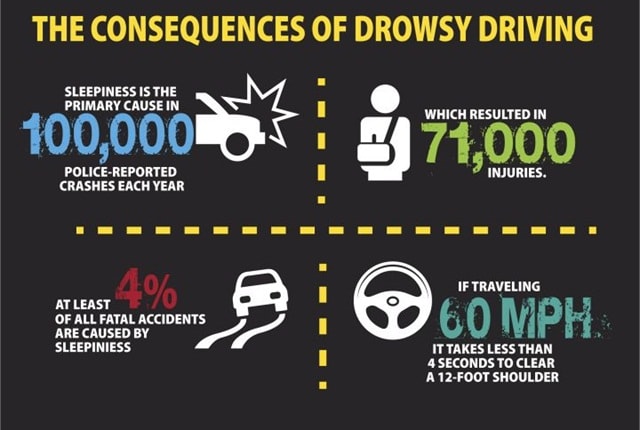
Underscoring his point, Uhles noted that one in two people involved in a drowsy driving accident will either be seriously injured or killed. In total, at least 4 percent of all fatal traffic accidents are attributable to sleepiness.
The problem is so endemic, St. Louis-based Uhles was recently told by investigators with the State of Missouri Crash Team, which investigates every fatality crash, that it has stopped investigating single-vehicle fatality accidents — an indicator of a drowsy driving — because there are "too many of them."
There are a number of reasons why drivers might not be getting enough sleep, ranging from simply foregoing sleep to having a sleep disorder, such as sleep apnea.
"We also have a biological clock that dictates when we're more likely to be alert and more likely to be sleeping," Uhles noted. "Not getting enough sleep and time of day will affect sleepiness. The worst time to drive is between 4 a.m. and 6 a.m. and between 2 p.m. and 4 p.m."
There are clear signs and symptoms associated with drowsy driving, which can include drifting from the lane, swerving or tailgating, yawning, and head snaps.
Ad Loading...
Uhles said there also are more subtle signs such as "zoning out." "What's going on physiologically when we zone out is that the part of our brain that is controlling our attention and focus has fallen asleep and the rest of the cortex and brain is going to catch up and the driver is going to have an accident," he said.
Uhles noted that, while there is no excusing distracted driving (e.g., texting and driving) or drunk driving, in some cases the distracted or drunk driver has an advantage over the drowsy driver, because these drivers still have the opportunity to react.
"When you're asleep, there is no chance to respond," Uhles said.
Illustration by Armie Bautista.
Educating drivers about the benefit of a good night's sleep is the No. 1 method fleet managers can use to combat drowsy driving.
"There's a general lack of awareness of what sleep does for us and what happens when we don't get enough sleep," Uhles said. "If you're driving and you're drowsy, it's only a matter of time before you'll be running off the shoulder or drifting out of your lane."
Ad Loading...
The National Sleep Foundation recommends that for every 100 miles or two hours of driving, the driver should take a short break.
If a driver does find that he or she is driving drowsy there are countermeasures that can be taken, Uhles said.
If driving with a partner, take frequent breaks or take turns or switch places; however, if the driver is alone, then he or she should stop driving immediately and take a nap. Drinking a cup of coffee can work, but it isn't an instant fix.
"Caffeine does work, but the problem is you have to drink lots of it, 200 mg, which is equivalent to two 8-ounce cups of coffee or four to six sodas, and it takes about 20 to 30 minutes to take effect," Uhles said. "One of the tips we recommend is that if you're driving and can't have another person drive, pull over, get a couple cups of coffee, take a nap for 20 to 30 minutes. This should be enough to restore you and get you to your destination safely. If you're still drowsy, stop driving and repeat."
However, the best medicine is still getting a good night's sleep.
Fleet drivers face constant visual, cognitive, and environmental interruptions the moment they hit the road. From roadside chaos to mental fatigue and digital overload, today’s biggest driving risks often come from outside the vehicle itself.
FLASH Weather AI has launched a first-of-its-kind hail prediction model capable of forecasting hail size and arrival time at 1-kilometer resolution up to 55 minutes ahead, giving fleets and insurers critical time to prepare for severe storms.
As litigation risk rises, vehicles are increasingly targeted. This Coca-Cola bottler shares how it’s reducing exposure through driver training, technology, and a proactive risk management approach.
From identity management to third-party certifications, the right technology partner should make security easier to manage. Here are the three building blocks that fleet managers need to stay in control as connected systems scale.
Distracted driving remains one of the most persistent risks in fleet operations. New approaches focus on removing mobile device use entirely while adding real-time safety support.
As distraction risks evolve, fleets are turning to smarter, more connected technologies to better understand what’s happening behind the wheel. Part 2 explores how these tools are helping identify risky behaviors and improve visibility across operations.
Distracted driving is often measured by what we can see—phones in hand, eyes off the road. But what about the distractions we can’t? A recent incident raises a bigger question about awareness, attention, and why subtle risks so often go unnoticed.