




Miss This? How to Prepare Your EV for Winter
Winter Emergency Kit: 5 Essential Tips to Keep You Safe this Winter
When winter emergencies strike, it's helpful to be prepared.
by Michael Miller
August 27, 2025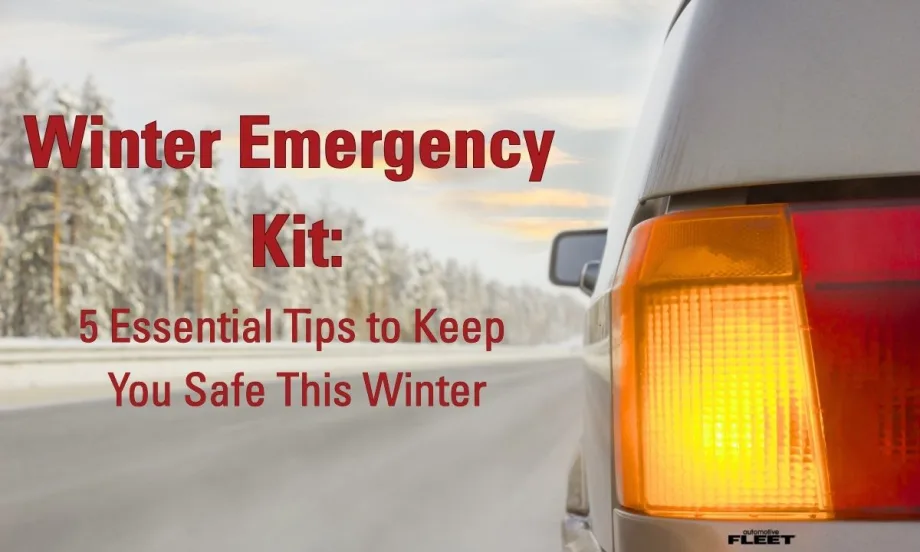
Don’t get caught off guard this winter. A well-prepared emergency kit, complete with essentials like blankets, food, and safety gear, can help keep you safe when the unexpected happens on the road.
Photo: Automotive Fleet
4 min to read
Delays and breakdowns on the highway can be difficult in any weather, but in winter they can be life-threatening. Reduced visibility in bad conditions means you’re more likely to encounter a collision, causing damage and delays or trapping you in your vehicle for hours, even overnight. And when you’re stuck in the cold, frostbite and hypothermia can set in quickly.
According to the US Department of Transportation, 24% of weather-related vehicle crashes occur on snowy, slushy, or icy pavement. Adding some key items to your regular emergency kit will help keep you safe and warm when your route takes you through cold climates.
Remember these 5 tips to remember what to pack:
1. Keep Warm
Bring a thermal blanket to stay warm in your vehicle and an insulated sleeping bag in case you’re delayed overnight. Wear a waterproof coat and boots, and pack your emergency kit with a hat, scarf, gloves, warm socks, and extras in case they get wet. Wet clothing can lead to frostbite or hypothermia. Hand warmers are small and easy to pack and will protect your hands from the cold when you’re working outside. A candle in a tin can, and matches can be used for both heat and light.
2. Tires Need Grip
Though you can’t avoid ice and snow in winter, you can make it easier to drive in them. Carry a set of snow socks in your emergency kit for when the roads get icy and slick. Socks are easier to install than snow chains because they slip over your tires and are also much lighter in your vehicle.
Kitty litter, a bag of salt, or even a simple shovel can help get your vehicle out of packed snow.
Pro tip: When parking for the night in snowy conditions, the heat from your tires can melt the snow enough to create ice, making getting out in the morning very difficult. Instead of going straight to sleep after you turn the truck off, wait 30 minutes, and then roll your vehicle forward about 2 feet. Put some ice melter or kitty litter in the tracks of your drive tires, and then roll it back. In the morning, you’ll be good to go.
3. Consider the Equipment
Take steps to protect your vehicle from the elements to ensure it operates properly in the cold and stays clean and dry, no matter how harsh the conditions. Carry a battery blanket in your emergency kit to prevent cold weather from draining your battery and causing stalling. If your vehicle does stall, booster cables will help you get back on track.
Bring extra washer fluid to clear off the dirty road spray that often coats your windshield in winter. To keep your fuel from gelling, use anti-gel additives, which drop the freezing point of diesel fuel so that it is less likely to freeze in cold temperatures. Check with your carrier about the best additives for your vehicle.
4. Clear the Snow
Keeping your vehicle clear of snow is not only a best practice for safety, but is required in many states. Carry a lightweight roof rake to remove snow from the roof of your vehicle. To make sure you can see and be seen on the road, pack your emergency kit with paper towels to clear snow off your mirrors, glass, and lights, and an ice scraper to see clearly on frostier days.
5. Have Extra
Because you may experience both more and longer delays in winter, stock up on extras of items you already have, but that you may need more of if you get stuck or stranded. These might include:
Extra snacks
Extra water
Extra medication
Extra road flares
Extra flashlight and batteries
Extra phone charger/battery pack
Don’t let the challenges of winter driving keep you off the road in bad weather. With a bit of planning and a well-stocked emergency kit, you can stay safe in the cold and keep your vehicle running smoothly even in the harshest conditions.
Editor’s note: This article was originally published in October 2018 and has been updated for continued relevance.
More Safety

Sponsored•October 1, 2026
Fleet Manager’s Ultimate Playbook: Navigating the New Standard in OEM Connectivity
Rising operating costs, driver safety concerns, and unplanned downtime are putting unprecedented pressure on modern fleets. Discover how fleet managers use embedded OEM connectivity and real-time vehicle data to cut TCO, prevent downtime, and protect drivers without aftermarket telematics hardware.
Read More →
From Driver Well-Being to EV Charging | AF News Recap
Mental health belongs in the fleet safety conversation. This week, we’re looking at five ways fleets can support employee well-being before a crisis, plus Holman’s expansion in Mexico, new one-day Fleet Forward passes, and why EV charging demand is outpacing infrastructure growth.
Read More →
Nexar-Nauto Merger Aims to Give Fleets Better Safety Intelligence Through Larger Driving Dataset
Stefan Heck tells Automotive Fleet that combining more than 10 billion miles of driving history with Nexar's AI models will give fleets deeper insights into driver risk and roadway conditions than either company could provide independently.
Read More →
Don't Wait for a Crisis: 5 Ways to Build Mental Health Into Your Fleet Safety Program
For Suicide Prevention Month, fleet and safety leaders have an opportunity to put mental health where it belongs: at the center of workplace safety.
Read More →
How Camera Data Can Strengthen a Fleet’s Insurance Renewal
Insights from a commercial insurance carrier and a broker show how fleets can turn video telematic data, driver coaching, and improved claims results into a stronger case at insurance renewal.
Read More →
The Safest Fleets Aren’t the Ones with the Most Technology
You’ve made the telematics investment. Here’s how to capture the other half of its value and build the safest fleet on the road.
Read More →
Sponsored•August 7, 2026
Hidden in Plain Sight: Fleet Compliance Risks
Fleet compliance isn't just about having policies — it's about consistently enforcing them. This practical guide reveals six hidden compliance risks common in public sector and shared fleet operations and outlines proven strategies to improve visibility, accountability, and audit readiness
Read More →
NETS Sets 2026 Fleet Safety Benchmark Conference for Indianapolis
The Sept. 15–17 program will feature fleet benchmarking data, case studies, emerging technologies, and implementation strategies while running alongside the NSC Safety Congress & Expo.
Read More →
Off-the-Job Crashes Account for 43% of Employers’ $61.7 Billion Crash Burden
NETS quantifies costs dispersed across fleet, risk, HR, and other departments while providing new per-crash benchmarks for employers.
Read More →
Ram Recalls More Than 1.27 Million 1500 Pickups for Seat Belt Anchor Issue
The recall affects certain 2019-2026 Ram 1500 pickups that may have improperly attached second-row seat belt buckle anchors.
Read More →