




Related: Uber, Waymo Settle Autonomous Vehicle Technology Lawsuit
Waymo Begins Autonomous Truck Test Program in Atlanta
Google's autonomous technology division said in a recent blog post it will begin testing self-driving trucks hauling freight to Google data centers in and around Atlanta.
by Staff
March 9, 2018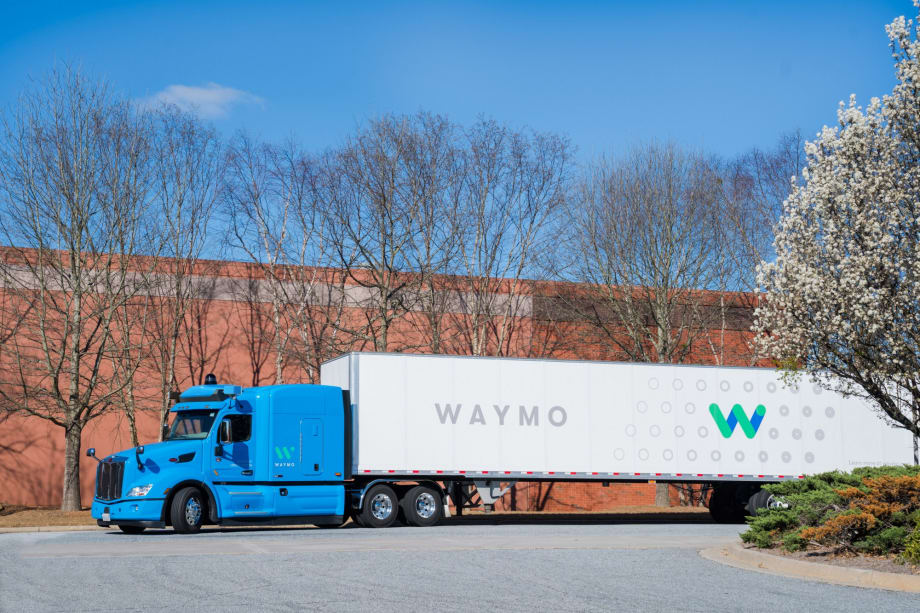
Fresh off runs in Arizona and California, Waymo says it is ready to begin autonomous truck tests in Atlanta's heavy urban traffic conditions. Photo: Waymo
2 min to read
Fresh off runs in Arizona and California, Waymo says it is ready to begin autonomous truck tests in Atlanta's heavy urban traffic conditions. Photo: Waymo
Autonomous vehicle developer Waymo announced it will begin a pilot program in Atlanta, Georgia, testing self-driving trucks carrying freight bound for Google data centers. According to the company, Atlanta is one of the biggest logistics hubs in the country, making it a natural home for Google’s logistical operations and the perfect environment for the next phase of testing Waymo’s self-driving trucks.
Waymo is Google’s autonomous vehicle controls division.
This pilot, in partnership with Google’s logistics team, will allow Waymo to further develop its autonomous truck technology and integrate it into the operations of shippers and carriers, as well as the network of factories, distribution centers, ports and terminals those carriers serve.
The company says the pilot program will be conducted with highly trained drivers in the truck cabs to monitor systems and take control if needed.
Waymo notes it has been conducting road tests of self-driving trucks in California and Arizona, and says its vehicle control software is now “learning” to drive big rigs in much the same way a human driver would after years of driving passenger cars. The company notes that while the overall principles are the same, things such as braking, turning, and blind spots are different with a fully loaded truck and trailer.
In a recent blog post outlining its new pilot program attributed to the Waymo Team, the company noted that, “Waymo’s self-driving technology is not only experienced, but adaptable. Our self-driving trucks use the same suite of custom-built sensors that power our self-driving minivan. They benefit from the same advanced self-driving software that has enabled our cars to go fully driverless in Arizona. And our engineers and AI experts are leveraging the same 5 million miles we’ve already self-driven on public roads, plus the 5 billion miles we’ve driven in simulation. In short, our near-decade of experience with passenger vehicles has given us a head start in trucking.”
Waymo has not yet released details on the length of the routes the trucks will take or what types of cargo will be hauled.
More Safety

What’s Next for Fleet? Safety, AI & Industry Recognition | AF News Recap
Could your company's culture be encouraging distracted driving? This week, we're exploring how workplace expectations affect driver safety, what AI, EVs, and autonomous vehicles could mean for the future of fleet management, and how fleet professionals can strengthen their award nominations.
Read More →
Does Your Fleet's Culture Encourage Distracted Driving?
What happens when the people responsible for enforcing safety rules are the ones setting the wrong example? The answer may reveal why some of the biggest risks to fleet drivers have little to do with what's written in the employee handbook.
Read More →
Sponsored•October 1, 2026
Fleet Manager’s Ultimate Playbook: Navigating the New Standard in OEM Connectivity
Rising operating costs, driver safety concerns, and unplanned downtime are putting unprecedented pressure on modern fleets. Discover how fleet managers use embedded OEM connectivity and real-time vehicle data to cut TCO, prevent downtime, and protect drivers without aftermarket telematics hardware.
Read More →
From Driver Well-Being to EV Charging | AF News Recap
Mental health belongs in the fleet safety conversation. This week, we’re looking at five ways fleets can support employee well-being before a crisis, plus Holman’s expansion in Mexico, new one-day Fleet Forward passes, and why EV charging demand is outpacing infrastructure growth.
Read More →
Nexar-Nauto Merger Aims to Give Fleets Better Safety Intelligence Through Larger Driving Dataset
Stefan Heck tells Automotive Fleet that combining more than 10 billion miles of driving history with Nexar's AI models will give fleets deeper insights into driver risk and roadway conditions than either company could provide independently.
Read More →
Don't Wait for a Crisis: 5 Ways to Build Mental Health Into Your Fleet Safety Program
For Suicide Prevention Month, fleet and safety leaders have an opportunity to put mental health where it belongs: at the center of workplace safety.
Read More →
How Camera Data Can Strengthen a Fleet’s Insurance Renewal
Insights from a commercial insurance carrier and a broker show how fleets can turn video telematic data, driver coaching, and improved claims results into a stronger case at insurance renewal.
Read More →
The Safest Fleets Aren’t the Ones with the Most Technology
You’ve made the telematics investment. Here’s how to capture the other half of its value and build the safest fleet on the road.
Read More →
Sponsored•August 7, 2026
Hidden in Plain Sight: Fleet Compliance Risks
Fleet compliance isn't just about having policies — it's about consistently enforcing them. This practical guide reveals six hidden compliance risks common in public sector and shared fleet operations and outlines proven strategies to improve visibility, accountability, and audit readiness
Read More →
NETS Sets 2026 Fleet Safety Benchmark Conference for Indianapolis
The Sept. 15–17 program will feature fleet benchmarking data, case studies, emerging technologies, and implementation strategies while running alongside the NSC Safety Congress & Expo.
Read More →