




Wash. Gets Stricter Distracted Driving Law
The new state law, which takes effect July 23, prohibits driver use of handheld electronic devices.

Washington State’s new anti-distracted driving law, which bans the use of handheld electronic devices while driving on a public highway, goes into effect on July 23 — much sooner than legislators had originally expected.
When Washington Gov. Jay Inslee signed the bill, but he vetoed a legislative compromise that postponed the bill’s enforcement until Jan. 1, 2019. “Public safety is better served by implementing this bill this year,” Inslee stated in his partial-veto message. He signed the legislation during a ceremony in Tacoma on May 16.
Washington already has a driver texting ban, but the new law is broader. For example, a driver won’t be permitted to shoot photos or video using a cell phone — even while waiting at a stoplight — or to hold a device to watch a video.
A first violation carries a base penalty of $48 and a total penalty of $136. Second and subsequent violations double the base penalty to $96, resulting in a total fine of about $235.
The law applies to a range of portable electronic devices, including tablets and gaming systems. Drivers, however, will still be able to use a smartphone secured in a dashboard-mounted cradle or use an in-vehicle system for hands-free navigation and phone calls. “Minimal use of a finger” is allowed to activate, deactivate or initiate a device function.
The law also doesn’t apply to the use of two-way radio, citizen band radio or amateur radio equipment.
Violations of the new law will become part of the driver’s record that insurers can access and take into account when setting rates. The law, known as the Driving Under the Influence of Electronics Act, is a primary-enforcement law. As such, police can pull over a driver solely for a violation of this law — they don’t need to witness another moving violation to do so.
The law provides some exemptions for emergency workers and transit system employees, as well as for drivers summoning emergency services. Also exempted are commercial vehicle drivers using handheld devices that are required by their employer and are compliant with federal law.
Dangerous distracted driving behavior unrelated to handheld electronic devices — for example, putting on makeup or shaving while driving — will also be subject to fine when the actions interfere with the safe operation of a vehicle on any highway. But this new infraction may only be enforced as a secondary offense. The base penalty for this violation is $30, with a total fine of about $100. The $30 base penalty will be appropriated for programs dedicated to distracted driving prevention.
More Safety

Fleet Manager’s Ultimate Playbook: Navigating the New Standard in OEM Connectivity
Rising operating costs, driver safety concerns, and unplanned downtime are putting unprecedented pressure on modern fleets. Discover how fleet managers use embedded OEM connectivity and real-time vehicle data to cut TCO, prevent downtime, and protect drivers without aftermarket telematics hardware.
Read More →
From Driver Well-Being to EV Charging | AF News Recap
Mental health belongs in the fleet safety conversation. This week, we’re looking at five ways fleets can support employee well-being before a crisis, plus Holman’s expansion in Mexico, new one-day Fleet Forward passes, and why EV charging demand is outpacing infrastructure growth.
Read More →
Nexar-Nauto Merger Aims to Give Fleets Better Safety Intelligence Through Larger Driving Dataset
Stefan Heck tells Automotive Fleet that combining more than 10 billion miles of driving history with Nexar's AI models will give fleets deeper insights into driver risk and roadway conditions than either company could provide independently.
Read More →
Don't Wait for a Crisis: 5 Ways to Build Mental Health Into Your Fleet Safety Program
For Suicide Prevention Month, fleet and safety leaders have an opportunity to put mental health where it belongs: at the center of workplace safety.
Read More →
How Camera Data Can Strengthen a Fleet’s Insurance Renewal
Insights from a commercial insurance carrier and a broker show how fleets can turn video telematic data, driver coaching, and improved claims results into a stronger case at insurance renewal.
Read More →
The Safest Fleets Aren’t the Ones with the Most Technology
You’ve made the telematics investment. Here’s how to capture the other half of its value and build the safest fleet on the road.
Read More →
Hidden in Plain Sight: Fleet Compliance Risks
Fleet compliance isn't just about having policies — it's about consistently enforcing them. This practical guide reveals six hidden compliance risks common in public sector and shared fleet operations and outlines proven strategies to improve visibility, accountability, and audit readiness
Read More →
NETS Sets 2026 Fleet Safety Benchmark Conference for Indianapolis
The Sept. 15–17 program will feature fleet benchmarking data, case studies, emerging technologies, and implementation strategies while running alongside the NSC Safety Congress & Expo.
Read More →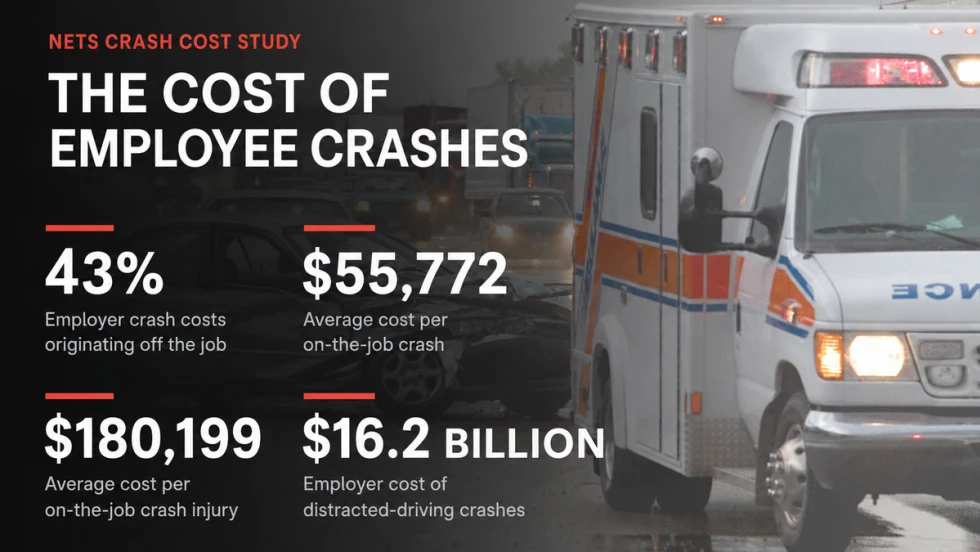
Off-the-Job Crashes Account for 43% of Employers’ $61.7 Billion Crash Burden
NETS quantifies costs dispersed across fleet, risk, HR, and other departments while providing new per-crash benchmarks for employers.
Read More →
Ram Recalls More Than 1.27 Million 1500 Pickups for Seat Belt Anchor Issue
The recall affects certain 2019-2026 Ram 1500 pickups that may have improperly attached second-row seat belt buckle anchors.
Read More →