




Related: Australian Fleet Drivers Need to be on the Lookout for Animals on the Road
Volvo Researches Anti-Kangaroo Collision System in Australia
Volvo Cars is developing kangaroo detection technology to solve one of the most costly causes of traffic collisions in Australia.
by Staff
October 30, 2015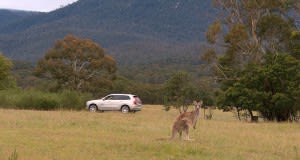
Photo: Volvo Cars
2 min to read
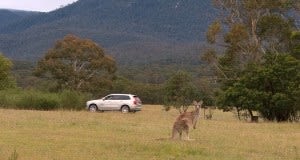
Photo: Volvo Cars
Volvo Cars is developing kangaroo detection technology to solve one of the most costly causes of traffic collisions in Australia.
A team of Volvo Cars safety experts traveled to the Australian Capital Territory this week to film and study the roadside behavior of kangaroos in their natural habitat. Volvo Cars said the data it collects will be used to develop the first ever kangaroo detection and collision avoidance system.
According to the National Roads & Motorists’ Association (NRMA) there are over 20,000 kangaroo strikes on Australian roads each year costing over AU $75 (US $53.5) million in insurance claims.
To help address this Volvo Cars said it is developing a system that uses radar and camera technology to detect kangaroos and automatically apply the brakes if an accident is imminent.
“Whereas Volvo Cars’ Pedestrian Detection technology is geared towards city driving, our kangaroo detection research is focusing on highway speed situations,” said Martin Magnusson, senior safety engineer at Volvo Cars. “Kangaroos are very unpredictable animals and difficult to avoid, but we are confident we can refine our technology to detect them and avoid collisions on the highway. In Sweden we have done research involving larger, slower moving animals like moose, reindeer and cows which are a serious threat on our roads. Kangaroos are smaller than these animals and their behaviour is more erratic. This is why it’s important that we test and calibrate our technology on real kangaroos in their natural environment.”
Volvo Car Australia Managing Director Kevin McCann said that research into kangaroo detection technology is one of the latest focus areas aimed at realizing Volvo Cars’ vision that no one is killed or seriously injured in a new Volvo car by 2020.
“This type of technology is not designed to take responsibility away from drivers. If the driver is inattentive the car will warn him or her and eventually intervene with hard braking to avoid a potential collision,” added Martin Magnusson.
Volvo Cars is conducting its kangaroo detection research this week at Tidbinbilla Nature Reserve near Canberra. Canberra is one of the nation’s hotspots for kangaroo collisions.
More Global Fleet
Holman Takes Full Ownership of ARIZA in Mexico
Holman is bringing its Mexican fleet management operation fully under its own brand after more than 30 years as a joint venture. The change gives multinational fleet customers a single Holman operation across the U.S., Canada, and Mexico.
Read More →
Proven Ways to Reduce Work Truck Downtime
The age-old problem of downtime will always be a reality, but with new strategies at hand, fleets have more ways to keep trucks on the road longer.
Read More →
Sponsored•July 23, 2026
The Top 300 Commercial Fleets
The Top 300 Commercial Fleets: See the List
Read More →

Cameras, Safety and Insurance: From Reactive Claims to Real-Time Prevention (Part 2 of 2)
Part Two: Commercial auto remains one of the most challenging and costly lines of coverage for fleet operators and insurers alike. Continue learning more about how to effectively address these issues from Onur Aksan, Enterprise Business Development Executive, Geotab
Read More →
Cameras, Safety and Insurance: From Reactive Claims to Real-time Prevention
Commercial auto remains one of the most challenging and costly lines of coverage for fleet operators and insurers alike. Learn more about how to effectively address these issues from Onur Aksan, Enterprise Business Development Executive, Geotab.
Read More →
Sponsored•May 6, 2026
Fleet Costs Are Rising: Here’s How Leaders Are Responding
Fleet leaders are under pressure to reduce costs, adapt to economic uncertainty, and make smarter decisions. See how peers across North America are responding with real data, proven strategies, and forward-looking insights. Download the 2026 Market Pulse Report to benchmark your strategy and uncover where you can gain an edge.
Read More →
Enterprise Fleet Management Surpasses 900,000 Vehicles in U.S. & Canada
Enterprise Mobility connects with mobility solutions around the globe
Read More →
Sponsored•October 14, 2025
Automotive Fleet's Guide to Fleet Electrification
Unlock the secrets to a successful transition to electric fleets with Automotive Fleet's comprehensive Fleet Electrification Guide!
Read More →
Sumitomo Rubber Industries to Acquire Viaduct
Viaduct will join Sumitomo as an independent subsidiary. Partnership strengthens global reach and accelerates AI-driven innovation for fleets and manufacturing.
Read More →