




Volvo Opens Traffic Safety Proving Ground in Sweden
AstaZero, a full-scale proving ground for future traffic safety solutions, has been opened by the Volvo Car Group, bringing it a step closer to realizing its vision that, by 2020, no one should be killed or seriously injured in a new Volvo car.
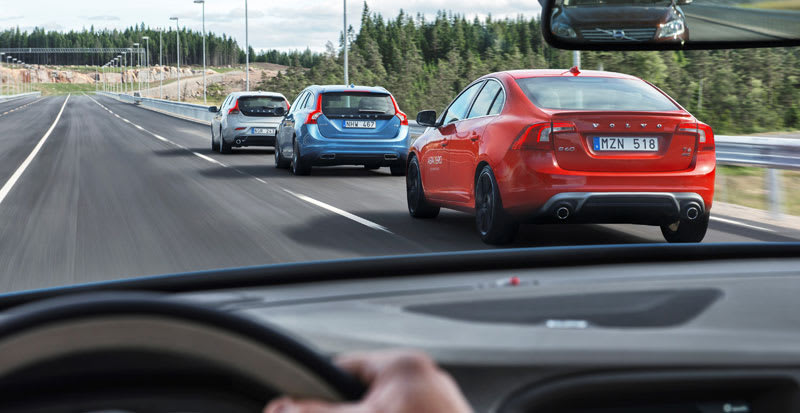
AstaZero is the world’s first full-scale proving ground for future traffic safety solutions. The multilane road consists of four lanes, which are connected to the high-speed area. Several different scenarios can be tested on the multilane road, such as lane changes, different collision scenarios and crossing scenarios. Photo: Volvo
AstaZero is the world’s first full-scale proving ground for future traffic safety solutions. The multilane road consists of four lanes, which are connected to the high-speed area. Several different scenarios can be tested on the multilane road, such as lane changes, different collision scenarios and crossing scenarios. Photo: Volvo
AstaZero, a full-scale proving ground for future traffic safety solutions, has been opened by the Volvo Car Group, bringing it a step closer to realizing its vision that, by 2020, no one should be killed or seriously injured in a new Volvo car.
An important measure towards achieving this goal will be the development of active safety systems, which will help to prevent accidents, according to the automaker. These active safety systems will be the primary focus at AstaZero proving ground, located in close proximity to the Volvo Cars headquarters in western Sweden.
One of the facility’s greatest assets is its flexibility, with a design that permits the construction of unique, customized environments. “You can simulate all types of real-world traffic scenarios,” said Pether Wallin, CEO of AstaZero. “At most proving grounds, the options are more limited.”
The center can accommodate a wide range of test conditions, such as those found on busy city roads, highways, multi-lane motorways and crossroads. These conditions are crucial for studying the way cars interact with moving obstacles such as other cars, pedestrians, cycles, mopeds, motorcycles, trucks, buses and even animals that suddenly appear. In certain studies, e.g., those involving complex traffic situations and high speeds, robots will operate the test vehicles, according to the automaker.
“Safety testing under realistic circumstances is a prerequisite for developing our active safety systems,” said Anders Axelson of Volvo Cars Safety Centre. “The facility will play several important roles: not only will it help us meet our safety vision, developing cars that don’t crash, it will also help us further develop safety functions that will address non-motorists, such as pedestrians and cyclists.”
One of AstaZero’s main functions will be as a platform for the research and development of next-generation safety technologies, according to the automaker. Here, in collaboration with universities and industry partners, Volvo Cars will undertake a range of initiatives, from strategic vehicle research and innovation projects to targeted research projects.
The work at AstaZero will also include the development and testing of autonomous driving technology. Advanced systems are also under progress to further help prevent, for example, inattentiveness and driver fatigue, according to Volvo.
“The Swedish automotive industry is at the leading edge of active safety,” said Axelson. “Thanks to AstaZero, we have great prospects for keeping our leading position. We’re the only car manufacturing company in the world to have set a goal of zero traffic fatalities for a specific date, and we’re the only country in the world whose government supports a zero traffic fatalities vision.”
More Global Fleet
Holman Takes Full Ownership of ARIZA in Mexico
Holman is bringing its Mexican fleet management operation fully under its own brand after more than 30 years as a joint venture. The change gives multinational fleet customers a single Holman operation across the U.S., Canada, and Mexico.
Read More →
Proven Ways to Reduce Work Truck Downtime
The age-old problem of downtime will always be a reality, but with new strategies at hand, fleets have more ways to keep trucks on the road longer.
Read More →
The Top 300 Commercial Fleets
The Top 300 Commercial Fleets: See the List
Read More →


Cameras, Safety and Insurance: From Reactive Claims to Real-Time Prevention (Part 2 of 2)
Part Two: Commercial auto remains one of the most challenging and costly lines of coverage for fleet operators and insurers alike. Continue learning more about how to effectively address these issues from Onur Aksan, Enterprise Business Development Executive, Geotab
Read More →
Cameras, Safety and Insurance: From Reactive Claims to Real-time Prevention
Commercial auto remains one of the most challenging and costly lines of coverage for fleet operators and insurers alike. Learn more about how to effectively address these issues from Onur Aksan, Enterprise Business Development Executive, Geotab.
Read More →
Fleet Costs Are Rising: Here’s How Leaders Are Responding
Fleet leaders are under pressure to reduce costs, adapt to economic uncertainty, and make smarter decisions. See how peers across North America are responding with real data, proven strategies, and forward-looking insights. Download the 2026 Market Pulse Report to benchmark your strategy and uncover where you can gain an edge.
Read More →
Enterprise Fleet Management Surpasses 900,000 Vehicles in U.S. & Canada
Enterprise Mobility connects with mobility solutions around the globe
Read More →
Automotive Fleet's Guide to Fleet Electrification
Unlock the secrets to a successful transition to electric fleets with Automotive Fleet's comprehensive Fleet Electrification Guide!
Read More →
Sumitomo Rubber Industries to Acquire Viaduct
Viaduct will join Sumitomo as an independent subsidiary. Partnership strengthens global reach and accelerates AI-driven innovation for fleets and manufacturing.
Read More →