




Video: Honda to Expand Air Bag Recall, Takata Resists
The automaker will expand its current regional air bag safety improvement campaign to a nationwide scale, as requested by federal safety regulators.
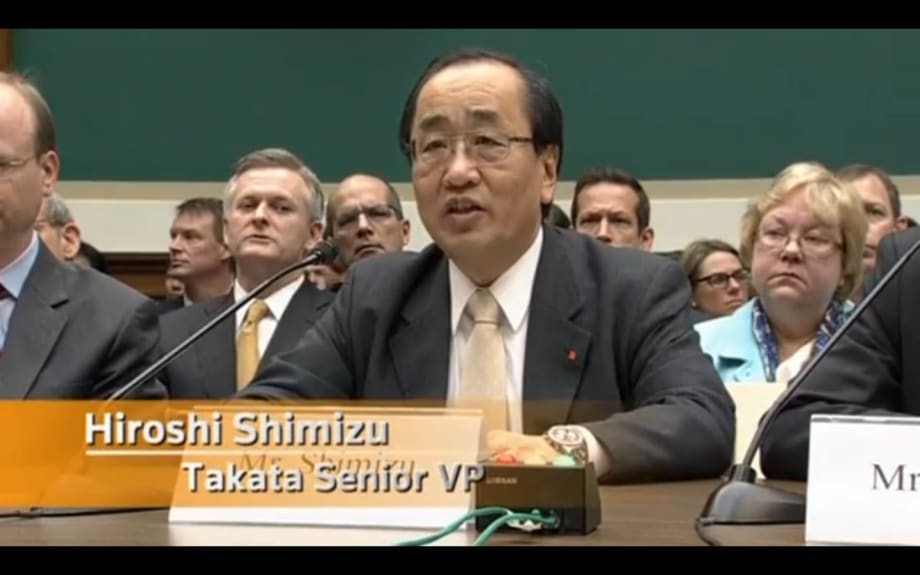
During a Congressional subcommittee hearing Dec. 3, a Honda executive indicated the automaker has agreed to expand its current regional air bag safety improvement campaign to a nationwide scale, as requested by federal safety regulators.
Honda dealers on a national scale will replace defective driver-side air bag inflators manufactured by Takata Corp., even though Takata this week refused to issue a nationwide notice of a defect in the air bags.
Honda, Takata's biggest air bag customer, is also working with additional safety system suppliers to increase availability of air bag inflator replacement parts, said Rick Schostek, executive vice president of Honda North America.
Honda has been in discussions with two Takata competitors, Autoliv and Daicel, Schostek said. “These talks have been encouraging and we believe will ultimately reduce the duration of any shortage [of replacement parts].”
Takata’s defective air bag inflators have been linked to four deaths in the U.S. and about 30 injuries. During deployment, the air bag inflators can explode and send shrapnel flying inside the vehicle.
At the same Congressional hearing, a Takata executive dismissed as unnecessary the National Highway Traffic Safety Administration’s order to broaden the regional air bag inflator recalls so they apply nationwide. NHTSA’s order, issued Nov. 18, was sent to Takata and 10 automakers that use Takata air bag inflators: Honda, BMW, Chrysler, Ford, General Motors, Mazda, Mitsubishi, Nissan, Subaru and Toyota.
“Based on the data currently available and our best engineering judgment, Takata continues to believe that the public safety is best served if the identified areas of high absolute humidity remain the priority for the replacement of suspect inflators,” said Hiroshi Shimizu, senior vice president for global quality assurance for Takata Corp.
However, Shimizu said, the company will "support the ongoing recalls and field actions, and we have devoted extra resources to producing quality replacement kits on the schedule necessary to fulfill all of the automakers' orders."
The House Subcommittee on Commerce, Manufacturing and Trade conducted the Dec. 3 hearing.
The latest round of Takata air bag recalls has until now targeted vehicles in regions with high absolute humidity, such as Florida, Puerto Rico, Hawaii and certain areas near the Gulf of Mexico. NHTSA changed course last month and opted to push for a nationwide recall of the driver’s-side air bag inflators after learning of a recent inflator rupture in a Ford vehicle outside the high-humidity region.
The agency has now verified two recent driver’s-side inflator ruptures outside the designated region – one in North Carolina, another in California.
NHTSA is now reviewing Takata’s written response to the agency’s request that the company declare the driver’s-side air bags defective. NHTSA is also beginning to analyze the company’s mandated submission of inflator test data. Ultimately, Takata’s continued resistance to the nationwide recall might lead NHTSA to file a lawsuit against the safety systems supplier, NHTSA Deputy Administrator David Friedman testified.
During his testimony, Shimizu said the most recent inflator ruptures are likely due to a combination of three factors: the unit’s age, persistent exposure to high absolute humidity over an extended period of time, and “potential production issues, which we are working to identify and address.”
Since 2008, defective Takata air bag inflators have led to three different categories of recalls: national recalls, regional recalls involving passenger-side frontal air bags, and regional recalls involving driver's-side frontal air bags. These actions have involved 10 automakers and more than 10 million vehicles, Friedman said. More than 8 million still remained unrepaired as of October.
When Congressman Gus Bilirakis (R-Fla.) asked Shimizu why Takata hasn’t resolved air bag inflator manufacturing issues by now, since problems first surfaced a decade ago, Shimizu responded that separate recalls have been tied to problems with different root causes.
During his testimony, Friedman pointed out that Takata still hasn’t determined a definitive root cause for the recent inflator ruptures.
Given Takata’s track record of air bag manufacturing defects, a Toyota executive at the hearing expressed concerns about Takata replacement parts for ongoing recalls.
“Like you, we want additional assurances about the integrity and quality of Takata’s manufacturing processes, particularly in light of previous experiences,” said Abbas Saadat, vice president of Toyota motor engineering and manufacturing for North America.
Shimizu, however, argued such concerns were unfounded. He also denied media-reported allegations that Takata secretly tested inflators as early as 2004 and hid the results.
“We are confident that the inflators Takata is producing today, including the replacements for recalled units, are safe,” Shimizu said. He added that Takata is forming an independent quality assurance panel to audit the company’s manufacturing procedures for inflators. The panel’s report, when completed, will be released to the public.
Former U.S. Transportation Secretary Samuel Skinner will chair the panel. Takata is also hiring two other former transportation secretaries, Rodney Slater and Norman Mineta, as advisors.
To view a USA Today video featuring highlights of the Dec. 3 hearing, click on the photo or link below the headline.
More Safety

Nexar-Nauto Merger Aims to Give Fleets Better Safety Intelligence Through Larger Driving Dataset
Stefan Heck tells Automotive Fleet that combining more than 10 billion miles of driving history with Nexar's AI models will give fleets deeper insights into driver risk and roadway conditions than either company could provide independently.
Read More →
Don't Wait for a Crisis: 5 Ways to Build Mental Health Into Your Fleet Safety Program
For Suicide Prevention Month, fleet and safety leaders have an opportunity to put mental health where it belongs: at the center of workplace safety.
Read More →
How Camera Data Can Strengthen a Fleet’s Insurance Renewal
Insights from a commercial insurance carrier and a broker show how fleets can turn video telematic data, driver coaching, and improved claims results into a stronger case at insurance renewal.
Read More →
The Safest Fleets Aren’t the Ones with the Most Technology
You’ve made the telematics investment. Here’s how to capture the other half of its value and build the safest fleet on the road.
Read More →
Hidden in Plain Sight: Fleet Compliance Risks
Fleet compliance isn't just about having policies — it's about consistently enforcing them. This practical guide reveals six hidden compliance risks common in public sector and shared fleet operations and outlines proven strategies to improve visibility, accountability, and audit readiness
Read More →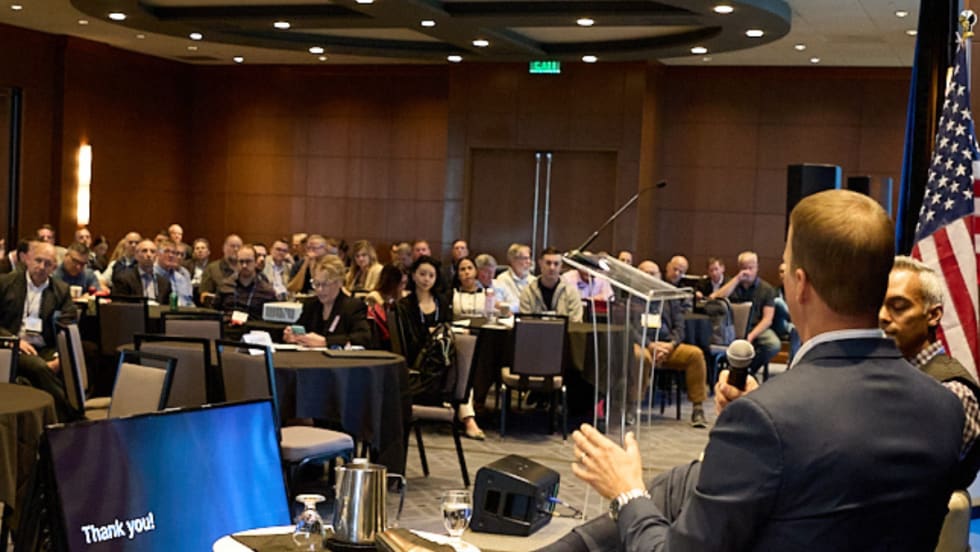
NETS Sets 2026 Fleet Safety Benchmark Conference for Indianapolis
The Sept. 15–17 program will feature fleet benchmarking data, case studies, emerging technologies, and implementation strategies while running alongside the NSC Safety Congress & Expo.
Read More →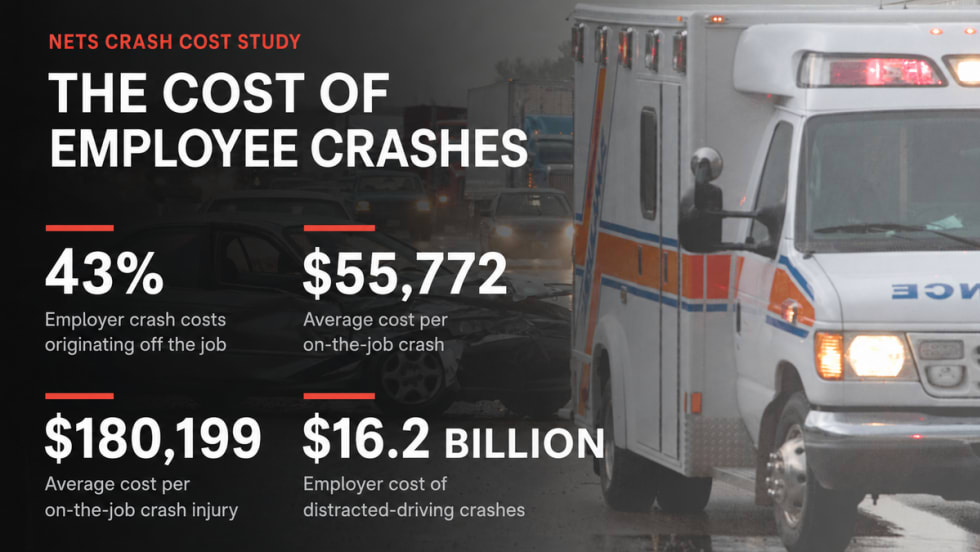
Off-the-Job Crashes Account for 43% of Employers’ $61.7 Billion Crash Burden
NETS quantifies costs dispersed across fleet, risk, HR, and other departments while providing new per-crash benchmarks for employers.
Read More →
Ram Recalls More Than 1.27 Million 1500 Pickups for Seat Belt Anchor Issue
The recall affects certain 2019-2026 Ram 1500 pickups that may have improperly attached second-row seat belt buckle anchors.
Read More →
How Better Visibility Cut Speeding Violations by 48%
Fleet leaders don't need more data, they need clearer visibility into what the data is saying. This case study explores how one utility replaced speeding-event counts with a single metric — miles driven in violation — to strengthen safety and significantly reduce speeding violations.
Read More →
Operation Safe Driver Week: Why the Industry's Oldest Safety Campaign Still Matters to Fleets
A look at how a 2007 enforcement initiative became one of the most consequential weeks on the fleet safety calendar, and what it means for your drivers in 2026.
Read More →