




Video: Ford Ties Wearables to Driver-Assist Tech
Potential applications for smart watches and fitness bands include linking health data to active safety features, such as lane-keeping assist.
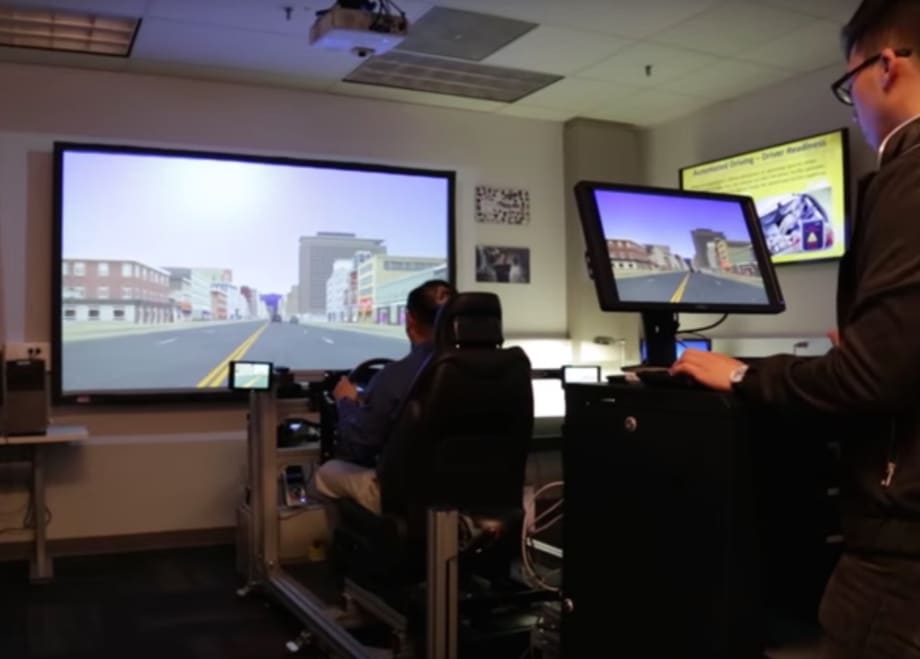
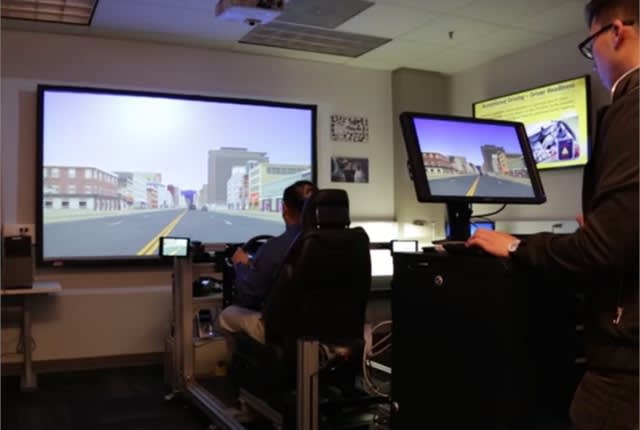
Ford’s new wearables research laboratory is working to integrate wearable devices and vehicles so that driver-assist technologies are more aware of the driver behind the wheel — particularly when he or she is stressed or sleepy.
“As more consumers embrace smart watches, glasses and fitness bands, we hope to develop future applications that work with those devices to enhance in-car functionality and driver awareness,” said Gary Strumolo, global manager for vehicle design and infotronics at Ford Research and Advanced Engineering.
Researchers at the new Automotive Wearables Experience laboratory are examining the potential to link vital health information to in-vehicle technologies, including lane-keeping assist and the Blind Spot Information System. The lab is housed in the Ford Research and Innovation Center in Dearborn, Mich.
Lane-keeping assist, for instance, could become more sensitive if a smart watch sends data to the vehicle that infers the driver didn’t get enough sleep the previous night. Or, if a driver’s heart rate increases as traffic intensifies, the vehicle’s adaptive cruise control or Blind Spot Information System could increase the distance between vehicles – giving the driver some breathing room.
“Wearable technology integrated with the vehicle allows for more accurate biometric data to stream continuously and alert active driver-assist systems to become more sensitive if the driver shows signs of compromised health or awareness,” Strumolo explained.
(To view a Ford video about the lab's work, click on the photo or link below the headline.)
This winter an app developer challenge, co-sponsored by Ford and Henry Ford Health System, seeks innovative technology to measure in-vehicle health metrics. The challenge invites Ford and Henry Ford Health System employees to submit app concepts that use vehicles and wearable devices as components, providing an effective health and wellness program for customers and patients of all ages and conditions.
Submissions open Jan. 20, and finalists for the first phase of the competition will be announced in March. Winners will earn a total of $10,000 in prizes.
Wearable innovations are part of Ford Smart Mobility, the plan to take Ford to the next level in connectivity, mobility, autonomous vehicles, the customer experience, and data and analytics.
The ability to measure wakefulness and health data including blood pressure, blood glucose and heart rate via wearable technology also could benefit semi-autonomous driving features, according to Ford.
The wearables lab is examining ways to signal a driver using semi-autonomous features of the potential need to take driving control back from the vehicle. If there was road construction or an accident ahead — a situation requiring a human at the wheel — the technology could send a wrist vibration, sound chimes or even activate flashing lights on the dash.
Researchers are testing voice control for the smart watch version of MyFord Mobile, which allows Ford drivers to remotely start, lock, unlock and locate their vehicle via their watch app. The lab is integrating voice commands to the app to allow for smart watch owners to use these features without touching their watch or phone.
More Safety

Nexar-Nauto Merger Aims to Give Fleets Better Safety Intelligence Through Larger Driving Dataset
Stefan Heck tells Automotive Fleet that combining more than 10 billion miles of driving history with Nexar's AI models will give fleets deeper insights into driver risk and roadway conditions than either company could provide independently.
Read More →
Don't Wait for a Crisis: 5 Ways to Build Mental Health Into Your Fleet Safety Program
For Suicide Prevention Month, fleet and safety leaders have an opportunity to put mental health where it belongs: at the center of workplace safety.
Read More →
How Camera Data Can Strengthen a Fleet’s Insurance Renewal
Insights from a commercial insurance carrier and a broker show how fleets can turn video telematic data, driver coaching, and improved claims results into a stronger case at insurance renewal.
Read More →
The Safest Fleets Aren’t the Ones with the Most Technology
You’ve made the telematics investment. Here’s how to capture the other half of its value and build the safest fleet on the road.
Read More →
Hidden in Plain Sight: Fleet Compliance Risks
Fleet compliance isn't just about having policies — it's about consistently enforcing them. This practical guide reveals six hidden compliance risks common in public sector and shared fleet operations and outlines proven strategies to improve visibility, accountability, and audit readiness
Read More →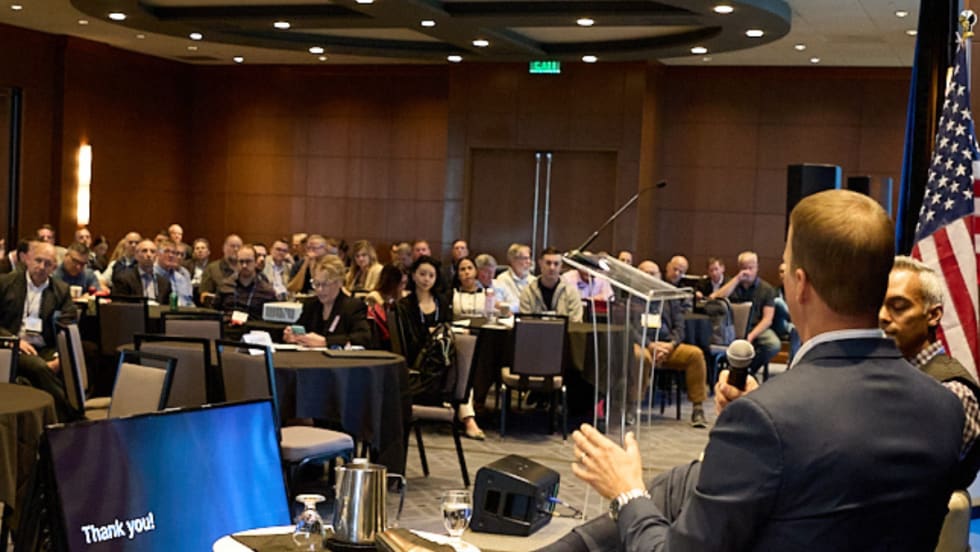
NETS Sets 2026 Fleet Safety Benchmark Conference for Indianapolis
The Sept. 15–17 program will feature fleet benchmarking data, case studies, emerging technologies, and implementation strategies while running alongside the NSC Safety Congress & Expo.
Read More →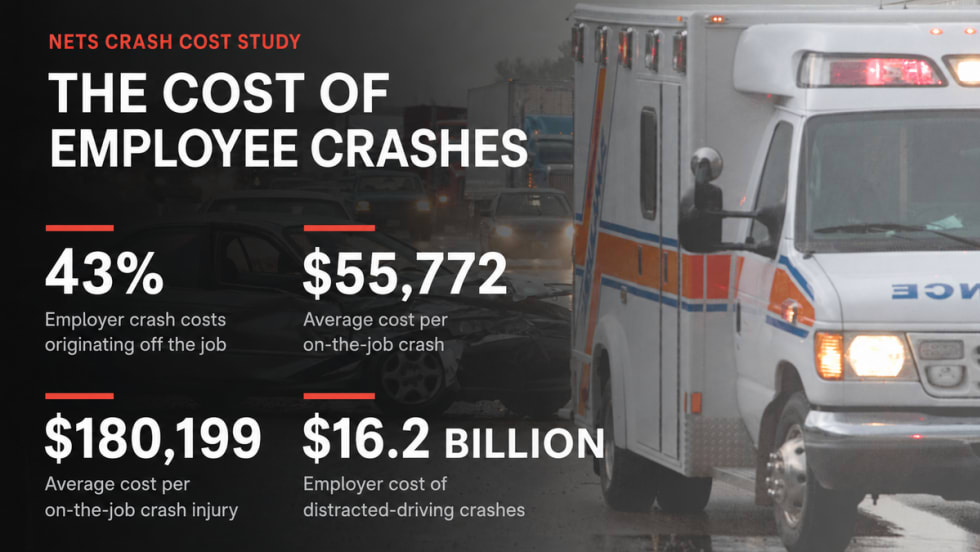
Off-the-Job Crashes Account for 43% of Employers’ $61.7 Billion Crash Burden
NETS quantifies costs dispersed across fleet, risk, HR, and other departments while providing new per-crash benchmarks for employers.
Read More →
Ram Recalls More Than 1.27 Million 1500 Pickups for Seat Belt Anchor Issue
The recall affects certain 2019-2026 Ram 1500 pickups that may have improperly attached second-row seat belt buckle anchors.
Read More →
How Better Visibility Cut Speeding Violations by 48%
Fleet leaders don't need more data, they need clearer visibility into what the data is saying. This case study explores how one utility replaced speeding-event counts with a single metric — miles driven in violation — to strengthen safety and significantly reduce speeding violations.
Read More →
Operation Safe Driver Week: Why the Industry's Oldest Safety Campaign Still Matters to Fleets
A look at how a 2007 enforcement initiative became one of the most consequential weeks on the fleet safety calendar, and what it means for your drivers in 2026.
Read More →