




Video: Battle Over Connected-Car Spectrum Heats Up
A pending U.S. Senate bill is aimed at opening up a portion of the 5-GHz spectrum band, now reserved for vehicle-to-vehicle communications, to unlicensed WiFi use.
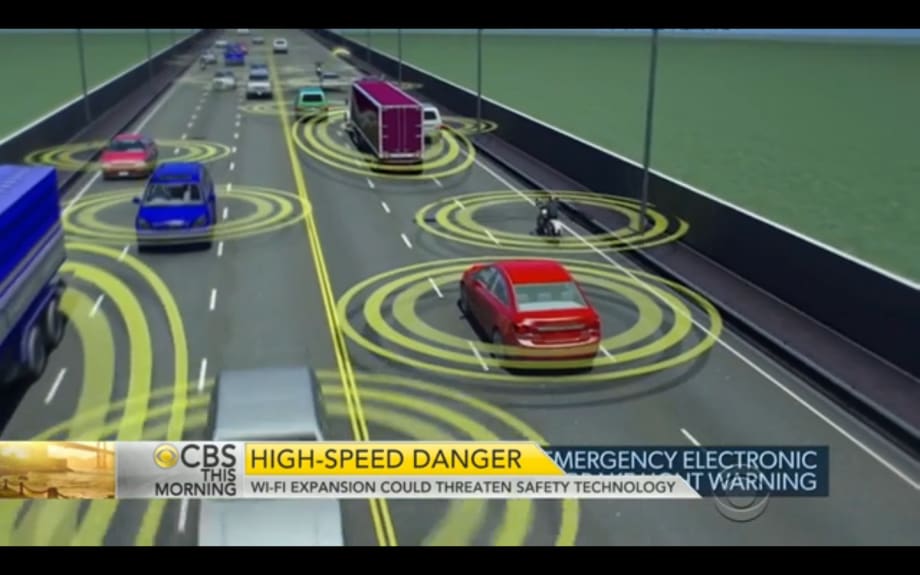
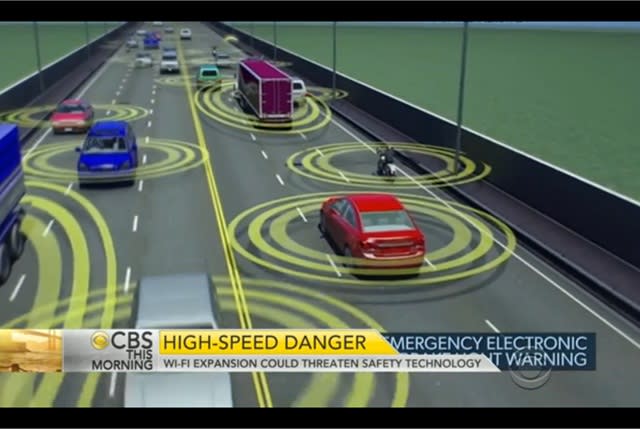
A U.S. Senate bill seeks to direct the Federal Communications Commission to decide whether an upper portion of the 5-GHz spectrum band, now reserved for vehicle-to-vehicle communications, can be shared to broaden public WiFi access.
The WiFi Innovation Act, re-introduced last month by senators Marco Rubio (R-Fla.) and Cory Booker (D-N.J.), would require the FCC to quickly test the feasibility of opening the 5850-5925 band to unlicensed WiFi use. Though the bill includes language about protecting existing licensees from harmful interference, proponents of connected-car technology have expressed concerns that sharing the spectrum might seriously hinder the technology’s future deployment.
Safety advocates and auto industry representatives, along with auto technology leaders in the academic realm, have criticized plans to impose a deadline for an FCC ruling. A hasty decision to share the spectrum could ultimately delay the rollout of crash-prevention technologies, they argue.
Both sides of the issue cite economic factors in making their case.
“America’s policies must adapt to the colossal technological advancements that are defining the 21st century and transforming the very nature of the American economy,” Rubio said. “The WiFi Innovation Act would bolster innovation, spur economic development, and increase connectivity by providing more spectrum to the public.”
The act would also establish a study to identify barriers to wireless network deployment in low-income neighborhoods. Further, the FCC would evaluate incentives and policies that could boost WiFi availability in areas where the working poor live.
Comcast and Time Warner Cable, as well as Google and Microsoft, back efforts to open up the spectrum for WiFi.
The Intelligent Transportation Society of America (ITS America), Alliance of Automobile Manufacturers, Association of Global Automakers and AAA are among the organizations that oppose the legislation.
“We are on the cusp of a revolution in vehicle safety that will save thousands of lives each year and dramatically reduce the nearly $1 trillion cost of traffic crashes and congestion to families, communities and the nation’s economy,” said Thomas E. Kern, interim president and CEO of ITS America. “Experts from the automotive, WiFi and intelligent transportation systems (ITS) industries are working together to explore whether a spectrum sharing technology can be developed to allow WiFi devices to operate in the same 5.9 GHz band set aside by the FCC for ITS safety systems without delaying time-critical communications needed to prevent crashes.”
This collaborative process, Kern said, should “continue without Congressionally-imposed deadlines, restrictive parameters or political pressure that creates regulatory uncertainty and could delay bringing these life-saving crash prevention technologies to consumers.”
The House of Representatives is also considering a companion bill, introduced by Congressman Bob Latta (R-Ohio). To view a CBS News report on the issue, which aired March 26, click on the photo or link above.
More Safety

What’s Next for Fleet? Safety, AI & Industry Recognition | AF News Recap
Could your company's culture be encouraging distracted driving? This week, we're exploring how workplace expectations affect driver safety, what AI, EVs, and autonomous vehicles could mean for the future of fleet management, and how fleet professionals can strengthen their award nominations.
Read More →
Does Your Fleet's Culture Encourage Distracted Driving?
What happens when the people responsible for enforcing safety rules are the ones setting the wrong example? The answer may reveal why some of the biggest risks to fleet drivers have little to do with what's written in the employee handbook.
Read More →
Fleet Manager’s Ultimate Playbook: Navigating the New Standard in OEM Connectivity
Rising operating costs, driver safety concerns, and unplanned downtime are putting unprecedented pressure on modern fleets. Discover how fleet managers use embedded OEM connectivity and real-time vehicle data to cut TCO, prevent downtime, and protect drivers without aftermarket telematics hardware.
Read More →
From Driver Well-Being to EV Charging | AF News Recap
Mental health belongs in the fleet safety conversation. This week, we’re looking at five ways fleets can support employee well-being before a crisis, plus Holman’s expansion in Mexico, new one-day Fleet Forward passes, and why EV charging demand is outpacing infrastructure growth.
Read More →
Nexar-Nauto Merger Aims to Give Fleets Better Safety Intelligence Through Larger Driving Dataset
Stefan Heck tells Automotive Fleet that combining more than 10 billion miles of driving history with Nexar's AI models will give fleets deeper insights into driver risk and roadway conditions than either company could provide independently.
Read More →
Don't Wait for a Crisis: 5 Ways to Build Mental Health Into Your Fleet Safety Program
For Suicide Prevention Month, fleet and safety leaders have an opportunity to put mental health where it belongs: at the center of workplace safety.
Read More →
How Camera Data Can Strengthen a Fleet’s Insurance Renewal
Insights from a commercial insurance carrier and a broker show how fleets can turn video telematic data, driver coaching, and improved claims results into a stronger case at insurance renewal.
Read More →
The Safest Fleets Aren’t the Ones with the Most Technology
You’ve made the telematics investment. Here’s how to capture the other half of its value and build the safest fleet on the road.
Read More →
Hidden in Plain Sight: Fleet Compliance Risks
Fleet compliance isn't just about having policies — it's about consistently enforcing them. This practical guide reveals six hidden compliance risks common in public sector and shared fleet operations and outlines proven strategies to improve visibility, accountability, and audit readiness
Read More →
NETS Sets 2026 Fleet Safety Benchmark Conference for Indianapolis
The Sept. 15–17 program will feature fleet benchmarking data, case studies, emerging technologies, and implementation strategies while running alongside the NSC Safety Congress & Expo.
Read More →