




US Postal Service Pilots Self-Driving Trucks
The Postal Service is exploring the feasibility of utilizing autonomous delivery vehicle technology to reduce fuel costs, increase safe truck operation, and improve its fleet utilization rate through longer hours of operation.
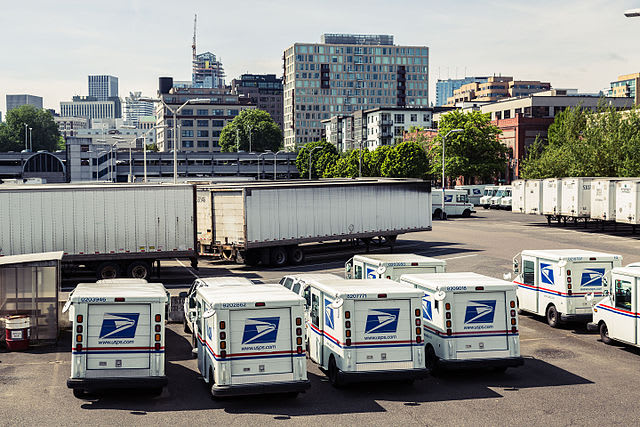
The truck will have a safety engineer and driver on board for the duration of the pilot to monitor vehicle performance and to ensure public safety.
Photo via Tony Webster/Wikimedia.
TuSimple, a global self-driving truck company, announced today that the United States Postal Service (USPS) has awarded it a contract to perform five round trips, for a two-week pilot, hauling USPS trailers more than 1,000 miles between the Postal Service's Phoenix, Ariz., and Dallas, Texas, distribution centers.
The truck will have a safety engineer and driver on board for the duration of the pilot to monitor vehicle performance and to ensure public safety.
This new route is an important milestone as TuSimple scales its autonomous operations beyond Arizona and marks the company's self-driving debut into Texas. TuSimple will run a series of its self-driving trucks for 22 hours each, which includes overnight driving, along the I-10, I-20 and I-30 corridors to make the trip through Arizona, New Mexico, and Texas. The freight that flows along I-10 corridor accounts for 60 percent of the total economic activity in the United States. TuSimple expects this to be a central route for the company because there is already strong demand from other customers for runs between Arizona and Texas.
Long-haul routes with short turnaround times, such as this 22 hour journey, are well suited for self-driving trucks because they are normally accomplished with driving teams of two.
Driving teams are challenging to recruit due to overnight driving requirements, the need to share close quarters with another person and a significant truck driver shortage. According to the American Trucking Association, the driver shortage could reach 175,000 by 2024. TuSimple is on its way to achieving its milestone of first driverless operations which is intended to free human drivers to focus on the shorter, more dynamic and closer to home routes.
The Postal Service is exploring the feasibility of utilizing autonomous delivery vehicle technology to reduce fuel costs, increase safe truck operation, and improve its fleet utilization rate through longer hours of operation.
The Postal Service provides the nation with a vital delivery platform that enables American commerce, serves every American business and address, and is part of critical infrastructure which has played an indispensable role in connecting the nation over its 240 years of service.
TuSimple is aiming to boost the $800-billion U.S. trucking industry by increasing safety, reducing carbon emissions and transportation costs and optimizing logistics for fleet operators. With a 1000 meter vision range, TuSimple autonomous trucks are safer because they can see more and react faster than humans - rain or shine, day or night.
More Fleet Forward

Chad Edmondson Named 2026 Fleet Safety Award Winner
The VSC Fire & Security fleet director oversees more than 1,100 assets nationwide. His approach to improving driver safety emphasizes collaboration, employee engagement, and building trust with the people behind the wheel.
Read More →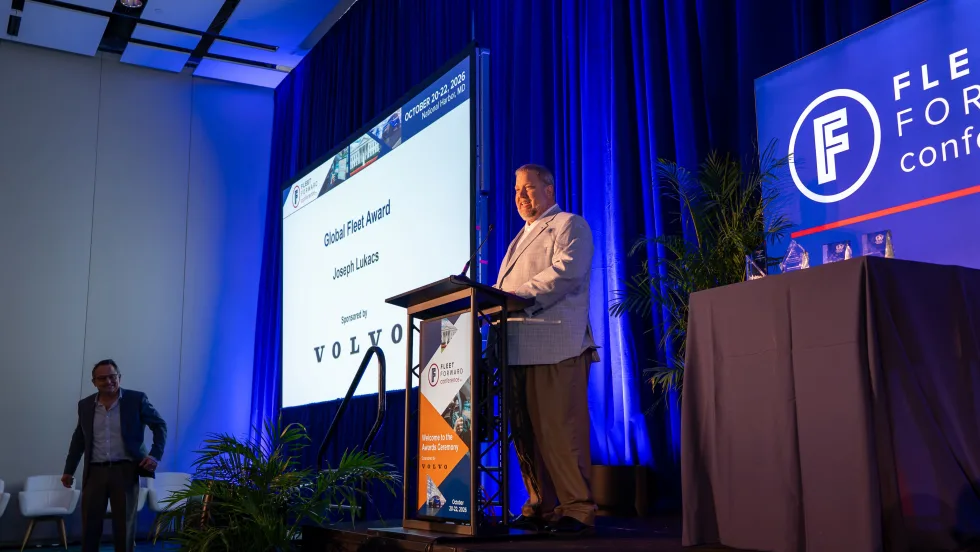
Joseph Lukacs Wins 2026 Global Fleet Manager of the Year
The Sherwin-Williams fleet leader adds another industry honor to his career after being named the 2025 Edward J. Bobit Professional Fleet Manager of the Year.
Read More →
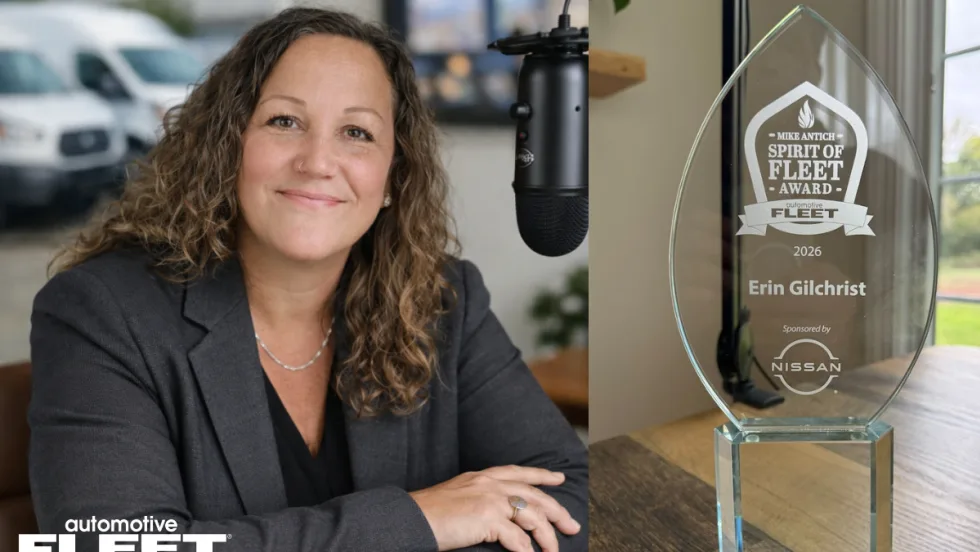
Erin Gilchrist Receives Mike Antich Spirit of Fleet Award
Last week at AFLA in Vegas, Erin Gilchrist received the inaugural, brand-new Spirit of Fleet Award.
Read More →
Dominika Leja Named the 2026 Fleet Manager of the Year
The AstraZeneca associate director of fleet was recognized for her leadership in fleet electrification, cost savings, and operational transformation.
Read More →
Jamie McKay Named the 2026 Fleet Visionary Award Winner
The Aptive Pest Control fleet manager was recognized for her approach to operations, data, lifecycle management, and driver needs.
Read More →
Fleet Forward Conference Introduces One-Day Passes for 2026
New one-day registration gives fleet professionals the flexibility to attend Tuesday, Wednesday, or Thursday, with passes available for $199 through Sept. 18.
Read More →
Vibe Coding: When Fleet Managers Become Software Builders
Five fleet professionals — none with programming skills — discuss how they’re using AI to build fleet solutions in-house and in a fraction of the time.
Read More →
Fleet Forward Conference Tackles Fleet Industry’s Growing Leadership Gap
This session will examine succession planning, knowledge transfer, and the skills the next generation of fleet leaders will need as veteran professionals leave the industry.
Read More →
2026 Fleet Manager of the Year Finalists Announced
Who are the 2026 Fleet Manager of the Year finalists?
Read More →