




Efforts to curb drunken driving, which have stalled in recent years, need to be jump-started, the government's top highway safety official says, according to an Associated Press report on December 3. Among Dr. Jeffrey Runge's suggestions: more prosecutors and courts dedicated to drunken driving cases. Runge, head of the National Highway Traffic Safety Administration (NHTSA), told the Associated Press on Tuesday that the country needs to overhaul the way it fights drunken driving. “Since the early 1990s, we haven't made any progress,'' Runge said. The number of alcohol-related fatalities in 2002 was 17,419, nearly the same as in 2000 and 2001. Of those, more than 15,000 were killed by people with a blood-alcohol level higher than 0.08, which is the legal limit in 45 states, Runge said. Runge, a trauma surgeon, believes more needs to be done to identify chronic drinkers who are more apt to drive drunk. He said doctors should be asking questions about drinking whenever they see patients. “A doctor's advice is often all you need to catch them early,” he said. Runge's comments coincide with Wednesday's launch of Mothers Against Drunk Driving's (MADD) 17th annual red ribbon campaign. MADD President Wendy Hamilton said the organization plans to distribute 6 million red ribbons to motorists this year, each with a picture of a seat belt to remind drivers to buckle up. Takada Safety Systems, a seat belt manufacturer, donated $500,000 for the effort, vice president Bob Kittle said. Runge said such programs are important, but the government can do more. NHTSA plans to offer grants for states to appoint prosecutors in areas with high drunken driving rates. Runge said drunken driving cases are complicated and tend to pit new prosecutors against experienced defense attorneys. A bill moving through Congress contains $50 million that states would be able to use for grants for specialized prosecutors or courts dedicated to drunken driving cases. Drunken driving courts, modeled on the drug courts, are reducing repeat offenses because they include treatment and intensive follow-up, Runge said. According to NHTSA, there are 68 drunken driving courts now in operation nationwide. Judge Michael McAdam, president of the American Judges Association, said Runge's efforts add to the momentum in states to create drunken driving courts. One benefit, he said, is that judges in those courts become experts on drunken driving. “The scientific evidence (in a drunken driving case) is complicated, and if you didn't hear these cases often, you wouldn't have the necessary science you might need for a decision,'' he said. Without offering specifics, Runge said NHTSA plans to partner more often with the alcohol industry. NHTSA's interactions with distillers have been limited in the past, but he said the industry has been helpful in efforts to reduce the legal limit for intoxication in many states. Hamilton said she is skeptical about the industry's commitment. She said she has often sparred with the beer industry and accuses it of mischaracterizing her group.
U.S. Must Curb Drunken Driving
Efforts to curb drunken driving, which have stalled in recent years, need to be jump-started, the government's top highway safety official says, according to an Associated Press report on December 3.
More Operations

Hybrids: Electrification Without the Challenges
For fleet managers, fuel is one of the biggest line items in the budget — and it's one hybrids can shrink without changing how your people work. Download the eBook to see the numbers, understand the technology, and get a step-by-step guide to making the switch.
Read More →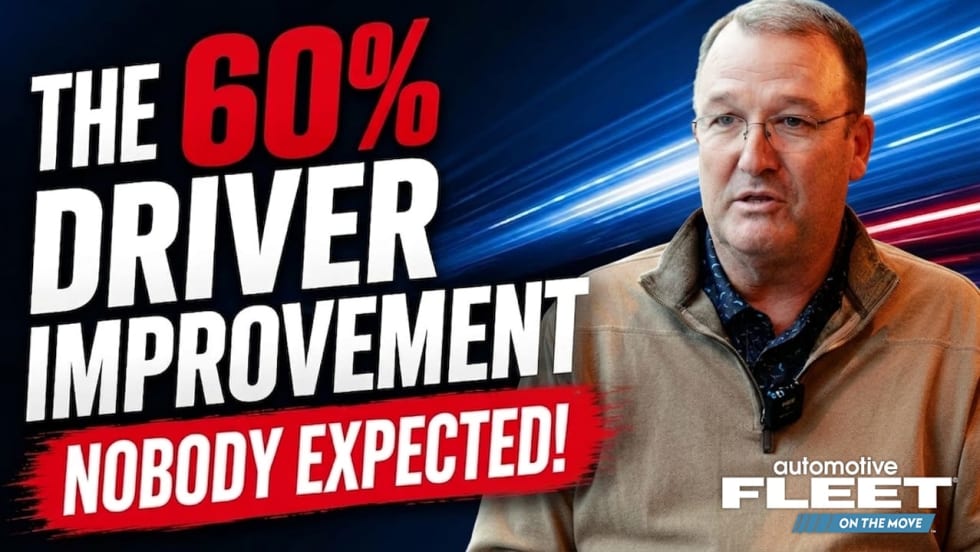
How NOV Uses Telematics to Improve Fleet Safety Across 160 Locations
James Victory of NOV discusses how the company manages fleet safety, maintenance, and telematics across more than 150 locations supporting oilfield operations throughout the U.S.
Read More →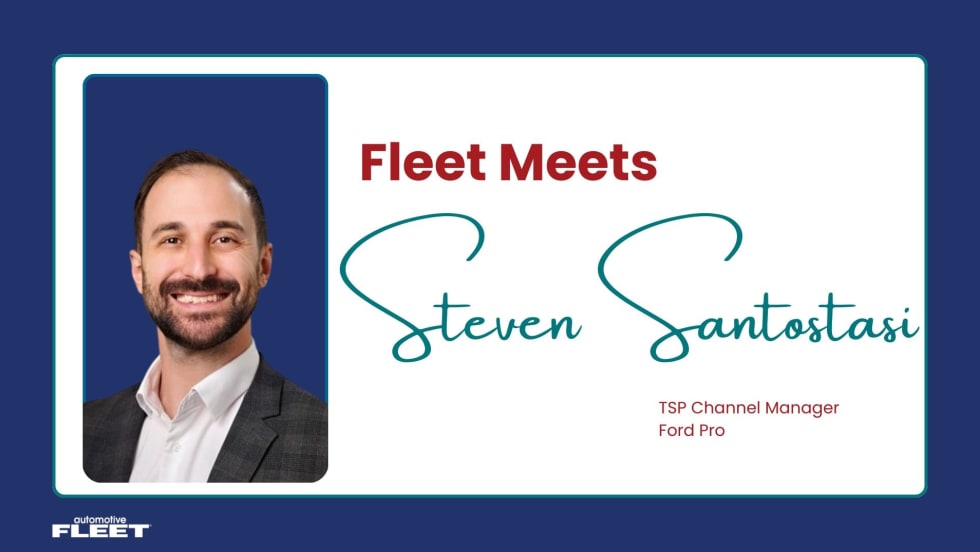
Fleet Meets: Steven Santostasi
This edition of the Fleet Meets series features Steven Santostasi, the current TSP channel manager for Ford Pro.
Read More →
Why Fleet Managers Are Replacing Departmental Vehicles with Shared Motor Pools
Departmentally assigned vehicles often create hidden costs through underutilization, poor visibility, and increased administrative burden. This white paper explores how shared motor pool strategies help fleets reduce costs, improve accountability, and optimize vehicle utilization.
Read More →
Soap Box Derby Challenge: Assembling the Crew
Meet Gabriel, Matthew, and Angel — the team helping bring this soap box derby build to life.
Read More →
BBL Fleet Acquires Velcor Leasing Corporation
BBL Fleet expanded its footprint in the fleet management industry with the acquisition of Velcor Leasing Corporation of Madison through a stock purchase agreement finalized Feb. 27, 2026.
Read More →
Lytx Introduces New AI Fleet Technologies at Protect 2026
The company introduced new AI-driven fleet safety and operations technologies during its annual user conference.
Read More →
Fleet Costs Are Rising: Here’s How Leaders Are Responding
Fleet leaders are under pressure to reduce costs, adapt to economic uncertainty, and make smarter decisions. See how peers across North America are responding with real data, proven strategies, and forward-looking insights. Download the 2026 Market Pulse Report to benchmark your strategy and uncover where you can gain an edge.
Read More →
From Waffle House to AI: Fleet Trends You Need to Know
In this AF news recap, host Faith Howell covers how Waffle House stepped up during disaster response and new AI tech on the market.
Read More →
Fleet Operations in the Age of AI: Navigating Ethical and Legal Challenges
AI is no longer a future concept for fleets—it’s already embedded in the tools, data, and decisions that operators rely on every day. In this episode of the Fleet Forward Podcast, recorded live at Fleet Forward, industry leaders take the conversation beyond hype to examine what responsible AI adoption really looks like in fleet operations.
Read More →