




Two Million Hydrogen Vehicles Could Be on Roads by 2020
WASHINGTON – A transition to hydrogen vehicles could greatly reduce U.S. oil dependence and carbon dioxide emissions, but making them competitive in the automotive market will not be easy.
WASHINGTON – A transition to hydrogen vehicles could greatly reduce U.S. oil dependence and carbon dioxide emissions, according to a new congressionally mandated report from the National Research Council, but making hydrogen vehicles competitive in the automotive market will not be easy. While the development of fuel cell and hydrogen production technology over the past several years has been impressive, challenges remain, according to www.sciencedaily.com.
Vehicle costs are high, and the U.S. currently lacks the infrastructure to produce and widely distribute hydrogen to consumers. These obstacles could be overcome, however, with continued support for research and development and firm commitments from the automotive industry and the federal government, concluded the committee that wrote the report.
Light-duty vehicles, such as cars, SUVs, and pickup trucks, are responsible for 44 percent of the oil used in the United States and over 20 percent of the carbon dioxide emitted. Concerns over climate change, oil imports, and recent spikes in gasoline prices have spurred interest in the development of alternative fuels.
The committee estimated the maximum number of hydrogen vehicles that could be on the road in the coming decades — assuming practical technical goals are met, consumers want hydrogen cars, and that government policies are in place to help drive the transition from oil to hydrogen fuel. The findings therefore represent potential best-case scenarios rather than predictions.
According to the committee, it will take many years before hydrogen vehicles will significantly penetrate the light-duty fleet, even though technological developments have been progressing rapidly. Production of hydrogen vehicles could increase significantly by 2015. At this stage, their cost — although dropping rapidly — would still need to be heavily subsidized for consumers.
The maximum practicable number of hydrogen vehicles that could be on the road by 2020 is 2 million, says the report. By 2023, the total cost of fuel cell vehicles, including the cost of hydrogen fuel over a vehicle's lifetime, could become competitive with conventional vehicles. At that point, the number of hydrogen vehicles on the road could grow rapidly, to nearly 60 million in 2035 and 200 million by 2050.
The committee also calculated the investments, both public and private, that would be needed to make a complete transition from oil to hydrogen fuel. These costs include research and development, vehicle deployment, and establishing infrastructure. According to the committee, government support via strong policy initiatives as well as funding would be needed until at least 2023. The cost to the government would be about $55 billion between 2008 and 2023; private industry would be expected to invest $145 billion over that same time period. To put these numbers into perspective, the government subsidy for ethanol fuel could grow to $15 billion per year by 2020.
More Leasing

Martin Kuhn on the Future of Mike Albert Fleet Solutions
The new president and CEO explains how Mike Albert Fleet Solutions plans to invest in technology, data, and people without losing the personal service fleet customers value.
Read More →
Mike Albert Fleet Solutions Names Marty Kuhn CEO, First from Outside the Family
Kuhn has a theory of what sets the company apart from larger FMCs: depth of partnership over breadth of volume.
Read More →
Union Leasing Rebrands as Moventum Fleet Management
The name Moventum reflects the company’s position at the intersection of movement and momentum, with the guiding principle "Keep Work Moving."
Read More →
How Does a Mid-Major FMC Compete? Ask BBL Fleet
This Pittsburgh-based FMC built a technology-first culture, sustained double-digit organic growth, and expanded its Midwest footprint through a recent acquisition. How did it happen?
Read More →
What’s Really Happening in Fleet Supply Right Now
Fleet supply has improved, but not everywhere. Merchants Fleet’s Charles Matthew explains where constraints still exist, what risks are emerging, and why fleets shouldn’t wait to place orders.
Read More →
These Edges Are Measured in Inches — Matt Dyer on Fleet’s New Normal
The Merchants Fleet CEO contends that fleets that drive the business win the inches. In 2026, every one of them counts.
Read More →
Who Gets a Company Car? (In 2026 and Beyond)
As costs rise and scrutiny increases, fleets are refining criteria that govern eligibility for company-owned vehicles.
Read More →
DriveItAway Holdings, Free2move Launch Operations In Nine Cities
The co-branded program with Stellantis’ mobility division scales up leasing and financing options nationwide with more cities to come online in 2026.
Read More →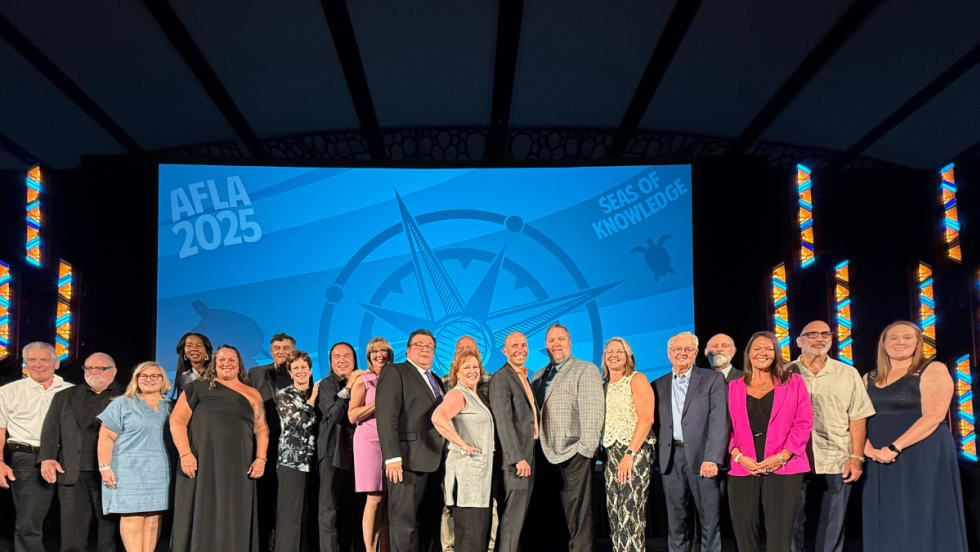
AFLA 2025 Conference in Pictures
Drawing over 640 attendees, the 2025 AFLA Annual Conference was held Sept. 14-17 at the JW Marriott Marco Island Beach Resort in Florida.
Read More →
DriveItAway, Free2move Partner to Expand Vehicle Access for Dealers
The arrangement enables franchise dealers to offer flexible lease-to-own programs with no credit checks, no down payments, and no long-term commitments.
Read More →