





Further Reading: New Federal Law Makes Requirements for EV Tax Credits More Restrictive
Trading Partners Fuming over U.S. EV Tax Breaks, China Threatens Action
The law, which the Biden administration considers critical for U.S. economic growth and security, excludes critical battery components from China, Russia, and other “foreign entities of concern.”
September 25, 2022

The E.U., South Korea, and Japan have vigorously protested the law’s provision, contending its sourcing requirements disadvantage their car and battery manufacturers, which remain dependent on Chinese inputs.
Photo: Pexels
3 min to read
The clause in the recently passed U.S. Inflation Reduction Act ruling out tax breaks for vehicles assembled abroad has sparked immediate and heated response from China and other U.S. trading partners, including the European Union (E.U.), South Korea, and Japan.
The new $437 billion health, climate, and tax law offers U.S. consumers as much as $7,500 in tax credits for new electric vehicles (EVs) as long as their batteries are composed of critical materials—such as lithium, nickel, and cobalt—extracted, processed or recycled in the U.S. or by the nation’s free-trade-agreement partners, reports the Bloomberg.com news service.
Significantly, the law, which the Biden administration considers critical for U.S. economic growth and security, excludes critical battery components from China, Russia, and other “foreign entities of concern.”
The clause in the Inflation Reduction Act ruling out tax breaks for vehicles assembled abroad “discriminates against similar imported goods and is a suspected breach of the World Trade Organization principles,” said Shu Jueting, China’s Ministry of Commerce spokesperson.
“China will continue to assess and evaluate implementation of the legislation and will take measures to safeguard its legal interests when necessary,” she added, without providing details, noted Bloomberg.
Much of the global battery supply chain relies on China, the world’s second-biggest EV producer. The country controls 92% of processed materials, 71% of cell assembly and 65% of battery components used in electric vehicles, according to Bloomberg.
The E.U., South Korea, and Japan have vigorously protested the law’s provision, contending its sourcing requirements disadvantage their car and battery manufacturers, which remain dependent on Chinese inputs.
Following a recent meeting of the G-7 countries, a European Commission spokesperson called the U.S. subsidies contrary to international trade rules and “designed in a way that they would result in new and significant transatlantic trade barriers as they discriminate against E.U. producers,” Bloomberg reported.
“This is detrimental to transatlantic trade and contrary to international trade rules, which have non-discrimination at its core,” the spokesman said. “The E.U. is therefore highly concerned about this unnecessary and damaging new trade barrier and will take the necessary steps to defend its interests.”
South Korean officials have called the new measure a “betrayal” and said they will consider filing a WTO complaint. Officials have met with their U.S. counterparts recently, and South Korean renewable energy research firm SNE Research said the nation’s suppliers hope to be offered some sort of exemption.
According to Bloomberg, some U.S. trade observers say policymakers may need soften the rules, because they also disadvantage domestic car manufacturers like Tesla, General Motors and Ford that still rely on Chinese battery manufacturers and Russian nickel.
“Currently, [the provision] is a standard no one can meet, including the U.S. companies,” said William Reinsch, senior adviser at the Center for Strategic and International Studies in Washington. “While steps are underway to develop non-Chinese sources, that will take time, probably more time than the statute provides. That leads me to think that Congress may decide it needs to reconsider the restrictions.”
More Global Fleet

GeoFencing Adds to Your Truck Security Arsenal
Geofencing is a familiar fleet tool today, but its early adoption marked a major shift in vehicle tracking, route monitoring, and the debate over employee privacy.
Read More →
Holman Takes Full Ownership of ARIZA in Mexico
Holman is bringing its Mexican fleet management operation fully under its own brand after more than 30 years as a joint venture. The change gives multinational fleet customers a single Holman operation across the U.S., Canada, and Mexico.
Read More →
5 Tire Maintenance Tips to Help Prevent Work Truck Downtime
Regular tire checks can do more than extend tread life. These five maintenance practices can help work truck fleets catch problems early, reduce costs, and prevent downtime.
Read More →

Proven Ways to Reduce Work Truck Downtime
The age-old problem of downtime will always be a reality, but with new strategies at hand, fleets have more ways to keep trucks on the road longer.
Read More →


Cameras, Safety and Insurance: From Reactive Claims to Real-Time Prevention (Part 2 of 2)
Part Two: Commercial auto remains one of the most challenging and costly lines of coverage for fleet operators and insurers alike. Continue learning more about how to effectively address these issues from Onur Aksan, Enterprise Business Development Executive, Geotab
Read More →
Cameras, Safety and Insurance: From Reactive Claims to Real-time Prevention
Commercial auto remains one of the most challenging and costly lines of coverage for fleet operators and insurers alike. Learn more about how to effectively address these issues from Onur Aksan, Enterprise Business Development Executive, Geotab.
Read More →
Fleet Costs Are Rising: Here’s How Leaders Are Responding
Fleet leaders are under pressure to reduce costs, adapt to economic uncertainty, and make smarter decisions. See how peers across North America are responding with real data, proven strategies, and forward-looking insights. Download the 2026 Market Pulse Report to benchmark your strategy and uncover where you can gain an edge.
Read More →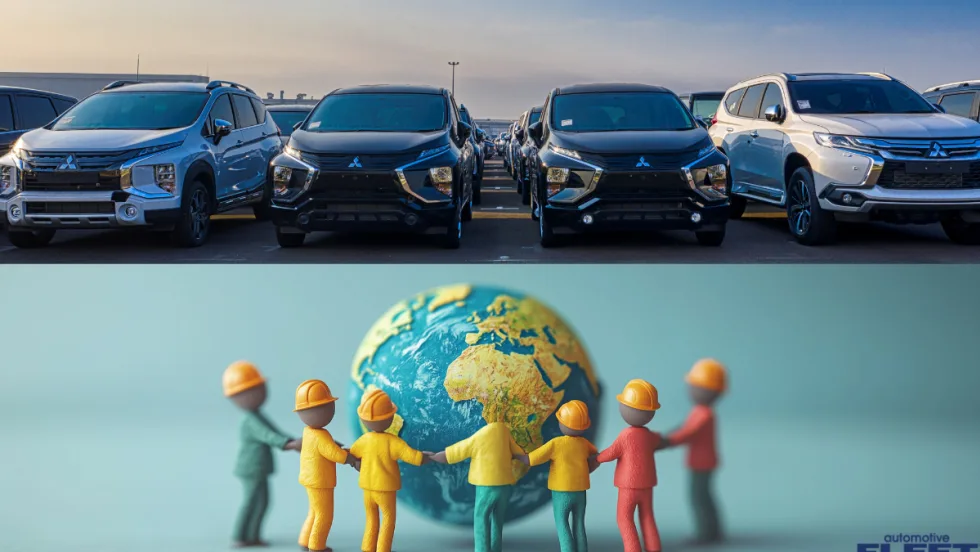
Enterprise Fleet Management Surpasses 900,000 Vehicles in U.S. & Canada
Enterprise Mobility connects with mobility solutions around the globe
Read More →