




Toyota Redesigns 4Runner Exterior and Interior for 2014
Toyota showed the latest edition of its 4Runner at the Stagecoach Country Music Festival in Indio, Calif., on April 27. A more rugged-looking exterior design and new interior materials and comfort features are new for 2014.
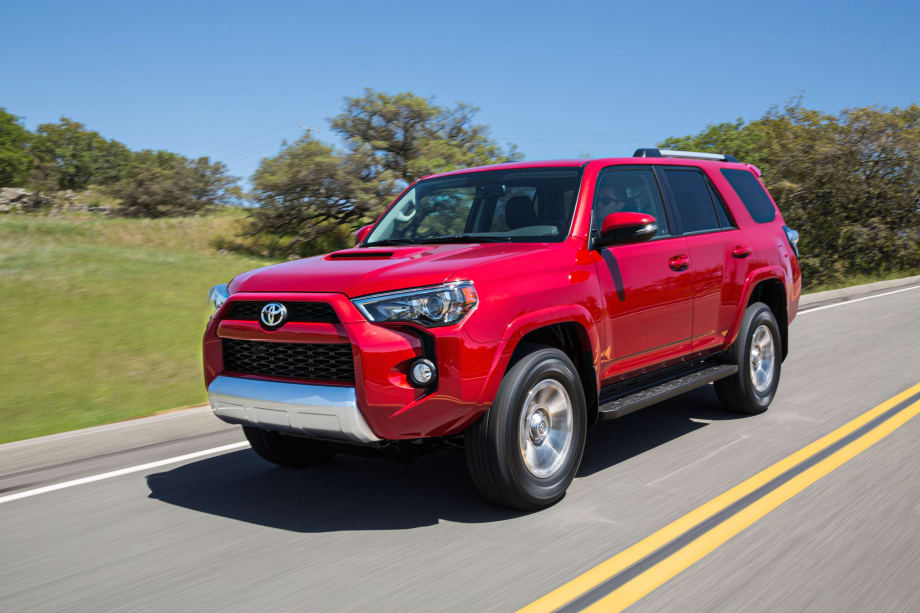
Toyota said it redesigned the 4Runner's front fascia to give it a more aggressive appearance for MY-2014. Photo courtesy Toyota.
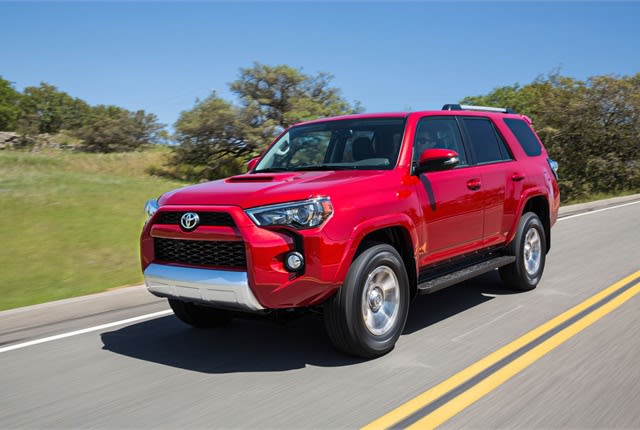
Toyota said it redesigned the 4Runner's front fascia to give it a more aggressive appearance for MY-2014. Photo courtesy Toyota.
Toyota showed the latest edition of its 4Runner at the Stagecoach Country Music Festival in Indio, Calif., on April 27. The vehicle features a new, more rugged exterior design and interior refinements, according to Toyota. The automaker said the vehicle is in its fifth generation and will come in three grades for MY-2014, including SR5, Limited, and Trail.
The vehicle comes in a rear-wheel 4x2, a “part-time” 4x4, or a full-time multi-mode 4x4 version with a locking center differential. Each model comes with a 4.0L, 270 hp V-6 that’s matched with a five-speed automatic transmission. For fuel economy, the 4Runner can achieve up to an EPA-estimated 17 mpg city and 23 mpg highway for the 4x2 models, and 17 mpg city and 22 mpg highway for the 4x4 models. Towing capacity for the 2014 4Runner is 5,000 lbs. and all models come standard with an integrated tow-hitch receiver and wiring harness, according to Toyota.
For the 2014 4Runner’s exterior, Toyota said it redesigned the front fascia and grille, giving them a more rugged look. The SR5 and Trail grades feature a color-keyed grille insert and the Trail grade features new color-keyed bumpers and overfenders. All trim grades come with a roof rack as standard equipment. The Limited’s front-end design features a chrome-plated grille insert and a chrome front bumper, along with chrome-trimmed side molding, roof rack, and rear bumper. The headlamps and rear combination lamps now come with LED lamps. The headlamps are now projector-beam-based rather than halogen-based.
Other exterior changes include 17-inch alloy wheels with a new wheel design on the SR5 and Trail grades. The Limited has 20-inch alloy wheels that are painted black. For colors, the 2014 4Runner features eight choices, including the addition of Super White; Attitude Black Metallic; Barcelona Red Metallic; and Nautical Blue Metallic. Other color choices include Blizzard Pearl; Classic Silver Metallic; Magnetic Gray Metallic; and Black.
Inside the redesigned 4Runner, Toyota added standard Soft Touch door trim, a leather-wrapped steering wheel, and a leather shift knob to the SR5 and Trail trim levels. The SR5 has a new Optitron instrument panel and a new multi-function display. The display shows an Eco-Driving monitor that shows real-time fuel economy while driving. On the Trail model, a single overhead console features all of the off-road controls. Next, manual air-conditioning controls are standard on the SR5 and Trail grades whereas the Limited model comes with an automatic dual-zone climate control system.

Up front, the driver's seat is eight-way power adjustable. The front passenger seat is four-way power adjustable. Photo courtesy Toyota.
The front seats in the Limited model are heated and the driver’s seat is eight-way power adjustable and has power lumbar support. The front passenger seat is four-way power-adjustable. Seat position memory settings are standard on both seats.
In the back of the 2014 4Runner, the front seat-back is sculpted to give second-row seat passengers more knee room. The second-row seats come in a 40/20/40 configuration, can recline up to 16 degrees, and include a center armrest. The second-row seats also have a one-touch walk-in feature that’s designed to provide easier access to the third row. On the SR5 and Limited grades, third-row seating is available.
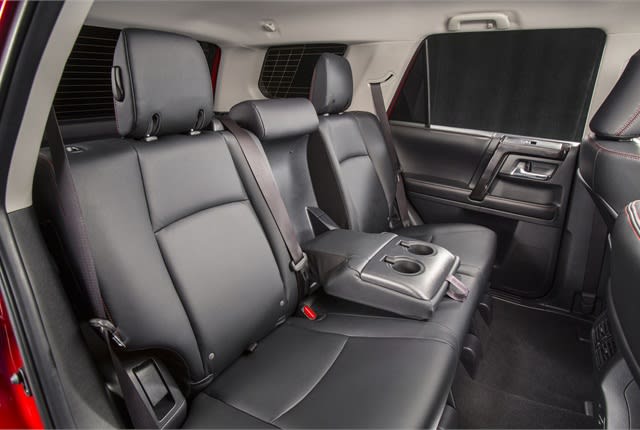
In the back, the second-row seats can recline up to 16 degrees. Third-row seats are optional on the SR5 and Limited grades. Photo courtesy Toyota.
In terms of interior materials, the SR5 and Trail grades come standard with fabric-trimmed seats in Sand Beige, Graphite or Black. SofTex seats are available, and for 2014, the SR5 grade comes with a standard eight-way power driver seat.
The Limited grade comes with standard leather trim and ventilated driver and front passenger seats. They come in Sand Beige, Black and a new Redwood color, according to Toyota.
When it comes to technology updates for MY-2014, Toyota offers Entune Audio Plus on the SR5 and Trail grades. This system includes the automaker’s Entune multimedia system, SiriusXM Satellite Radio with a 90-day trial subscription, Bluetooth hands-free phone pairing and music streaming capability, and an AM/FM/MP3 CD player with eight speakers. The Limited grade comes with an Entune Premium JBL Audio system and a navigation system with a seven-inch monitor. The vehicle also features a new in-glass antenna rather than the older “pole-style” antenna.
More Operations

Turning Fleet Payment Data into Executive Insights
Does data alone drive results in operations?
Read More →
Automotive Fleet Opens 2026 Personal Use Survey for Commercial Fleet Managers
Commercial and corporate fleet managers are invited to share how their organizations handle company vehicle personal-use policies, charges, and driver eligibility.
Read More →
Top 50 Executive Fleets
It is that time of year again! Time for the 2026 list of the Top 50 Executive Fleets, presented by Automotive Fleet and Volvo as part of its annual Fleet 500. Download now to see this year's list of companies!
Read More →
Gary Van Orden Retires After Nearly Four Decades in Commercial Fleet
From answering customer calls at Ford Motor Company to leading fleet sales across multiple OEMs and a fleet management company, Gary Van Orden's career reflects nearly four decades of leadership in commercial fleet.
Read More →
How Stellantis Plans to Get Ahead of Fleet Downtime
Vehicle acquisition may grab the headlines, but fleet uptime increasingly determines operating success. Darren Bradshaw of Mopar North America gives the details.
Read More →
Hyundai Releases 2027 Commercial Program Incentives
The 2027 Model Year "Fleet Street Incentives" are available to commercial and government fleets.
Read More →
It's All Downhill from Here! Fleet Industry Raises $22,000 for Skilled Trades Scholarships
Work Truck’s Lauren Fletcher and Automotive Fleet’s Chris Brown turned a friendly racing rivalry into $22,000 for automotive technology and skilled trades scholarships.
Read More →
The Top 300 Commercial Fleets
The Top 300 Commercial Fleets: See the List
Read More →

Your Local Dealer Knows More Than You Think
Your local dealer can provide an information advantage that extends well beyond courtesy deliveries.
Read More →