




Toyota Hopes to Sell 5.5M Electrified Vehicles by 2030
Toyota has set a goal to sell 5.5 million electrified vehicles by 2030, including 1 million zero-emission vehicles fitted with non-gasoline powertrains, the company has announced.
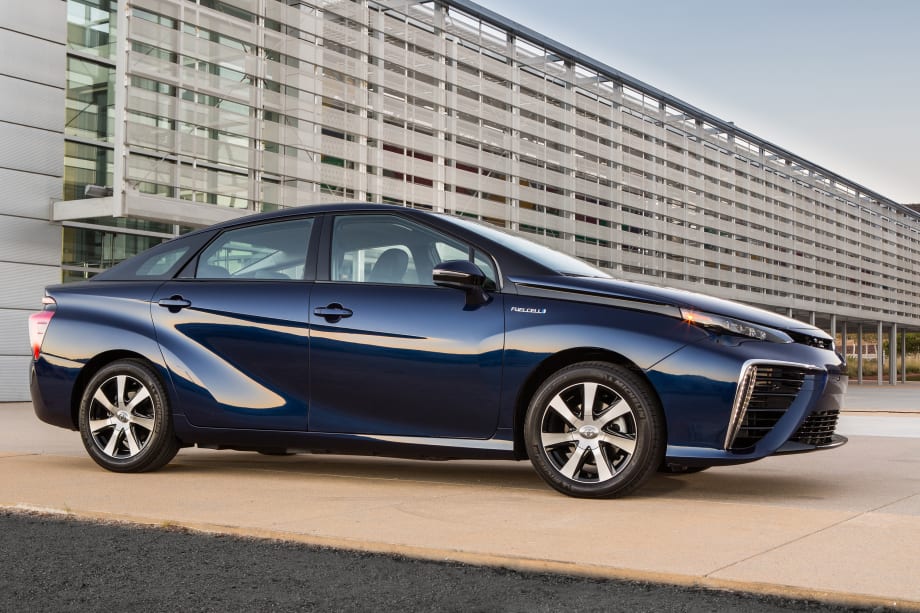
Photo of current Mirai fuel cell sedan courtesy of Toyota.
Photo of current Mirai fuel cell sedan courtesy of Toyota.
Toyota has set a goal to sell 5.5 million electrified vehicles by 2030, including 1 million zero-emission vehicles fitted with non-gasoline powertrains, the company has announced.
As a step toward the goal, Toyota and Lexus will offer electrified versions of every vehicle in their lineup by 2025. Toyota will eventually rely on a blend of gasoline-electric hybrids, plug-in electric hybrids, battery-electric vehicles, and hydrogen fuel cell vehicles to meet the 2030 goal.
Toyota hasn't offered a battery-electric vehicle since it discontinued the RAV4 EV after the 2014 model year. However, by the early 2020s, the company plans to offer 10 such models globally. The first BEVs will arrive in China, and will gradually roll out to Japan, India, the U.S., and Europe.
In the commercial vehicle realm, Toyota plans to expand the number of hydrogen fuel cell vehicles it will offer by the early 2020s.
Toyota will also expand its gasoline-electric hybrid models with further development of the second-generation hybrid powertrain that powers the current Prius. Toyota will introduce more powerful versions of some models and develop simpler hybrid systems for other models, according to Toyota.
Toyota is working with Panasonic on a feasibility study on a joint automotive prismatic battery business with the goal of developing the "best automotive prismatic battery in the industry," according to the company.
To date, Toyota has sold more than 11 million electrified vehicles since introducing the Prius 20 years ago.
More Operations
Here's When You Should Make an Exception to Fleet Policy
Fleet policies are designed to create consistency, but not every driver or situation fits neatly within standard rules.
Read More →
AI-Native or AI-Acquired: What Should Fleet Managers Look for in an AI Platform?
Six questions can help fleet managers look beyond AI marketing claims to evaluate integration, data access, and real-world operational performance.
Read More →
A buyer's guide to fleet management software in 2027
Buying fleet management software in 2027 means looking beyond features and price. As fleet operations, technology and expectations evolve, this guide explores what today’s fleet professionals should consider when choosing a system that can deliver value now and adapt to what comes next.
Read More →

What Will Shape the Next Era of Fleet Management?
EVs, AI, and autonomous vehicles are reshaping fleet management. Discover what’s ahead—and how fleet leaders can prepare for the next era.
Read More →
How Fleets Can Recruit and Train Veterans for Technician Roles
Here's how the technician shortage has affected uptime for fleets, and what to do about it.
Read More →
Avis Budget Group Deploys Neology Toll Management Technology Across Major Brands
Neology’s neoFleet platform will manage toll transactions and toll-authority operations for vehicles across Avis, Budget, Payless, Budget Truck and Zipcar.
Read More →
Fleet Personal-Use Charges Edge Higher in 2026
Nearly eight in 10 surveyed fleets allow personal use of company vehicles, while just over half of respondents report charging employees for the privilege.
Read More →
The Future of Fleet + What’s Changing Right Now | AF News Recap
Could developments overseas offer a preview of what’s coming for U.S. fleets? This week, we’re looking at the future of AI, autonomy, and electrification, plus Ford Pro’s new certified pre-owned program, smarter vehicle offboarding, and a new way for fleets to manage toll expenses.
Read More →
How to Handle Vehicle Offboarding
What do fleet managers need to do when a driver leaves?
Read More →
Fleet Manager’s Ultimate Playbook: Navigating the New Standard in OEM Connectivity
Rising operating costs, driver safety concerns, and unplanned downtime are putting unprecedented pressure on modern fleets. Discover how fleet managers use embedded OEM connectivity and real-time vehicle data to cut TCO, prevent downtime, and protect drivers without aftermarket telematics hardware.
Read More →