




Tesla AutoPilot Crash Investigation Yields Autonomous Tech Insights
The government has closed its investigation into a fatal crash between a Tesla on AutoPilot and a tractor-trailer that raised questions about the safety of autonomous vehicles, and the report offers a number of insights into the advanced driver assist technologies on the path to “self-driving” vehicles.
January 20, 2017


Still from a YouTube video of a Tesla S model owner using the vehicle's autopilot mode.
2 min to read
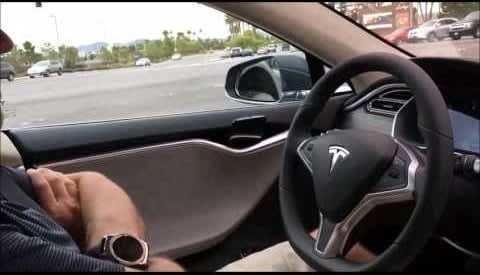
Still from a YouTube video of a Tesla S model owner using the vehicle's autopilot mode.
The government has closed its investigation into a fatal crash between a Tesla on AutoPilot and a tractor-trailer that raised questions about the safety of autonomous vehicles, and the report offers a number of insights into the advanced driver assist technologies on the path to “self-driving” vehicles.
In May 2016, a Tesla Model S crashed into a tractor-trailer crossing an uncontrolled intersection on a Florida highway, killing the Tesla driver. The Tesla was being operated in Autopilot mode at the time of the collision, but the automatic emergency braking system did not provide any warning or automated braking. Nor did the driver take any braking, steering or other actions to avoid the collision.
The National Highway Traffic Safety Administration report determined that there was no safety-related defect involved in the crash. The agency noted that emergency braking systems like this are designed to reduce rear-end collisions, not crossing-path collisions like this one.
It also pointed out that Tesla’s Autopilot system “is an Advanced Driver Assistance System (ADAS) that requires the continual and full attention of the driver to monitor traffic and be prepared to take action to avoid crashes.”
But in this case, the driver did not have his hands on the wheel, and NHTSA said the crash appears to have involved a period of extended driver distraction (at least 7 seconds). The truck driver told a reporter that the driver of the Tesla was “playing Harry Potter on the TV screen” at the time of the crash.
Since the crash, Tesla has improved its system for monitoring driver engagement. If a driver doesn’t respond to visual cues in the driver monitoring system alerts, he or she may "strike out" and lose Autopilot function for the rest of the drive cycle.
While a report in Bloomberg said the system had been “vindicated,” the National Highway Traffic Safety Administration noted in its report that “the closing of this investigation does not constitute a finding by NHTSA that no safety-related defect exists. The agency will monitor the issue and reserves the right to take future action if warranted by the circumstances.”
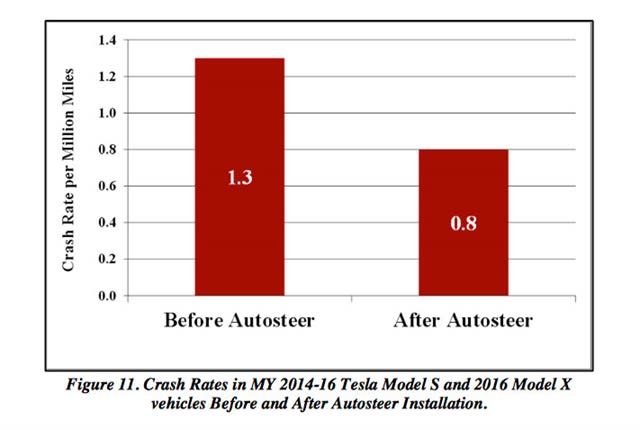
However, NHTSA reported, an analysis of data supplied by Tesla indicated the Tesla vehicles crash rate dropped by almost 40% after Autosteer installation.
The agency analyzed mileage and airbag deployment data supplied by Tesla for all MY 2014 through 2016 Model S and 2016 Model X vehicles equipped with the Autopilot Technology Package, either installed in the vehicle when sold or through an OTA update, to calculate crash rates by miles travelled prior to and after Autopilot installation.
More Safety
Tips for Driving Safely on Halloween Night
This video features a reminder from the Connecticut Department of Transportation (DOT) and the Connecticut Police Chiefs Association, urging drivers to prioritize safety this Halloween.
Read More →
IIHS Crash Avoidance Tests Reveal Safety Gaps in Cargo Vans and Work Trucks
New crash-avoidance ratings from the Insurance Institute for Highway Safety reveal inconsistent performance among commercial vehicles, with several popular cargo vans and heavy-duty pickups struggling to avoid collisions with other vehicles and pedestrians.
Read More →
What’s Next for Fleet? Safety, AI & Industry Recognition | AF News Recap
Could your company's culture be encouraging distracted driving? This week, we're exploring how workplace expectations affect driver safety, what AI, EVs, and autonomous vehicles could mean for the future of fleet management, and how fleet professionals can strengthen their award nominations.
Read More →
Does Your Fleet's Culture Encourage Distracted Driving?
What happens when the people responsible for enforcing safety rules are the ones setting the wrong example? The answer may reveal why some of the biggest risks to fleet drivers have little to do with what's written in the employee handbook.
Read More →
Sponsored•October 1, 2026
Fleet Manager’s Ultimate Playbook: Navigating the New Standard in OEM Connectivity
Rising operating costs, driver safety concerns, and unplanned downtime are putting unprecedented pressure on modern fleets. Discover how fleet managers use embedded OEM connectivity and real-time vehicle data to cut TCO, prevent downtime, and protect drivers without aftermarket telematics hardware.
Read More →
From Driver Well-Being to EV Charging | AF News Recap
Mental health belongs in the fleet safety conversation. This week, we’re looking at five ways fleets can support employee well-being before a crisis, plus Holman’s expansion in Mexico, new one-day Fleet Forward passes, and why EV charging demand is outpacing infrastructure growth.
Read More →
Nexar-Nauto Merger Aims to Give Fleets Better Safety Intelligence Through Larger Driving Dataset
Stefan Heck tells Automotive Fleet that combining more than 10 billion miles of driving history with Nexar's AI models will give fleets deeper insights into driver risk and roadway conditions than either company could provide independently.
Read More →
Don't Wait for a Crisis: 5 Ways to Build Mental Health Into Your Fleet Safety Program
For Suicide Prevention Month, fleet and safety leaders have an opportunity to put mental health where it belongs: at the center of workplace safety.
Read More →
How Camera Data Can Strengthen a Fleet’s Insurance Renewal
Insights from a commercial insurance carrier and a broker show how fleets can turn video telematic data, driver coaching, and improved claims results into a stronger case at insurance renewal.
Read More →
The Safest Fleets Aren’t the Ones with the Most Technology
You’ve made the telematics investment. Here’s how to capture the other half of its value and build the safest fleet on the road.
Read More →