




Survey: Mature Drivers Rank Blind Spot Warning Systems as Top Tech Pick
New research from The Hartford and the MIT AgeLab finds that drivers over 50 believe that blind spot warning systems will make them safer while driving. These systems were ranked No. 1 among a list of 10 vehicle technologies.
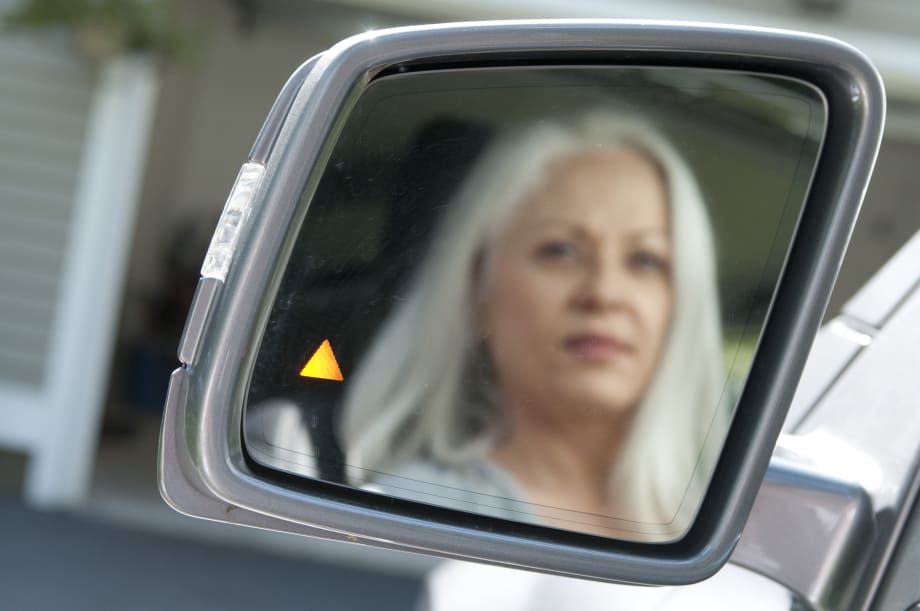
Photo by Business Wire
Mature drivers rank blind spot warning systems highest from a list of 10 new vehicle features, saying this technology would make them feel most safe when driving, according to a new survey released by The Hartford and the MIT AgeLab.
The survey results, released in Top Technologies for Mature Drivers: Consumer Insights, indicate that drivers over 50 who have at least one of the 10 technologies report feeling more confident as they drive than those who don't have any of the technologies.
"As part of our recent research focus on mature drivers and technology, we wanted to understand what new features mature drivers themselves want in their vehicles," said Jodi Olshevski, gerontologist and executive director of The Hartford Center for Mature Market Excellence. "The research suggests that mature drivers value technology that assists with changing lanes and parking. This is encouraging, and consistent with our previous research in which mature drivers identified turning their head to see blind spots as a challenging aspect of driving. It also supports our understanding of changes in flexibility and range of motion that can occur as we age."
Photo by Business Wire
In the survey, drivers over 50 years old ranked a list of 10 vehicle technologies according to what they believed would make them feel the most safe when they drive. Here’s how the technologies ranked in order:
1. Blind spot warning systems: warns drivers of objects in blind spots, especially while changing lanes and parking, and helps those with limited range of motion
2. Crash mitigation systems: detects when the vehicle may be in danger of a collision and can help to minimize injuries to passengers
3. Emergency response systems: offers quick assistance to drivers in the case of a medical emergency or collision, often allowing emergency personnel to get to the scene more quickly
4. Drowsy driver alerts: monitor the degree to which a driver may be inattentive while on the road and helps alert drivers to the driving task
5. Reverse monitoring systems: warn of objects to the rear of the vehicle to help drivers judge distances and back up safely, and helps drivers with reduced flexibility
6. Vehicle stability control: helps to automatically bring the vehicle back in the intended line of travel, particularly in situations where the driver underestimates the angle of a curve or experiences weather effects, and reduces the likelihood of a crash
7. Lane departure warning: monitors the vehicle's position and warns the driver if the vehicle deviates outside the lane, helping drivers stay in their lane
8. Smart headlights: adjust the range and intensity of light based on the distance of traffic and to reduce glare and improve night vision
9. Voice activated systems: allow drivers to access features by voice command so they can keep focused on the road
10. Assistive parking systems: enable vehicles to park on their own or indicate distance to objects, reducing driver stress, making parking easier, and increasing the places that a driver can park.
The survey found that 51% of mature drivers said they would feel safer if their vehicle had all of the most up-to-date technologies. Interestingly, women were more likely than men to report that having all 10 technologies would make them feel safer.
This new research also revealed that 55% of mature drivers plan to buy or lease another vehicle in the next five years, suggesting that as more and more of these features are incorporated into new vehicles, a growing number of consumers 50-plus could be driving cars with these technologies.
"As new technologies are incorporated into vehicles, it's important for drivers of all ages to learn how to use them appropriately so that they enhance driver safety," said Joseph F. Coughlin, PhD, director of the MIT AgeLab. "This research shows that mature drivers are ready to consider new technologies and associate them with greater safety behind the wheel."
This recent study is a follow-up to the Top Technologies for Mature Drivers: Experts Ranking research conducted in 2012. The Hartford Center for Mature Market Excellence and the MIT AgeLab worked with a panel of leading experts in driving, aging and technology to conduct an extensive study that involved the review of 25 new technologies and the identification of 10 features that can benefit mature drivers.
GfK Knowledge Networks conducted an online survey of adults over the age of 50 across the United States for The Hartford and the MIT AgeLab. A total of 927 interviews were completed with individuals who hold a valid drivers' license and drive at least three days in a typical week. The data was weighted to match U.S. Census current population survey benchmarks. The survey was fielded in June 2013.
More Safety

What’s Next for Fleet? Safety, AI & Industry Recognition | AF News Recap
Could your company's culture be encouraging distracted driving? This week, we're exploring how workplace expectations affect driver safety, what AI, EVs, and autonomous vehicles could mean for the future of fleet management, and how fleet professionals can strengthen their award nominations.
Read More →
Does Your Fleet's Culture Encourage Distracted Driving?
What happens when the people responsible for enforcing safety rules are the ones setting the wrong example? The answer may reveal why some of the biggest risks to fleet drivers have little to do with what's written in the employee handbook.
Read More →
Fleet Manager’s Ultimate Playbook: Navigating the New Standard in OEM Connectivity
Rising operating costs, driver safety concerns, and unplanned downtime are putting unprecedented pressure on modern fleets. Discover how fleet managers use embedded OEM connectivity and real-time vehicle data to cut TCO, prevent downtime, and protect drivers without aftermarket telematics hardware.
Read More →
From Driver Well-Being to EV Charging | AF News Recap
Mental health belongs in the fleet safety conversation. This week, we’re looking at five ways fleets can support employee well-being before a crisis, plus Holman’s expansion in Mexico, new one-day Fleet Forward passes, and why EV charging demand is outpacing infrastructure growth.
Read More →
Nexar-Nauto Merger Aims to Give Fleets Better Safety Intelligence Through Larger Driving Dataset
Stefan Heck tells Automotive Fleet that combining more than 10 billion miles of driving history with Nexar's AI models will give fleets deeper insights into driver risk and roadway conditions than either company could provide independently.
Read More →
Don't Wait for a Crisis: 5 Ways to Build Mental Health Into Your Fleet Safety Program
For Suicide Prevention Month, fleet and safety leaders have an opportunity to put mental health where it belongs: at the center of workplace safety.
Read More →
How Camera Data Can Strengthen a Fleet’s Insurance Renewal
Insights from a commercial insurance carrier and a broker show how fleets can turn video telematic data, driver coaching, and improved claims results into a stronger case at insurance renewal.
Read More →
The Safest Fleets Aren’t the Ones with the Most Technology
You’ve made the telematics investment. Here’s how to capture the other half of its value and build the safest fleet on the road.
Read More →
Hidden in Plain Sight: Fleet Compliance Risks
Fleet compliance isn't just about having policies — it's about consistently enforcing them. This practical guide reveals six hidden compliance risks common in public sector and shared fleet operations and outlines proven strategies to improve visibility, accountability, and audit readiness
Read More →
NETS Sets 2026 Fleet Safety Benchmark Conference for Indianapolis
The Sept. 15–17 program will feature fleet benchmarking data, case studies, emerging technologies, and implementation strategies while running alongside the NSC Safety Congress & Expo.
Read More →