





Should You Check Mobile Phone Records After a Fleet Vehicle Crash?
Study Reveals Dangers of Driving While Tired
Drowsy Driving Prevention Week is underway and an updated study shows drowsy driving statistics that will make you think twice about hitting the road when you’re struggling to stay awake.
November 6, 2024
Driving drowsy can impair judgment and slow reaction times, making it harder to physically or mentally react to stimuli than in a normal and alert state.
Photo: Automotive Fleet
4 min to read
Every November, the National Sleep Foundation conducts Drowsy Driving Prevention Week to reduce the number of drowsy driving crashes. In 2024, the prevention week is held from Nov. 3-9.
In support of Drowsy Driving Prevention Week, MarketWatch Guides and the National Highway Traffic Safety Administration (NHTSA) published a new study on annual drowsy driving statistics. It shows that impaired driving is often associated with cellphone use or drugs and alcohol, but drowsy driving is just as dangerous.
According to the updated statistics, the NHTSA reported 693 deaths resulting from crashes involving drowsy drivers in 2022. This shows an increase from 2021, where 684 deaths were reported as a direct result of drowsy driving.
Take a look at the following statistics surrounding drowsy driving:
A study by the Centers for Disease Control and Prevention (CDC) found that 1 in 25 drivers admitted to falling asleep while driving in the prior 30 days.
Most drowsy driving-related accidents involve motorists moving off the road at high rates of speed, often with no evidence of braking.
Drowsy driving-related accidents are more likely to occur in the early morning hours between midnight and 6 a.m. and in the late afternoon. These times correspond with natural dips in the circadian rhythms responsible for regulating sleep.
Accidents due to drowsy driving frequently occur on highways and rural roads.
Why Is Drowsy Driving Dangerous?
Driving drowsy can impair judgment and slow reaction times, making it harder to physically or mentally react to stimuli than in a normal and alert state.
In certain instances, reaction times also increase more over time for sleepy drivers than for drivers with the proper rest. In other words, the longer you’re sleepy behind the wheel, the greater the impairment to your judgment.
Sleep deprivation can mirror the effects of drunkenness, a comparison that’s bolstered by various studies. In one study, some sleep-deprived participants performed equal to or worse than drunk participants with a blood alcohol concentration (BAC) of 0.05% when performing certain tasks.
Even the smallest change in reaction time can put drowsy drivers at a higher risk of causing or being involved in a car crash, especially when traveling at high speeds.
Fatal Consequences and Financial Impact of Drowsy Driving
Unfortunately, determining a precise number of drowsy-driving crashes, injuries, and fatalities is not yet possible. Crash investigators can look for clues that drowsiness contributed to a collision, but these clues are only sometimes identifiable or conclusive.
NHTSA’s census of fatal crashes and estimate of traffic-related crashes and injuries rely on police and hospital reports to determine the incidence of drowsy-driving crashes.
The NHTSA estimates that in 2017, 91,000 police-reported crashes involved drowsy drivers. These crashes led to an estimated 50,000 people injured and nearly 800 deaths.
Survivors of drowsy driving-related car accidents continue to wrestle with the consequences of their actions, primarily via their annual car insurance premiums.
A single at-fault accident on your driving record can increase your premium by hundreds of dollars to over $1,000. Multiple accidents compound these rates due to increased insurance risk as a driver.

The NHTSA reported 693 deaths resulting from crashes involving drowsy drivers in 2022.
Photo: Anastasiia Chaikovska / Pexels
Warning Signs of Drowsy Driving
According to the CDC, the following represent signs of drowsy driving:
Yawning or blinking frequently
Trouble remembering the past few miles driven
Missing your exit
Drifting from your lane
Hitting a rumble strip on the side of the road
According to the study, passengers should also closely monitor motorists for signs of drowsy driving and look for rest areas if the driver must pull off.
Who Is Most at Risk for Drowsy Driving?
The NHTSA previously reported the following population groups to be at the highest risk for drowsy driving:
Shift workers: Work shifts that interfere with the natural circadian rhythm can put employees at a higher risk of drowsy driving. Shifts that begin at or near dark and extend into the early morning could negatively impact driving ability.
Young people: Increased socialization, extracurricular activities, jobs, and schoolwork can all keep young drivers on the road longer and later, increasing their risk of drowsy driving.
People living with sleeping disorders: Left untreated, sleeping disorders such as sleep apnea and narcolepsy can increase the risk of car crashes due to drowsiness.
How to Prevent Drowsy Driving
Understanding how to avoid drowsy driving requires more than just hitting the snooze button. Here are a few tips from the CDC and NHTSA that you can use to remain alert the next time you get into the driver’s seat:
Aim for around seven to eight hours of sleep per night.
Check your medications for side effects of drowsiness, and use public transportation if they’re present.
Avoid using tricks such as opening the window, turning up the radio, or guzzling coffee or energy drinks. Their effects on drowsiness are minimal and short-lived.
Seek treatment for sleep-related conditions like sleep apnea and narcolepsy.
Refrain from drinking alcohol before you drive, even if you’re well under the legal limit.
Take frequent breaks or pull over to rest if you feel yourself getting drowsy.
Editor's Note: This article was originally published in November 2023 and was updated on November 6, 2024, for continued relevancy on drowsy driving and related statistics.
More Safety

Sponsored•October 1, 2026
Fleet Manager’s Ultimate Playbook: Navigating the New Standard in OEM Connectivity
Rising operating costs, driver safety concerns, and unplanned downtime are putting unprecedented pressure on modern fleets. Discover how fleet managers use embedded OEM connectivity and real-time vehicle data to cut TCO, prevent downtime, and protect drivers without aftermarket telematics hardware.
Read More →
From Driver Well-Being to EV Charging | AF News Recap
Mental health belongs in the fleet safety conversation. This week, we’re looking at five ways fleets can support employee well-being before a crisis, plus Holman’s expansion in Mexico, new one-day Fleet Forward passes, and why EV charging demand is outpacing infrastructure growth.
Read More →
Nexar-Nauto Merger Aims to Give Fleets Better Safety Intelligence Through Larger Driving Dataset
Stefan Heck tells Automotive Fleet that combining more than 10 billion miles of driving history with Nexar's AI models will give fleets deeper insights into driver risk and roadway conditions than either company could provide independently.
Read More →
Don't Wait for a Crisis: 5 Ways to Build Mental Health Into Your Fleet Safety Program
For Suicide Prevention Month, fleet and safety leaders have an opportunity to put mental health where it belongs: at the center of workplace safety.
Read More →
How Camera Data Can Strengthen a Fleet’s Insurance Renewal
Insights from a commercial insurance carrier and a broker show how fleets can turn video telematic data, driver coaching, and improved claims results into a stronger case at insurance renewal.
Read More →
The Safest Fleets Aren’t the Ones with the Most Technology
You’ve made the telematics investment. Here’s how to capture the other half of its value and build the safest fleet on the road.
Read More →
Sponsored•August 7, 2026
Hidden in Plain Sight: Fleet Compliance Risks
Fleet compliance isn't just about having policies — it's about consistently enforcing them. This practical guide reveals six hidden compliance risks common in public sector and shared fleet operations and outlines proven strategies to improve visibility, accountability, and audit readiness
Read More →
NETS Sets 2026 Fleet Safety Benchmark Conference for Indianapolis
The Sept. 15–17 program will feature fleet benchmarking data, case studies, emerging technologies, and implementation strategies while running alongside the NSC Safety Congress & Expo.
Read More →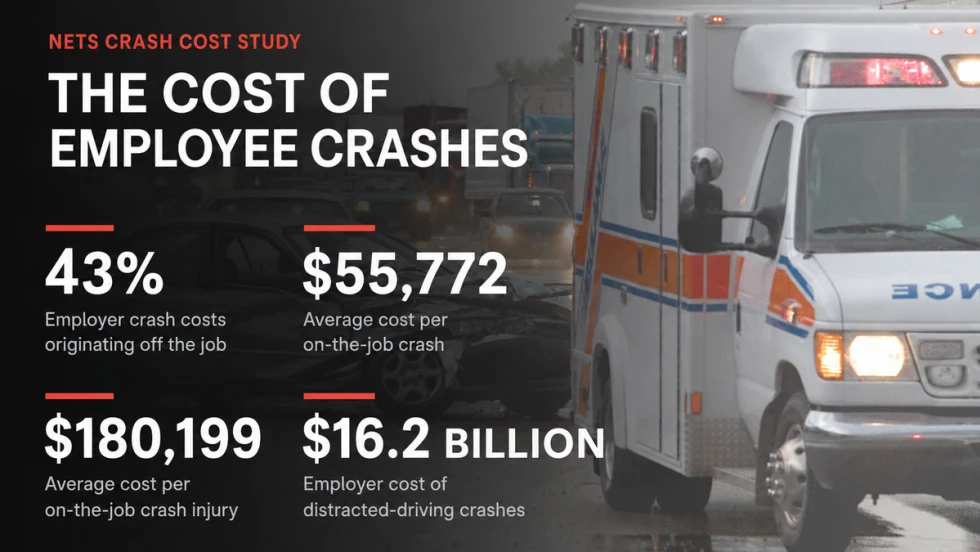
Off-the-Job Crashes Account for 43% of Employers’ $61.7 Billion Crash Burden
NETS quantifies costs dispersed across fleet, risk, HR, and other departments while providing new per-crash benchmarks for employers.
Read More →
Ram Recalls More Than 1.27 Million 1500 Pickups for Seat Belt Anchor Issue
The recall affects certain 2019-2026 Ram 1500 pickups that may have improperly attached second-row seat belt buckle anchors.
Read More →