




Related: New Mobility, Autonomous and E-Tech Upfront at BusCon 2019
Study Looks at Cold Weather Effects on Electric Bus Range
As transit agencies plan to replace their traditional diesel-fueled buses with zero-emission buses, they will need to consider the effects of extreme weather on the new buses replacing their existing fleets.
by Staff
January 12, 2020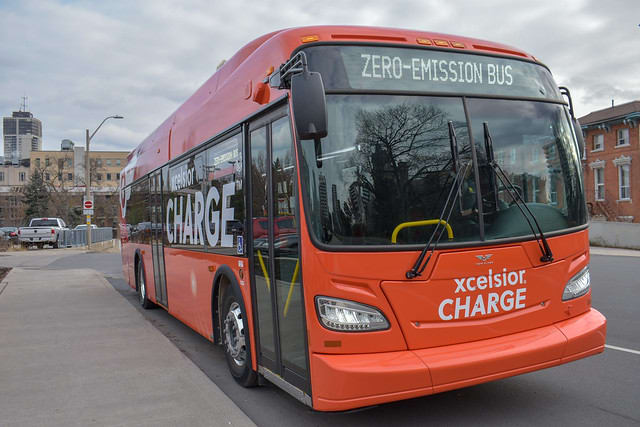
This paper attempts to compare both battery electric and fuel cell electric buses’ fuel economy in relation to varying temperature trends.
Photo via Joey Coleman/Flickr.
3 min to read
The Center for Transportation and the Environment (CTE) with the Midwest Hydrogen Center of Excellence (MHCoE), Cleveland State University (CSU), and the Stark Area Regional Transit Authority (SARTA) have released a study evaluating the relationship between ambient temperature and fuel economy for zero-emission buses.
This study builds upon previous efforts by incorporating daily-level data into the analysis, allowing the team to capture extreme temperature values that would be masked in an evaluation of monthly data.All transit buses, regardless of fuel source, experience some loss of range in extreme weather. As transit agencies plan to replace their traditional diesel-fueled buses with zero-emission buses, they will need to consider the effects of extreme weather on the new buses replacing their existing fleets.
"Transit agencies located in cold weather climates will need to consider the effects of winter on range when planning a transition to zero emission buses," Andrew Thomas, director of the MHCoE, said. "Hydrogen fuel cell buses appears to offer cold weather ranges that will be most compatible with traditional route planning.”
This paper attempts to compare both battery electric and fuel cell electric buses’ fuel economy in relation to varying temperature trends.
“As someone who has relied on a bus year round in an area of the country with very cold weather – I haven’t forgotten standing outside in -30 degrees Fahrenheit last winter – it is important to me that we share these real-world range results of zero-emission buses under a wide range of temperature conditions to ensure that they are deployed successfully throughout the United States,” said Alison Smyth, engineering consultant at CTE.
The Study Team collected data from eight transit agencies: four that deployed hydrogen fuel cell and four that deployed battery electric buses. The results of the analysis show that the loss in range during a temperature change from 50-60°F to 22-32°F was greater for battery electric buses (37.8% decrease) than for fuel cell electric buses (23.1% decrease). Since battery electric buses typically have a smaller range than fuel cell electric buses even under optimal conditions, this is an important consideration for transit agencies that are seeking one-for-one bus replacements.
This study seeks to provide transit agencies with planning insights as they consider strategies for replacing existing fleets, and does not intend to recommend one technology over another.
“As a transit agency operating in the Midwest it is our goal to provide the best service possible to our riders,” said Kirt Conrad, CEO of SARTA. “This includes being able to operate our fleet with the greatest efficiency possible. This study, and its findings, help to show that hydrogen fuel cells are a viable option for other transit agencies in addition to their success here in Stark County.”
This effort was funded under a National Fuel Cell Bus Program grant provided by the Federal Transit Administration.
This story was originally posted on Metro Magazine.
More Fleet Forward
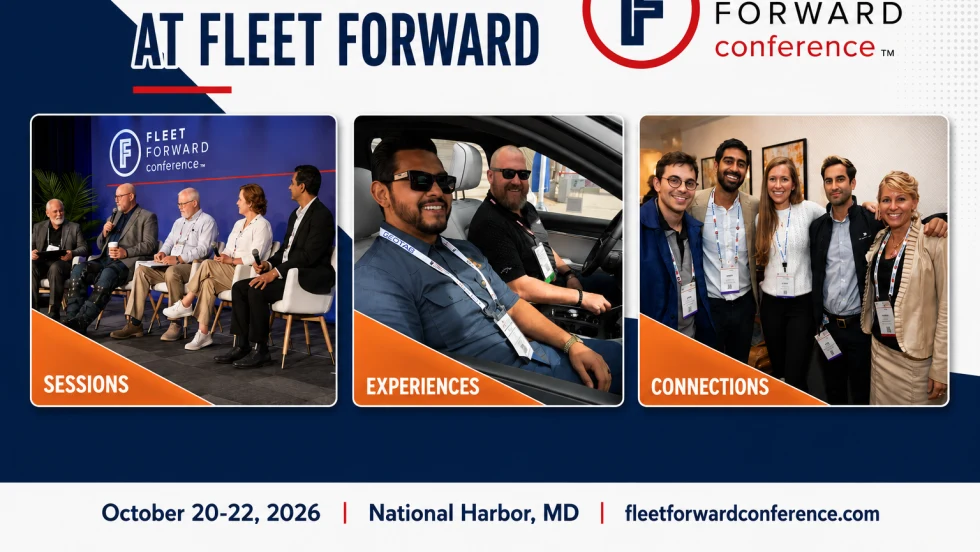
What Fleets Want: FFC Panel to Examine the Future of the Fleet-OEM Relationship
Fleet and OEM leaders will tackle how connected vehicles, embedded telematics, and data are changing the relationship between commercial fleets and automakers.
Read More →
2026 Fleet Manager of the Year Finalists Announced
Who are the 2026 Fleet Manager of the Year finalists?
Read More →
John Rossant to Deliver Opening Keynote at 2026 Fleet Forward Conference
The CoMotion founder will draw on developments across Europe, China, the Middle East, and other international markets to identify trends that could influence how U.S. fleets plan for the coming decade.
Read More →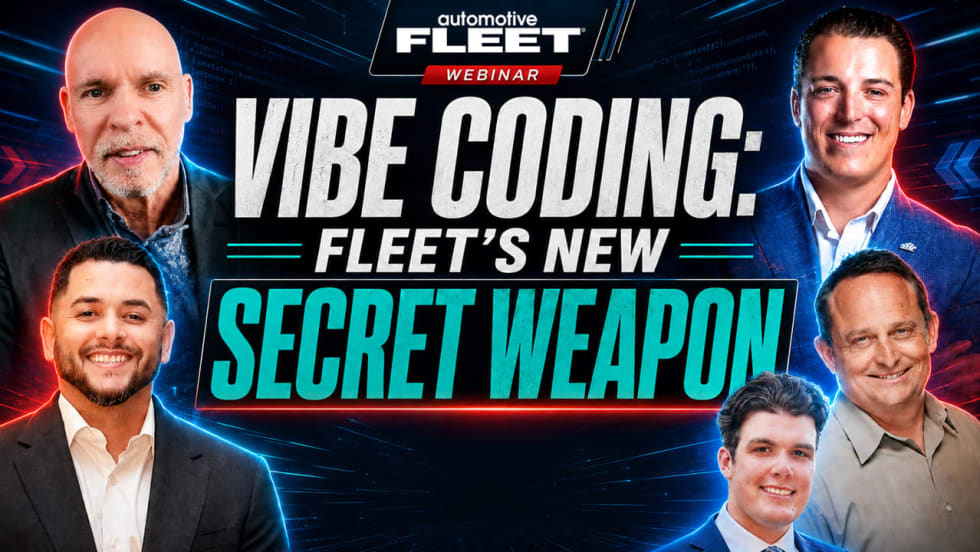
How to Build Custom Fleet Tools With AI and Vibe Coding [Webinar]
A new Automotive Fleet webinar explores how fleet managers are using AI and vibe coding to automate routine work and create simple operational tools without traditional programming skills.
Read More →
Is Fleet Ready for Its New Disruptors?
Three emerging leaders from a corporate fleet, public fleet, and the automotive supply chain will bring new ideas and a willingness to challenge industry norms to the Fleet Forward Conference stage.
Read More →
NAFA Announces 2026 Fleet Safety Symposium Education Program
Register for NAFA’s Fleet Safety Symposium and save $200 on your Fleet Forward Conference registration.
Read More →
Fleet Managers Take the Lead in Hands-On AI Workshop at FFC
The fleet manager-led session will show how to use “vibe coding” to build practical fleet tools without a traditional programming background.
Read More →
NETS Crash-Cost Data and CoolSys’ 80% Loss Reduction Take Center Stage at FFC
NETS will present findings from its latest Cost of Crashes research, then CoolSys safety leader and author Shawn Martinez will explain how the company built a safer driving culture across 3,500 employees.
Read More →
Is Your Grey Fleet Creating an Unmanaged Safety Risk?
NCR Atleos Fleet Manager Jose Rocha will join Cardata and SambaSafety experts at Fleet Forward Conference to examine how fleets can extend safety oversight to every employee who drives for business.
Read More →
Agentic AI Session at FFC Will Help Fleets Turn Data Into TCO Action
Mike Albert Fleet Solutions and Motorq will show how agentic AI can uncover maintenance, fuel, and utilization savings buried across disconnected fleet data.
Read More →