




SmartDrive Launches Video Safety Platform With New Hardware
SmartDrive Systems launched the SmartDrive Transportation Intelligence Platform and SR4 hardware for fleets, offering a comprehensive video- and sensor-based intelligence platform for fleets looking to improve driver habits and safety.
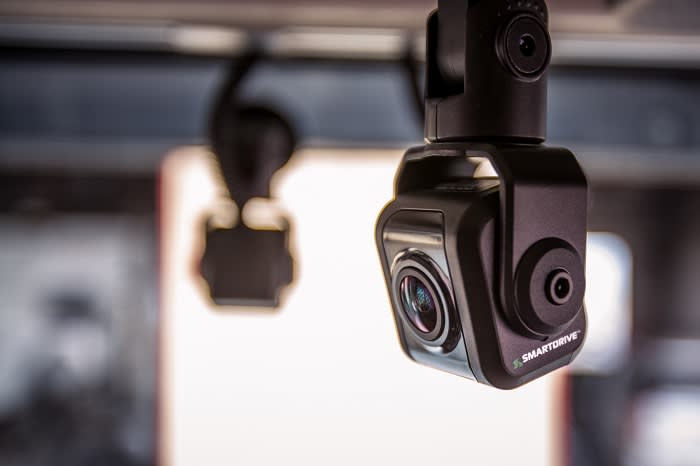
SmartDrive's SR4 hardware is more than 50% smaller than previous iterations to reduce the distraction to the driver, especially for dash- and windshield-mounted equipment. Photo: SmartDrive
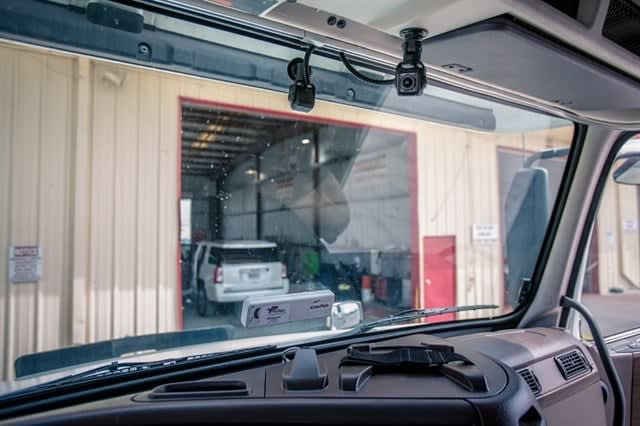
The SmartDrive Transportation Intelligence Platform was presented to fleets late last year and adopted by companies like Oakley Transport. Photo: SmartDrive
SmartDrive Systems launched the SmartDrive Transportation Intelligence Platform and SR4 hardware for fleets, offering a comprehensive video- and sensor-based intelligence platform for fleets looking to improve driver habits and safety.
Using what SmartDrive calls single-box architecture, the new platform allows for the convergence of data, devices (including third-party devices) and network connectivity, allowing a fleet to view all of its data in a single location. The SR4 hardware can now support up to nine cameras, including four SmartDrive cameras, four third-party cameras, and integration with Wabco’s next generation OnLane lane departure warning system as the road-facing camera.
The system was designed to anticipate new challenges for fleet safety, including increased automation, more driver distractions, and new security threats to data and privacy. The platform will support data from many sources, such as third-party telematics software and hardware. It uses this data to give fleets better analytics and risk assessment capabilities. Updated sensors and software enable more precise triggering for non-collision events.
"We architected this platform to enable the future of intelligent transportation while delivering fleets significant value today," said Steve Mitgang, SmartDrive's CEO. "It will help our customers solve a long-standing business challenge — disparate, siloed information stemming from a myriad of disconnected on-board devices that increase operational costs without delivering commensurate value."
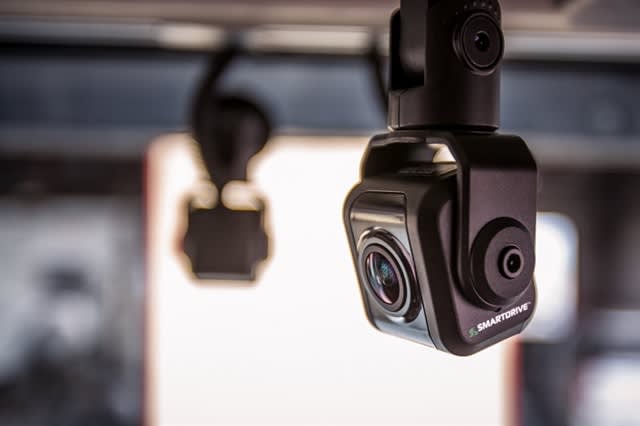
SmartDrive's SR4 hardware is more than 50% smaller than previous iterations to reduce the distraction to the driver, especially for dash- and windshield-mounted equipment. Photo: SmartDrive
Smaller, More Capable Hardware
SmartDrive’s SR4 hardware has been redesigned from previous generations, including smaller HD video cameras, a separate sensor bar, a controller device to tie all systems together, and new algorithms and advanced driver assistance capabilities. The SR4 hardware is more than 50% smaller than previous iterations to reduce the distraction to the driver, says SmartDrive, especially for dash- and windshield-mounted equipment. Installation has been made simpler.
New SmartSense ADAS (advanced driver assistance system) sensors offer in-cab alerting for short-following, forward-collision and lane-departure warning; and new posted speed detection identifies high risks and enables drivers to react in real time. Ports enable data integration and triggering from other on-board systems, amplifying the value of previous technology investments and delivering a more complete view of risk. Current SmartDrive customers can also leverage both new and pre-existing hardware.
“The transportation industry has seen a trend of devices getting larger as they add more advanced capabilities, whereas tech innovation demands that hardware become smaller and sleeker while delivering more power and functionality,” said Mitgang. “The SR4 meets these expectations by delivering unprecedented compute power, seamless integration with third-party systems and the most advanced risk assessment capabilities — all within a discreet footprint.”
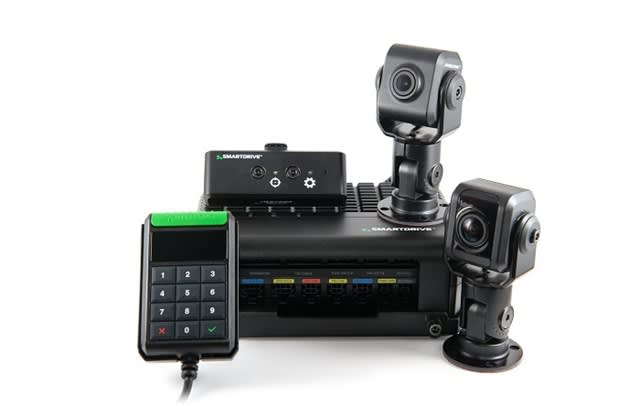
SmartDrive's Transportation Intelligence Platform and SR4 hardware is an evolution of the company's video-based safety program.
Connectivity Features
Also included in the SR4 hardware is a purpose-built controller unit featuring intelligent monitoring and recording functions, expandable solid-state storage and 4G/LTE and Bluetooth communication capabilities.
The system also features a wireless key fob for the driver or driver trainer to manually trigger video recording. This can be used to record events that may not automatically cause a recording or to record segments for later use in training. Drivers are also given a keypad with a unique ID code to disable cameras that face into the cab during off hours for more privacy. The cameras will automatically re-engage once the vehicle begins moving.
The system also features a mobile app for Android devices that provides an overview of events in the field and can be used to check and adjust cameras or perform troubleshooting on the system in the field.
Extended recording is available with options for 128, 256 and 512GB of solid-state memory, good for storing up to 800 hours of recording from two cameras. The extended video service is available as an option with the multi-camera deployment. It is designed to capture more context for events and from non-collision related activities related to fleet safety policy, procedure, compliance, and security.
The SmartDrive Transportation Intelligence Platform and SR4 hardware is currently available. It was presented to fleets late last year and adopted by companies such as Forward Air, Oakley Transport, Arctic Glacier, Clariant Oil Services, Combined Transport, Schilli Corp., and Superior Paving. SmartDrive solutions are available for a wide variety of fleets in different applications, including commercial trucking, refuse, construction, government, distribution, and utilities.
More Safety
IIHS Crash Avoidance Tests Reveal Safety Gaps in Cargo Vans and Work Trucks
New crash-avoidance ratings from the Insurance Institute for Highway Safety reveal inconsistent performance among commercial vehicles, with several popular cargo vans and heavy-duty pickups struggling to avoid collisions with other vehicles and pedestrians.
Read More →
What’s Next for Fleet? Safety, AI & Industry Recognition | AF News Recap
Could your company's culture be encouraging distracted driving? This week, we're exploring how workplace expectations affect driver safety, what AI, EVs, and autonomous vehicles could mean for the future of fleet management, and how fleet professionals can strengthen their award nominations.
Read More →
Does Your Fleet's Culture Encourage Distracted Driving?
What happens when the people responsible for enforcing safety rules are the ones setting the wrong example? The answer may reveal why some of the biggest risks to fleet drivers have little to do with what's written in the employee handbook.
Read More →
Fleet Manager’s Ultimate Playbook: Navigating the New Standard in OEM Connectivity
Rising operating costs, driver safety concerns, and unplanned downtime are putting unprecedented pressure on modern fleets. Discover how fleet managers use embedded OEM connectivity and real-time vehicle data to cut TCO, prevent downtime, and protect drivers without aftermarket telematics hardware.
Read More →
From Driver Well-Being to EV Charging | AF News Recap
Mental health belongs in the fleet safety conversation. This week, we’re looking at five ways fleets can support employee well-being before a crisis, plus Holman’s expansion in Mexico, new one-day Fleet Forward passes, and why EV charging demand is outpacing infrastructure growth.
Read More →
Nexar-Nauto Merger Aims to Give Fleets Better Safety Intelligence Through Larger Driving Dataset
Stefan Heck tells Automotive Fleet that combining more than 10 billion miles of driving history with Nexar's AI models will give fleets deeper insights into driver risk and roadway conditions than either company could provide independently.
Read More →
Don't Wait for a Crisis: 5 Ways to Build Mental Health Into Your Fleet Safety Program
For Suicide Prevention Month, fleet and safety leaders have an opportunity to put mental health where it belongs: at the center of workplace safety.
Read More →
How Camera Data Can Strengthen a Fleet’s Insurance Renewal
Insights from a commercial insurance carrier and a broker show how fleets can turn video telematic data, driver coaching, and improved claims results into a stronger case at insurance renewal.
Read More →
The Safest Fleets Aren’t the Ones with the Most Technology
You’ve made the telematics investment. Here’s how to capture the other half of its value and build the safest fleet on the road.
Read More →
Hidden in Plain Sight: Fleet Compliance Risks
Fleet compliance isn't just about having policies — it's about consistently enforcing them. This practical guide reveals six hidden compliance risks common in public sector and shared fleet operations and outlines proven strategies to improve visibility, accountability, and audit readiness
Read More →