




How to Cross Rails Safely
In 2021, there were 2,148 vehicle-train collisions at highway-rail grade crossings, resulting in 236 fatalities. Here’s how to cross with confidence.

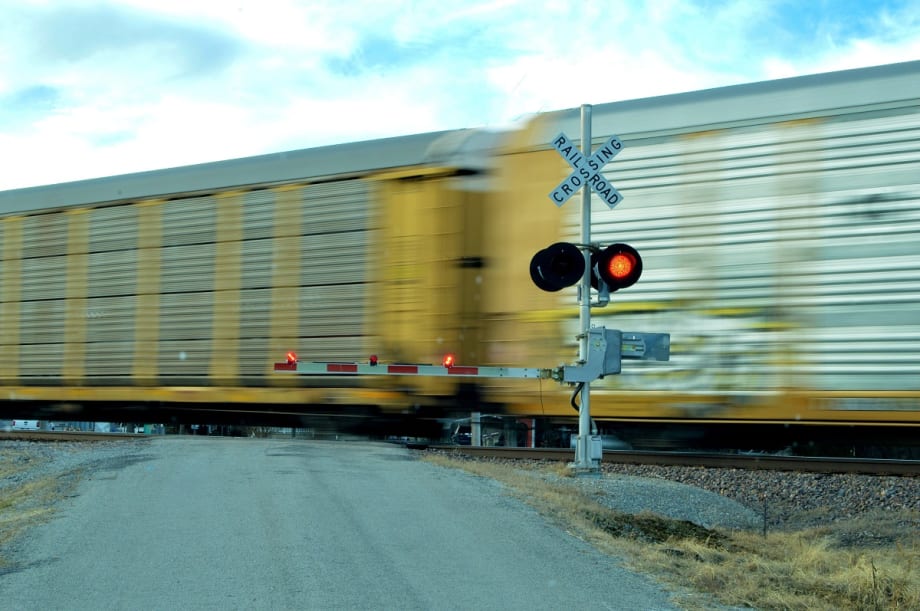
Caution is imperative at rail crossings. It can take a train a mile or more to stop — that’s the length of 18 football fields.
Photo: unsplash.com/Russ Ward
A train strikes a vehicle or a person every three hours in the United States, according to Operation Lifesaver. Because professional drivers log more hours behind the wheel than the average American, they also likely face rail crossings more frequently.
Lack of caution and common sense at a rail crossing can be deadly. In 2021, there were 2,148 vehicle-train collisions at highway-rail grade crossings, according to data from the Federal Railroad Administration (FRA). Moreover, these crashes resulted in 236 fatalities and 662 injuries.
Also noteworthy, approximately 68% of all 2021 highway-rail grade crossing collisions occurred in 15 states. The top five states with the most collisions at rail crossings include Texas with a total of 247 crashes, California (169), Georgia (132), Illinois (125), and Indiana (120).
Now is a good time for fleet operators to remind their drivers to be vigilant about safety when crossing train tracks. Operation Lifesaver, a non-profit that promotes rail safety education to prevent collisions, injuries, and fatalities on and around railroad tracks and highway-rail grade crossings, offers the following advice you can share with your fleet drivers.
Advice for Safely Crossing the Tracks
Always expect a train.
Trains may be closer and traveling faster than they appear and can run on any track at any time in any direction.
Eliminate distractions.
As always, stay focused on the task at hand. Do not use your cell phone, eat, drink, or fiddle with the radio while attempting to cross railroad tracks.
Never try to beat a train.
It can take a train a mile or more to stop — the length of 18 football fields.
Cross in the right place.
The only safe and legal place for anyone to cross railroad tracks is at designated crossings.
Be cautious.
Always obey warning signs and signals. Always look for a train before proceeding.
Avoid getting stuck.
Before crossing, be sure there is space on the other side to completely clear the tracks.
Distance matters.
Trains overhang tracks. Leave at least 15 feet between the front and rear of your vehicle and the nearest rail. Also, avoid shifting gears while crossing.
Look both ways.
Multiple tracks may mean multiple trains. Ensure you can clearly see down the tracks in both directions before proceeding.
Respect safety infrastructure.
Avoid crossing while lights are flashing or gates are down.
Take the right actions if you get stuck.
If your vehicle stalls at a crossing, get out and move far away immediately, even if you do not see a train. Call the number on the Blue and White Emergency Notification System (ENS) sign and share the crossing ID number with the dispatcher. If there is no sign, dial 911.
More Safety

What’s Next for Fleet? Safety, AI & Industry Recognition | AF News Recap
Could your company's culture be encouraging distracted driving? This week, we're exploring how workplace expectations affect driver safety, what AI, EVs, and autonomous vehicles could mean for the future of fleet management, and how fleet professionals can strengthen their award nominations.
Read More →
Does Your Fleet's Culture Encourage Distracted Driving?
What happens when the people responsible for enforcing safety rules are the ones setting the wrong example? The answer may reveal why some of the biggest risks to fleet drivers have little to do with what's written in the employee handbook.
Read More →
Fleet Manager’s Ultimate Playbook: Navigating the New Standard in OEM Connectivity
Rising operating costs, driver safety concerns, and unplanned downtime are putting unprecedented pressure on modern fleets. Discover how fleet managers use embedded OEM connectivity and real-time vehicle data to cut TCO, prevent downtime, and protect drivers without aftermarket telematics hardware.
Read More →
From Driver Well-Being to EV Charging | AF News Recap
Mental health belongs in the fleet safety conversation. This week, we’re looking at five ways fleets can support employee well-being before a crisis, plus Holman’s expansion in Mexico, new one-day Fleet Forward passes, and why EV charging demand is outpacing infrastructure growth.
Read More →
Nexar-Nauto Merger Aims to Give Fleets Better Safety Intelligence Through Larger Driving Dataset
Stefan Heck tells Automotive Fleet that combining more than 10 billion miles of driving history with Nexar's AI models will give fleets deeper insights into driver risk and roadway conditions than either company could provide independently.
Read More →
Don't Wait for a Crisis: 5 Ways to Build Mental Health Into Your Fleet Safety Program
For Suicide Prevention Month, fleet and safety leaders have an opportunity to put mental health where it belongs: at the center of workplace safety.
Read More →
How Camera Data Can Strengthen a Fleet’s Insurance Renewal
Insights from a commercial insurance carrier and a broker show how fleets can turn video telematic data, driver coaching, and improved claims results into a stronger case at insurance renewal.
Read More →
The Safest Fleets Aren’t the Ones with the Most Technology
You’ve made the telematics investment. Here’s how to capture the other half of its value and build the safest fleet on the road.
Read More →
Hidden in Plain Sight: Fleet Compliance Risks
Fleet compliance isn't just about having policies — it's about consistently enforcing them. This practical guide reveals six hidden compliance risks common in public sector and shared fleet operations and outlines proven strategies to improve visibility, accountability, and audit readiness
Read More →
NETS Sets 2026 Fleet Safety Benchmark Conference for Indianapolis
The Sept. 15–17 program will feature fleet benchmarking data, case studies, emerging technologies, and implementation strategies while running alongside the NSC Safety Congress & Expo.
Read More →