




Parents Often Pass Bad Driving Habits to Their Children
COLUMBUS, Ohio --- If you're managing a fleet with some less than stellar drivers behind the wheel, take note: Maybe those employees picked up those lousy habits from their moms and dads.
COLUMBUS, Ohio --- If you're managing a fleet with some less than stellar drivers behind the wheel, take note: Maybe those employees picked up those lousy habits from their moms and dads. What's more, a new survey suggests that this risk is prevalent today. A new study of more than 2,200 parents and children by Nationwide Mutual Insurance found that 82 percent of 10- to 18-year-olds pay attention to their parents' driving at least half of the time they spend in the car. "Teens are learning the rules of the roads by watching their parents," said Bill Windsor, Nationwide associate vice president of safety. "Parents play a significant role in shaping the type of driver their child will become and they recognize this duty. According to the survey, 85 percent of parents say they try to promote roadway safety by driving safely themselves." While parents recognize they are being observed and need to lead by example, this often gets lost in practice. Two out of five parents surveyed said they curb their bad driving habits in front of their children, but many children reported seeing their parents drive aggressively, feel around for items in the car, talk on cell phones and refrain from wearing seatbelts. Key findings from the study include: While nearly half of parents reported that they typically drive at or below the speed limit, 80 percent of children observed that their parents drive over the speed limit. More than half of children have observed their parent multi-tasking behind the wheel (talking on cell phones, adjusting the radio and/or correcting a misbehaving child), arguing with a passenger, and/or arguing and yelling at other drivers. Nearly three in 10 children surveyed have been scared by a parent's driving and 53 percent of parents have been scared when riding with their teen driving. More than half of children have not told their parents how they feel about their driving, including 20 percent who never found the right time or way to bring it up. 27 percent of teens with their driver's license have never had formal instruction and have learned from watching their parents and other people drive. Teen drivers are 66 percent more likely to obey speed limits and 51 percent more likely to keep both hands on the steering wheel than their parents. Parental influence on the driving habits of their children is confirmed by research from the Insurance Institute for Highway Safety. "IIHS has found that parents with traffic violations or who've been in crashes are more likely to have teen drivers with violations or crashes," said Anne McCartt, senior vice president for research at IIHS. "Our research and Nationwide's survey should send a clear message that when it comes to learning good driving habits, parents matter." Between July 2 and July 12, 2007, Marketing Services Research Inc (MRSI) conducted 2,253 interviews using a nationally representative online panel. All respondents were required to be a parent of a child between the ages of 10 and 18 and a licensed driver, or a child between the ages of 10 and 18. In total, 735 parents and 1,518 children were surveyed. Three types of interviews were conducted to ensure accuracy: parent-only interviews, child-only interviews and parent/child interviews. Results were then examined to determine whether differences existed between the attitudes of respondents in paired interviews and those who were surveyed alone. No significant differences of note emerged. The survey has +/- 4.8 percent margin of error.
More Safety

From Driver Well-Being to EV Charging | AF News Recap
Mental health belongs in the fleet safety conversation. This week, we’re looking at five ways fleets can support employee well-being before a crisis, plus Holman’s expansion in Mexico, new one-day Fleet Forward passes, and why EV charging demand is outpacing infrastructure growth.
Read More →
Nexar-Nauto Merger Aims to Give Fleets Better Safety Intelligence Through Larger Driving Dataset
Stefan Heck tells Automotive Fleet that combining more than 10 billion miles of driving history with Nexar's AI models will give fleets deeper insights into driver risk and roadway conditions than either company could provide independently.
Read More →
Don't Wait for a Crisis: 5 Ways to Build Mental Health Into Your Fleet Safety Program
For Suicide Prevention Month, fleet and safety leaders have an opportunity to put mental health where it belongs: at the center of workplace safety.
Read More →
How Camera Data Can Strengthen a Fleet’s Insurance Renewal
Insights from a commercial insurance carrier and a broker show how fleets can turn video telematic data, driver coaching, and improved claims results into a stronger case at insurance renewal.
Read More →
The Safest Fleets Aren’t the Ones with the Most Technology
You’ve made the telematics investment. Here’s how to capture the other half of its value and build the safest fleet on the road.
Read More →
Hidden in Plain Sight: Fleet Compliance Risks
Fleet compliance isn't just about having policies — it's about consistently enforcing them. This practical guide reveals six hidden compliance risks common in public sector and shared fleet operations and outlines proven strategies to improve visibility, accountability, and audit readiness
Read More →
NETS Sets 2026 Fleet Safety Benchmark Conference for Indianapolis
The Sept. 15–17 program will feature fleet benchmarking data, case studies, emerging technologies, and implementation strategies while running alongside the NSC Safety Congress & Expo.
Read More →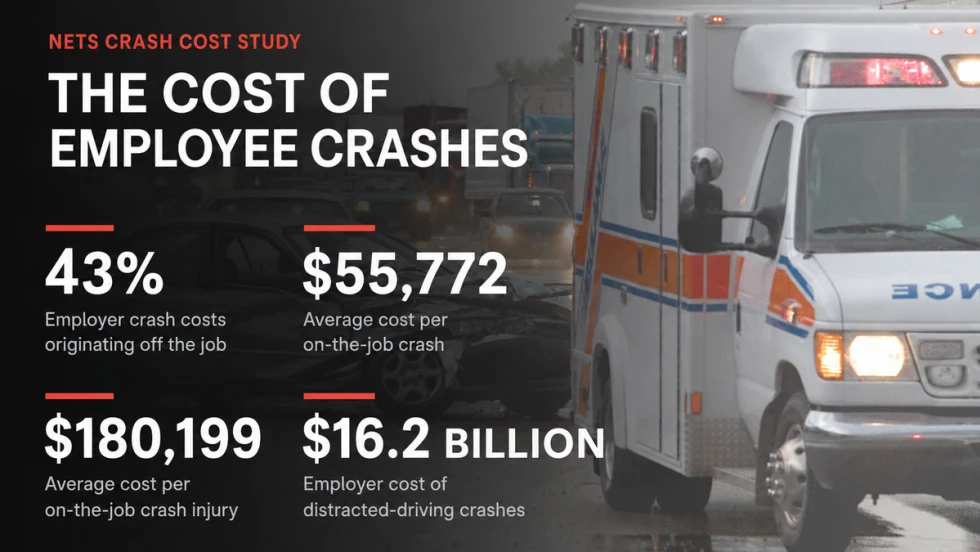
Off-the-Job Crashes Account for 43% of Employers’ $61.7 Billion Crash Burden
NETS quantifies costs dispersed across fleet, risk, HR, and other departments while providing new per-crash benchmarks for employers.
Read More →
Ram Recalls More Than 1.27 Million 1500 Pickups for Seat Belt Anchor Issue
The recall affects certain 2019-2026 Ram 1500 pickups that may have improperly attached second-row seat belt buckle anchors.
Read More →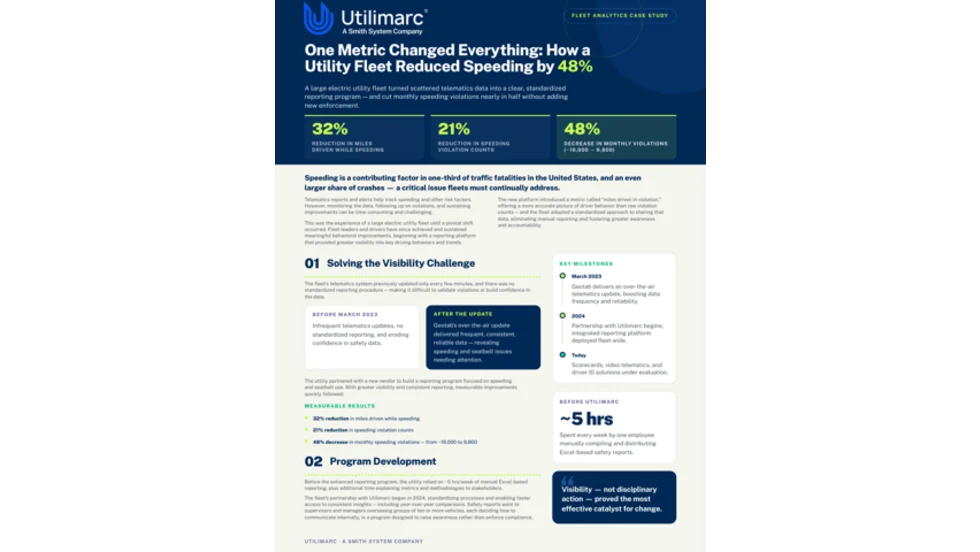
How Better Visibility Cut Speeding Violations by 48%
Fleet leaders don't need more data, they need clearer visibility into what the data is saying. This case study explores how one utility replaced speeding-event counts with a single metric — miles driven in violation — to strengthen safety and significantly reduce speeding violations.
Read More →