




Nissan Unveils 2012 Versa Sedan at NY Auto Show
NEW YORK – Nissan unveiled its all-new 2012 Versa Sedan, the automaker’s new entrant in the entry-level compact sedan segment, at the New York Auto Show.
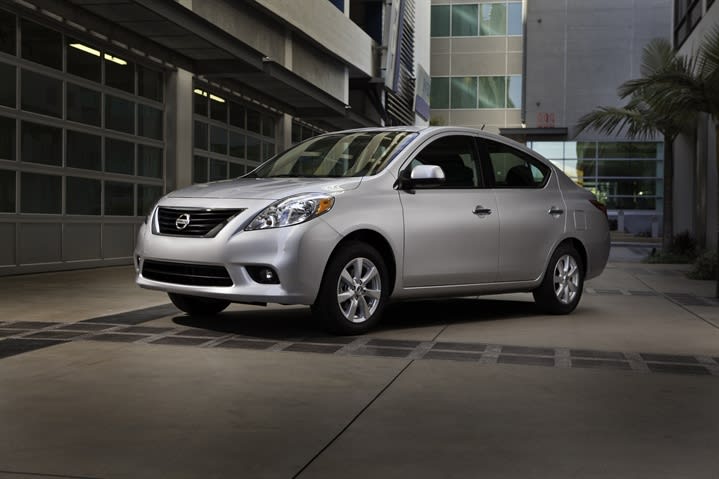
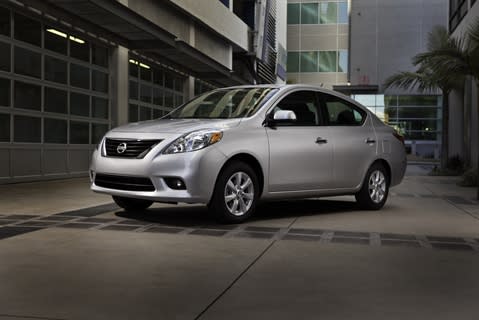
NEW YORK – Nissan unveiled its all-new 2012 Versa Sedan, the automaker’s new entrant in the entry-level compact sedan segment, at the New York Auto Show.
Nissan said starting MSRP is $10,990 and provides a low cost of ownership. The automaker said it expects the Versa to get combined city/highway fuel economy of 33 miles per gallon, achieved via a new dual injector system and sub-planetary continuously variable transmission (CVT) design.
The all-new 2012 Nissan Versa Sedan will be available in three models when it goes on sale at Nissan dealers nationwide in summer 2011. The models include the Versa Sedan 1.6 S, offered in 5MT and CVT versions, the Versa Sedan 1.6 SV, CVT only, and Versa Sedan 1.6 SL, CVT only.
Under the Hood
Nissan said it estimates fuel economy for the 2012 Versa Sedan at 30 mpg city, 37 mpg highway, 33 mpg combined with the CVT transmission. For the five-speed manual transmission, the company estimates preliminary numbers of 27 city, 36 highway, 30 mpg combined.
The second-generation 1.6L HR16DE four-cylinder engine features a dual injector system. The engine can achieve 109 hp at 6,000 rpm and 107 lb.-ft. of torque at 4,400 rpm. The new engine also utilizes a twin continuously variable timing control (CVTC) system to achieve an approximate four percent improvement in fuel efficiency.
The Versa Sedan is available with a 5-speed manual transmission (1.6 S model only) and with a next-generation Xtronic CVT transmission.
Exterior Design
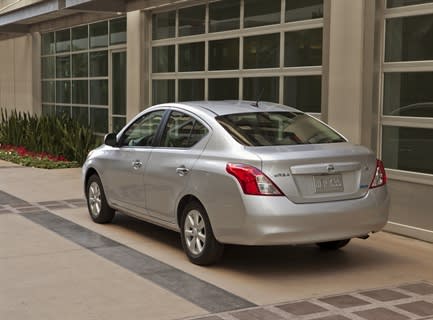
Although the 2012 Versa Sedan retains the same 102.4-inch wheelbase and 66.7-inch width as the previous generation Versa Sedan, the new model is 1.2 inches lower in height (59.6 inches) and 0.6 inches shorter in overall length (175.4 inches). The new Versa’s trunk is longer, achieved via a more compact engine/transmission design that allows for a 2.7-inch increase in the distance from the center of the rear tire to the rear bumper.
In front, Versa Sedan features Nissan’s new signature sedan grille design and jewel-like headlights. Its aerodynamic design achieves coefficient of drag of 0.31. Other exterior features include a fixed roof antenna, body-color front and rear fascias and available chrome-accented grille, blacked-out B-pillar, chrome door handles and front fog lights.
The 2012 Versa Sedan is offered in eight exterior colors, including Metallic Blue, Blue Onyx, Super Black, Brilliant Silver, Magnetic Gray, Red Brick, Fresh Powder, and Titanium (previously reserved for the Nissan GT-R).
Interior Design
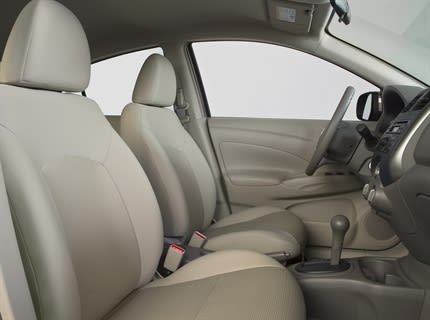
The new Versa Sedan’ offers aninterior volume of 90.0 cubic feet and trunk volume of 14.8 cubic feet (104.8 cubic feet total). A 60/40-split fold-down rear seat is offered on SL models.
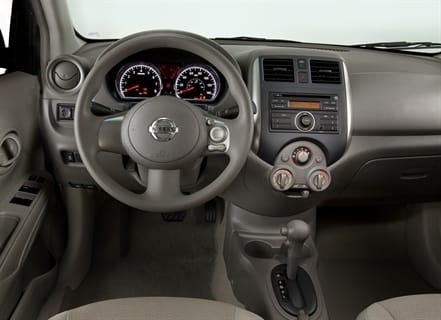
Available entertainment and connectivity features include Bluetooth, navigation system with 5-inch touch-screen display, Satellite Radio, and an iPod/USB interface.
Other available interior features include trip computer, power windows with driver’s one-touch down, speed-sensing auto door locks, remote trunk release lever and steering wheel-mounted audio controls. Two interior colors are available, Sandstone and Charcoal.
Safety Features
All 2012 Versa Sedans are equipped with an independent MacPherson strut front suspension and torsion beam rear suspension, with front and rear stabilizer bars. Other standard equipment includes Electric Power Steering and power-assisted front disc/rear drum brakes. An Anti-lock Braking System (ABS) with Electronic Brake force Distribution (EBD) and Brake Assist (BA) is also standard on all Versa Sedan models.
In addition, the new Versa will be the first Nissan model in the United States branded with the PUREDRIVE designation. PUREDRIVE will be used on to promote eco-friendly driving.
Standard safety features found on every 2012 Versa Sedan include the Nissan Advanced Air Bag System (AABS),which includes dual-stage front supplemental air bags and front seat side-impact supplemental air bags for chest protection, seat-mounted driver and front passenger side-impact supplemental air bags, and roof-mounted curtain side-impact air bags for front and rear outboard occupant head protection.
Additional safety features include standard LATCH (Lower Anchors and Tethers for CHildren) system, child safety rear door locks, child seat upper tether anchors and Tire Pressure Monitoring System (TPMS), Vehicle Dynamic Control (VDC) and Traction Control System (TCS).
Trim Levels
Along with the 1.6 S model’s many standard features, the 1.6 SV adds cruise control, Fine Vision instrumentation, chrome grille accents, body-color dual power remote-controlled sideview mirrors, upgraded cloth seats, power windows and more.
Versa Sedan 1.6 SL models add 15-inch aluminum-alloy wheels, fog lights, variable intermittent wipers, chromed inside door handles, 60/40-split fold-down rear seat, Bluetooth Hands-free Phone System, steering wheel audio controls, USB/iPod® connectivity, upgraded audio system, door-linked map lights and more.
Nissan offers a total of three option packages. The first two include the Cruise Control Package (1.6 S CVT only) and the SV Convenience Package (1.6 SV only) with Bluetooth Hands-free Phone System, steering wheel-mounted audio controls, upgraded audio, iPod control, map lights and front passenger vanity mirror. The SL Tech Package (1.6 SL only) adds the Nissan Navigation System with XM NavTraffic and 5-inch color touch-screen display and XM Satellite Radio (XM features require a subscription).
More Operations

How Fleets Can Recruit and Train Veterans for Technician Roles
Here's how the technician shortage has affected uptime for fleets, and what to do about it.
Read More →
Avis Budget Group Deploys Neology Toll Management Technology Across Major Brands
Neology’s neoFleet platform will manage toll transactions and toll-authority operations for vehicles across Avis, Budget, Payless, Budget Truck and Zipcar.
Read More →
Fleet Personal-Use Charges Edge Higher in 2026
Nearly eight in 10 surveyed fleets allow personal use of company vehicles, while just over half of respondents report charging employees for the privilege.
Read More →
The Future of Fleet + What’s Changing Right Now | AF News Recap
Could developments overseas offer a preview of what’s coming for U.S. fleets? This week, we’re looking at the future of AI, autonomy, and electrification, plus Ford Pro’s new certified pre-owned program, smarter vehicle offboarding, and a new way for fleets to manage toll expenses.
Read More →
How to Handle Vehicle Offboarding
What do fleet managers need to do when a driver leaves?
Read More →
Fleet Manager’s Ultimate Playbook: Navigating the New Standard in OEM Connectivity
Rising operating costs, driver safety concerns, and unplanned downtime are putting unprecedented pressure on modern fleets. Discover how fleet managers use embedded OEM connectivity and real-time vehicle data to cut TCO, prevent downtime, and protect drivers without aftermarket telematics hardware.
Read More →
U.S. Bank Adds Verra Mobility Toll Management to Voyager Fleet Platform
The integration allows U.S. Bank Voyager fleet customers to manage toll payments and violations alongside fuel, EV charging and maintenance expenses.
Read More →
ADAS Prevents Crashes. But Repairs Cost More | AF News Recap
ADAS-equipped vehicles may crash less often, but they can cost more when they do. This week, we’re breaking down what that tradeoff means for fleets, plus Subaru’s first Forester Wilderness Hybrid, Nissan’s new e-POWER Rogue, and why Calstart has become Catalyst Mobility.
Read More →
Moventum Fleet Management Names Mark Iorillo Head of Sales
Iorillo brings nearly 20 years of fleet management and sales experience to the role, including previous positions at Element Fleet Management, CEI, Donlen and Ryder.
Read More →
Fleet Has a Talent Pipeline Problem. What Comes Next? | AF News Recap
Where will fleet’s next generation of leaders come from? This week, we’re looking at the industry’s talent pipeline, what certification can add to a fleet career, how to build an award-worthy track record, and the return of Automotive Fleet’s Personal Use Survey.
Read More →