




New York No-Fault Claim Payouts Continue to Rise
EAST ELMHURST, NY - Fraud and abuse in New York's no-fault auto insurance system equate to about 20 percent of every no-fault claim paid, according to Dr. Steven Weisbart, chief economist at the Insurance Information Institute (I.I.I.).
EAST ELMHURST, NY - Fraud and abuse in New York's no-fault auto insurance system equate to about 20 percent of every no-fault claim paid, according to Dr. Steven Weisbart, chief economist at the Insurance Information Institute (I.I.I.).
This "fraud tax" works out to about $1,561 per claim, a figure which spread out statewide totaled nearly $230 million in 2009 alone, an I.I.I. analysis found.
Since 2005, New York no-fault fraud and abuse have cost the state's consumers and insurers more than $600 million, Weisbart estimated. During a presentation at the New York Insurance Fraud Summit on April 21, he said that the average cost of a no-fault auto insurance claim in New York State soared 58 percent between 2004 and 2009 as dishonest medical providers submitted inflated and sometimes bogus bills for services rendered to insurers.
"The scale of fraud and abuse in New York State's no-fault auto insurance system is so severe that claims payouts are at their second-highest level since we started tracking this issue in the late 1990s," Weisbart stated. "For too long, the cost of auto insurance in this state has been driven upward by unethical medical providers who have partnered with equally unscrupulous lawyers to sue the auto insurers who dare challenge their bogus claims. This stand-off has clogged New York's court system, too."
If auto insurers are paying out more than they should in no-fault claims, their policyholders are paying out more in premiums, Weisbart observed. This "fraud tax," namely what New York's insurers are billed by medical providers versus what other pricing benchmarks indicate they should be charged, totaled nearly $1,600 per claim in 2009 -- an unacceptable surcharge medical providers are extracting from the system for every single accident.
The average cost of a no-fault auto insurance claim skyrocketed to $8,862 in the fourth quarter of 2009, up $3,247, or 58 percent, from $5,615, the average cost of a no-fault claim in the third quarter of 2004. Only Michigan and New Jersey auto insurers, which also operate in deeply troubled no-fault states, paid higher average no-fault claims as of year-end 2009, according to an I.I.I. analysis.
"While the cost drivers influencing the price of auto insurance in New York are similar to those in other states in most respects, there is one glaring exception -- its $50,000 threshold for no-fault auto insurance claims is the highest dollar threshold in the United States. It should come as no surprise that the richest benefits in the country come with the highest costs," Weisbart said.
Recognizing the generosity of this state's $50,000 cap, and the absence in New York of safeguards such as medical treatment guidelines or utilization reviews and controls, Weisbart noted that the cost of the average no-fault Personal Injury Protection (PIP) claim rose at a rate more than twice that of overall medical cost growth (47 percent, as compared to 21 percent, between 2004 and 2009). PIP is the portion of an auto insurance policy that covers the treatment of injuries to the driver and passengers of the policyholder's car.
"Solutions for containing New York's emerging crisis must necessarily focus on no-fault's cost drivers," Weisbart concluded. "But because New York State has the highest no-fault dollar threshold in the country, it remains attractive to those who perpetrate fraud based on the perception that the insurers who pay the bills are a 'deep pocket.'"
The New York Insurance Association (NYIA) and the National Insurance Crime Bureau (NICB) on April 21 co-sponsored the New York Insurance Fraud Summit at the La Guardia Marriot Hotel. The event drew hundreds of attendees.
More Safety

Nexar-Nauto Merger Aims to Give Fleets Better Safety Intelligence Through Larger Driving Dataset
Stefan Heck tells Automotive Fleet that combining more than 10 billion miles of driving history with Nexar's AI models will give fleets deeper insights into driver risk and roadway conditions than either company could provide independently.
Read More →
Don't Wait for a Crisis: 5 Ways to Build Mental Health Into Your Fleet Safety Program
For Suicide Prevention Month, fleet and safety leaders have an opportunity to put mental health where it belongs: at the center of workplace safety.
Read More →
How Camera Data Can Strengthen a Fleet’s Insurance Renewal
Insights from a commercial insurance carrier and a broker show how fleets can turn video telematic data, driver coaching, and improved claims results into a stronger case at insurance renewal.
Read More →
The Safest Fleets Aren’t the Ones with the Most Technology
You’ve made the telematics investment. Here’s how to capture the other half of its value and build the safest fleet on the road.
Read More →
Hidden in Plain Sight: Fleet Compliance Risks
Fleet compliance isn't just about having policies — it's about consistently enforcing them. This practical guide reveals six hidden compliance risks common in public sector and shared fleet operations and outlines proven strategies to improve visibility, accountability, and audit readiness
Read More →
NETS Sets 2026 Fleet Safety Benchmark Conference for Indianapolis
The Sept. 15–17 program will feature fleet benchmarking data, case studies, emerging technologies, and implementation strategies while running alongside the NSC Safety Congress & Expo.
Read More →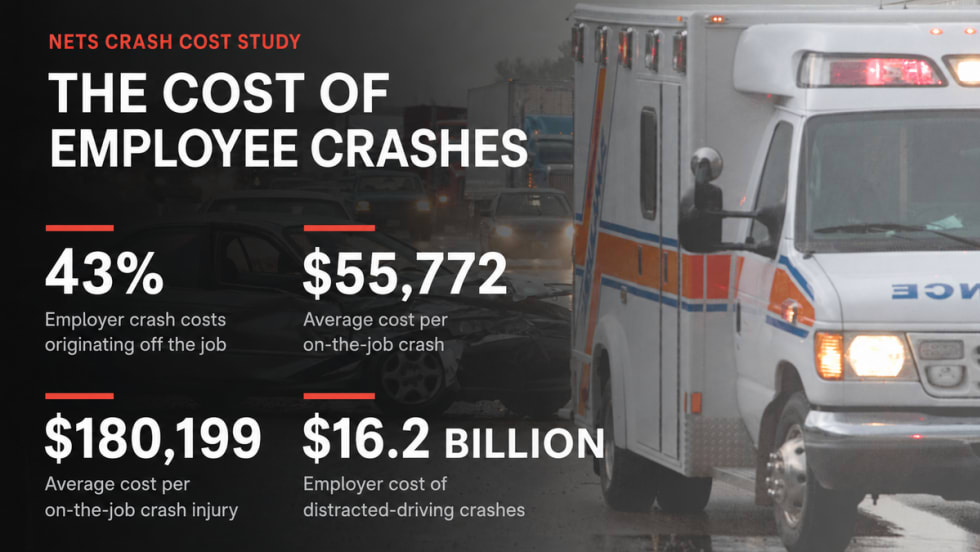
Off-the-Job Crashes Account for 43% of Employers’ $61.7 Billion Crash Burden
NETS quantifies costs dispersed across fleet, risk, HR, and other departments while providing new per-crash benchmarks for employers.
Read More →
Ram Recalls More Than 1.27 Million 1500 Pickups for Seat Belt Anchor Issue
The recall affects certain 2019-2026 Ram 1500 pickups that may have improperly attached second-row seat belt buckle anchors.
Read More →
How Better Visibility Cut Speeding Violations by 48%
Fleet leaders don't need more data, they need clearer visibility into what the data is saying. This case study explores how one utility replaced speeding-event counts with a single metric — miles driven in violation — to strengthen safety and significantly reduce speeding violations.
Read More →
Operation Safe Driver Week: Why the Industry's Oldest Safety Campaign Still Matters to Fleets
A look at how a 2007 enforcement initiative became one of the most consequential weeks on the fleet safety calendar, and what it means for your drivers in 2026.
Read More →