




New Vehicle Supply Grows, Prices Rise, Used Vehicle Sales Fall
Retail demand softened last month, but January sales were buoyed by fleet purchases, up 58% from the year-earlier January.


For non-luxury brands, Toyota, Kia and Honda had the lowest inventories to close out January with days’ supply under 30. Subaru was also at the low end.
Graphic: Cox Automotive
New-vehicle inventory edged lower in January from December but remained significantly higher than a year ago, according to Cox Automotive’s analysis of vAuto Available Inventory data released Feb. 16. Asking prices for new vehicles set another record high in January.
The total U.S. supply of available unsold new vehicles stood at 1.73 million units near the end of January, compared with a revised 1.8 million vehicles at the end of December. Supply was up 62% from a year ago, or 660,000 units higher. Days’ supply was 57, down from 59 at the end of December 2022 but up 65% compared with the end of January 2022. Historically, a 60-day supply across the industry had been considered normal and ideal.
The Cox Automotive days’ supply is based on the daily sales rate for the most recent 30-day period when about 913,688 vehicles were sold. For January, total new-vehicle sales were up 4% from January a year ago for a sales rate, or seasonally adjusted annual rate (SAAR), of 15.7 million, up from 15.1 million last January and 13.4 million in December. Retail demand softened last month, but January sales were buoyed by fleet purchases, up 58% from the year-earlier January.
While inventory is up substantially from 2022 levels, it remains low by historical standards. At the end of pre-pandemic January 2019, supply stood at 3.63 million vehicles for a 95 days’ supply.
New-Vehicle Asking Prices Rose Again in January
After showing some signs of stabilizing last fall, the average listing price – or the asking price – jumped to another record $47,743 at the end of January, up from a revised $47,531 at the end of December, according to Cox Automotive’s analysis of vAuto Available Inventory data. The listing price was 6% higher than in January 2021.
The average transaction price (ATP) – or the price paid – declined slightly in January to $49,388, down 0.6% or $310 from December’s record, according to Kelley Blue Book. The January ATP was up nearly 6% from a year ago, and the share of luxury brand sales was at a record high near 20%.
Supply Shows Wide Variation by Brand, Segment, Price and Region
January continued to show wide variation in supply by brand, segment and region.
Closing the month, the industry had a non-luxury vehicle inventory totaling 1.46 million vehicles for a 58 days’ supply, compared with 1.53 million vehicles for a 57 days’ supply at the end of December. The inventory of luxury vehicles (excluding uber luxury ones) stood at nearly 260,000 units for a 53 days’ supply. That compares with 270,000 vehicles for a 61 days’ supply a month earlier.
As for non-luxury brands, Toyota, Kia and Honda had the lowest inventories to close out January with days’ supply under 30. Subaru was also at the low end. Luxury brands at the low end were Lexus and Land Rover, which both had about a 31 days’ supply. BMW and Porsche also had low supply.
Seven brands, a mix of luxury and non-luxury, import and domestic, had days’ supply into the triple digits. Jeep had the highest at 123 days’ supply, followed by Buick, Volvo, Chrysler, Dodge, Jaguar and Ram.
Affordable vehicles popular with less affluent consumers had the lowest supply. Large and/or expensive cars had the highest along with domestic SUVs and trucks.
The lower the price category, the tighter the supply. Under $20,000, a segment with a low active supply of just over 3,000 units had 31 days’ supply. Between $20,000 and $30,000, the days’ supply was 42; $30,000 to $40,000 had a 48 days’ supply; and $40,000 to $50,000 had 55 days’ supply. The $50,000 to $80,000 category had the most supply at over 70 days’ supply.
Except for low-volume, high-performance cars, vehicles in the lowest supply were compact, midsize and subcompact cars. Full-size SUVs and large luxury SUVs also were in lower supply. Larger and/or expensive cars had the highest inventories, as well as electric vehicles and full-size pickup trucks.
Of the 30 best-sellers for the 30-day sales period, Toyota, Kia and Honda had the most models at the low end of supply. Starting at the very bottom were Kia Sportage, Honda CR-V and Kia Telluride. Of the 30 best-sellers, the Ford Escape had the most inventory, with days’ supply in the triple digits. It was followed by domestic pickup trucks and SUVs with larger inventory.
Supply showed wide variation by Designated Market Areas (DMA). Northern DMAs, led by Minneapolis-St. Paul, followed by Detroit and Denver, had the highest supply, likely because they are heavier on domestic brands with a more abundant inventory. Southern DMAs, specifically Miami-Ft. Lauderdale and Orlando-Daytona Beach-Melbourne in Florida and Atlanta were at the low end.
Used Vehicles Sales Decline
Total used-vehicle sales in January are estimated to be near 2.8 million units, down 8% from January 2022. The seasonally adjusted annual rate, or SAAR, is estimated to have finished near 35.9 million, down from last January’s 39 million level but above December’s revised 34.6 million pace.
“The used market is showing some surprising strength to start the year," said Charles Chesbrough, senior economist at Cox Automotive. "Although down from last year, the recent sales pace has been ticking slightly higher. High prices in the new market, coupled with weakening used car prices, is supporting slightly stronger used demand. If this holds up for the next few months, the spring selling season may be better than initially expected.”
Retail used-vehicle sales — the volume of vehicles sold via a dealership, thus removing private party sales — are estimated to be 1.5 million, down 7.5% from January 2022. An early read of same-store Dealertrack data shows that used retail sales were stronger than this initial report shows and increased by 5% year over year. The Cox Automotive team is expecting upward revisions in the total used-vehicle retail sales when registration data is complete in March. The used retail sales pace ticked up to 19 million in January from December’s revised 18.3 million level.
Total used sales for 2023 are forecast by Cox Automotive to be 35.6 million, down 1% compared to 2022.
Originally posted on Vehicle Remarketing
More Remarketing

Copart to Acquire ACV in $1.9 Billion Deal
The acquisition would expand Copart beyond its traditional salvage business into dealer-to-dealer wholesale remarketing while adding ACV’s vehicle data, inspection, and valuation technology.
Read More →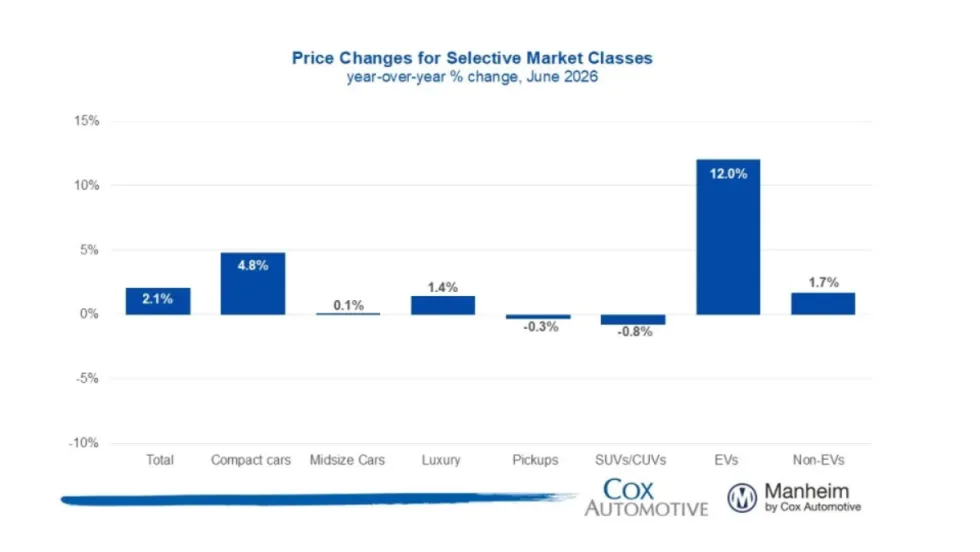
Manheim Index Shows Used-Vehicle Wholesale Prices Up 2.1% in June
The market is seeing stronger appreciation in older used vehicles this year, and the most affordable segments have been among the year’s best performers.
Read More →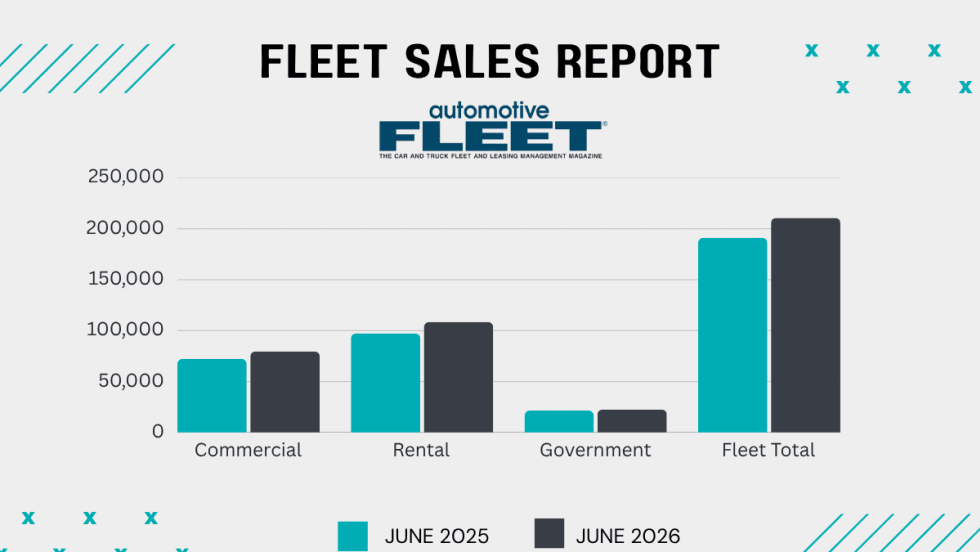
Commercial Fleet Sales Contribute To June, YTD Gains
The fleet sector has boosted its vehicle purchases at a reliable pace in the first half of this year compared with 1H 2025.
Read More →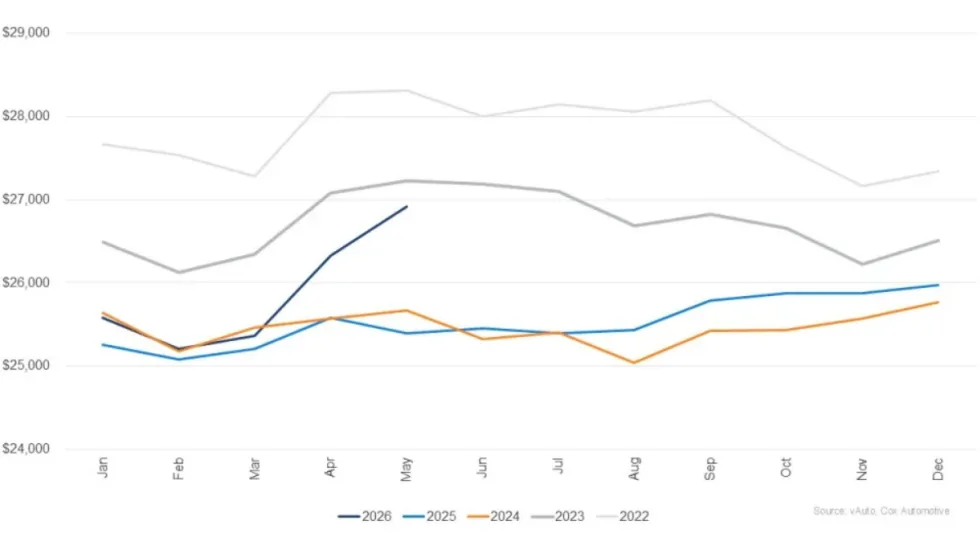
Used Vehicle Prices Climb Higher As Sales Pace Slows
The higher prices at used retail reflect strong wholesale values earlier in the spring, particularly for older, more affordable vehicles.
Read More →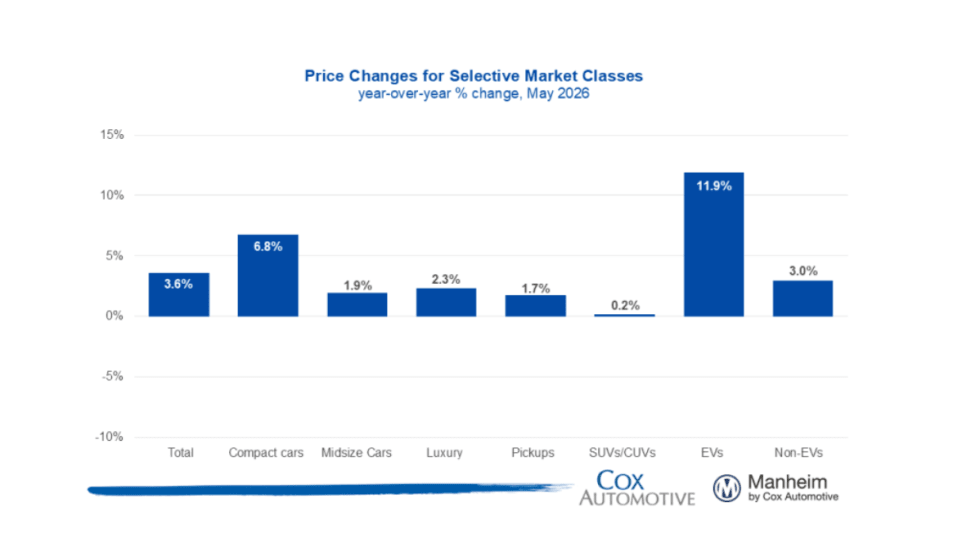
Wholesale Used Vehicle Market Sustains Moderate Rise In Values, Prices
Trends continue to normalize after a strong start to the year, as consumers contend with higher gas prices in the coming summer months.
Read More →
Commercial Fleet Sales Still Lead Sectors Despite May Mini Dip
The U.S. economy's continued growth and positive business investment are creating a favorable environment for fleet vehicle demand.
Read More →
How Connected Vehicle Data Is Lifting Fleet Resale Values
A vehicle health score could improve the value of fleet vehicles at remarketing. The path to a universal standard is forming, and fleets that understand the process early will be better positioned when it arrives.
Read More →
Wholesale Used Vehicle Prices Slightly Up In April
The Iranian conflict and rising gas prices inject much uncertainty into the future wholesale used vehicle markets, as higher gas prices soak up spendable income from vehicle buyers.
Read More →
CAR2026: James McKinley Wins Value Champion of the Year
James McKinley of City Rent a Truck was named the inaugural Fleet Value Champion at the CAR Conference for his data-driven approach to fleet lifecycle management and vehicle remarketing.
Read More →
CAR2026: Eric Autenrieth Wins Remarketer of the Year
Eric Autenrieth was recognized at this year's CAR Conference as the Remarketer of the Year.
Read More →