





Further Reading: Study: Hands-On Training May Help Drivers Better Understand ADAS
New NHTSA Data Shows ADAS Connected to Hundreds of Collisions
The National Highway Traffic Safety Administration has released two reports on crash data involving vehicles equipped with advanced driver assistance systems and automated driving systems.
June 22, 2022
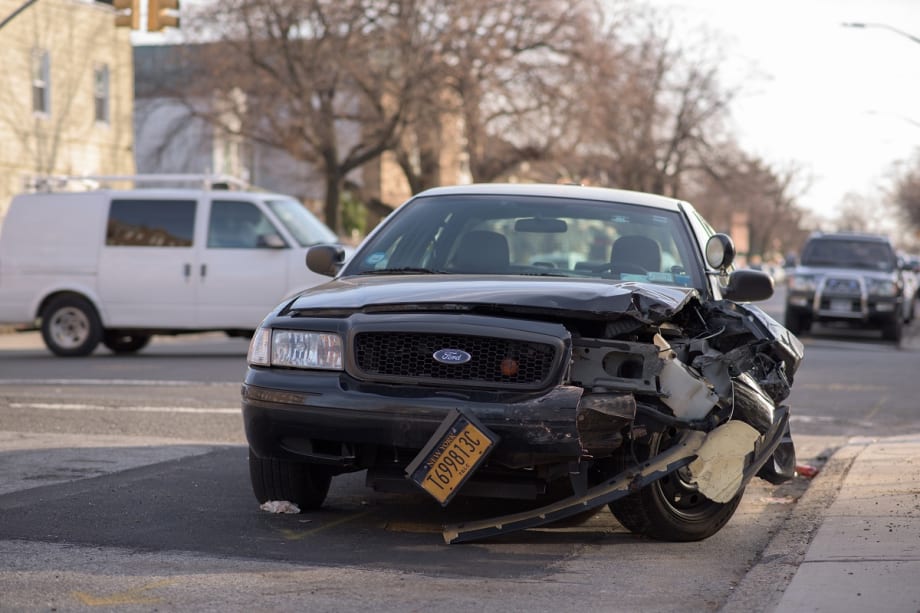
Advanced driver assistance systems were linked to 392 crashes over a recent 10-month period, according to new data released by NHTSA.
Photo: unsplash.com/Michael Jin
3 min to read
The National Highway Traffic Safety Administration (NHTSA) recently released 10 months of crash data aimed at protecting the public from potential safety risks involving advanced driver assistance systems (ADAS) and automated driving systems (ADS).
The agency released two reports. In the report regarding ADAS specifically, NHTSA tracked 392 incidents from July 1 of last year through May 15. In those incidents, six people were killed and five were seriously injured, reports the New York Times. Teslas operating with Autopilot, the more ambitious Full Self Driving mode, or any of their associated component features were in 273 crashes. Five of those Tesla crashes were fatal, notes the Times.
The data was collected under a Standing General Order that NHTSA issued last June requiring automakers to report crashes of vehicles with ADAS and ADS. One of the key concerns about advanced systems is that they often allow drivers to relinquish active control of the car and could lull them into a false sense of security, which can lead to driver complacency and ultimately, collisions.
Both the National Safety Council (NSC) and the National Transportation Safety Board (NTSB) have applauded NHTSA’s efforts and recognized the data as a good “first step” toward improving safety of advanced systems. In a press release, NHTSA stated the “while not comprehensive, the data are important and provide NHTSA with immediate information about crashes that occur with vehicles that have various levels of automated systems deployed at least 30 seconds before the crash occurred.”
Approximately 830,000 Tesla cars in the United States are equipped with Autopilot or the company’s other driver-assistance technologies. This may be why Tesla vehicles accounted for nearly 70% of the reported crashes in the data released by NHTSA, notes the Times.
While Tesla reported the most ADAS crashes by far, Honda and Subaru ranked second and third — with 90 and 10 collisions, respectively, according to the NHTSA data. Ford, GM, BMW, Volkswagen, Toyota, Hyundai, and Porsche each reported five or fewer crashes.
Other key findings in the ADAS crash data report concern what the vehicle collided with. For example, 116 of the ADAS vehicle collisions were with another vehicle. While 20 collided with a pole, another 78 collided with another fixed object. Four crashes involved a vulnerable road user — one cyclist and three pedestrians.
In a second report, NHTSA summarizes the crash data it collected regarding automated systems, or ADS, over the same 10-month period. Automakers submitted a total of 130 crashes involving ADS-equipped vehicles. While no fatalities were reported, one resulted in serious injury and 15 were associated with mild or moderate injuries.
As for what the ADS vehicles collided with, 108 crashed into another vehicle. Another 11 crashes involved vulnerable road users — seven with cyclists, two with motorcyclists, and two with electric scooters.
More Safety

Sponsored•October 1, 2026
Fleet Manager’s Ultimate Playbook: Navigating the New Standard in OEM Connectivity
Rising operating costs, driver safety concerns, and unplanned downtime are putting unprecedented pressure on modern fleets. Discover how fleet managers use embedded OEM connectivity and real-time vehicle data to cut TCO, prevent downtime, and protect drivers without aftermarket telematics hardware.
Read More →
From Driver Well-Being to EV Charging | AF News Recap
Mental health belongs in the fleet safety conversation. This week, we’re looking at five ways fleets can support employee well-being before a crisis, plus Holman’s expansion in Mexico, new one-day Fleet Forward passes, and why EV charging demand is outpacing infrastructure growth.
Read More →
Nexar-Nauto Merger Aims to Give Fleets Better Safety Intelligence Through Larger Driving Dataset
Stefan Heck tells Automotive Fleet that combining more than 10 billion miles of driving history with Nexar's AI models will give fleets deeper insights into driver risk and roadway conditions than either company could provide independently.
Read More →
Don't Wait for a Crisis: 5 Ways to Build Mental Health Into Your Fleet Safety Program
For Suicide Prevention Month, fleet and safety leaders have an opportunity to put mental health where it belongs: at the center of workplace safety.
Read More →
How Camera Data Can Strengthen a Fleet’s Insurance Renewal
Insights from a commercial insurance carrier and a broker show how fleets can turn video telematic data, driver coaching, and improved claims results into a stronger case at insurance renewal.
Read More →
The Safest Fleets Aren’t the Ones with the Most Technology
You’ve made the telematics investment. Here’s how to capture the other half of its value and build the safest fleet on the road.
Read More →
Sponsored•August 7, 2026
Hidden in Plain Sight: Fleet Compliance Risks
Fleet compliance isn't just about having policies — it's about consistently enforcing them. This practical guide reveals six hidden compliance risks common in public sector and shared fleet operations and outlines proven strategies to improve visibility, accountability, and audit readiness
Read More →
NETS Sets 2026 Fleet Safety Benchmark Conference for Indianapolis
The Sept. 15–17 program will feature fleet benchmarking data, case studies, emerging technologies, and implementation strategies while running alongside the NSC Safety Congress & Expo.
Read More →
Off-the-Job Crashes Account for 43% of Employers’ $61.7 Billion Crash Burden
NETS quantifies costs dispersed across fleet, risk, HR, and other departments while providing new per-crash benchmarks for employers.
Read More →
Ram Recalls More Than 1.27 Million 1500 Pickups for Seat Belt Anchor Issue
The recall affects certain 2019-2026 Ram 1500 pickups that may have improperly attached second-row seat belt buckle anchors.
Read More →