




New Mobile Workforce Report Says Employees Carry Average of 3.5 Devices for Work
REDWOOD SHORES, CA - iPass conducted its mobile workforce survey between January and February 2012, receiving responses from more than 1,700 employees at 1,100 companies worldwide.
REDWOOD SHORES, CA – A new quarterly report from mobile workforce solutions company iPass shows that employees are carrying more devices than ever before, an average of 3.5 devices in early 2012, up from 2.7 in 2011. The devices typically carried include at least one laptop, a smartphone, and a tablet.
The report also notes that a much higher percentage of employees are carrying tablet devices, which grew to 64% of respondents as of February 2012, up from 41% during the second quarter of 2011.
Another finding is that business users of mobile devices are within range of a WiFi network 61% of the time during their day. These employees are using these available networks, with 58% of respondents reporting they actively use Wi-Fi more than two hours a day on their smartphones, 73% on their tablets, and 83% on their laptops.
With most drivers of fleet vehicles working in either a sales or service capacity, this report shows just how reliant workers are on their devices. This becomes an issue for employers working to prevent distracted driving while still meeting the needs of the business in the field.
Beyond an increase in the number of devices employees are carrying, respondents said they were less satisfied (a 25% decline) in cellular mobile network satisfaction. Only half of respondents said they are satisfied with their data coverage, and just a third said they are satisfied with network speed.
“Mobile employees are seeing a significant reduction in service levels due to the rapid rise of data consumption,” said Barbara Nelson, chief technology officer at iPass. “An enterprise’s adaptation strategy should include investing in better management tools to monitor usage, upgrading infrastructure to address the new capacity requirements, licensing outside network services and requiring employees to use inexpensive and secure Wi-Fi connections when possible.”
One interesting finding is just how much mobile workers are multi-tasking today. The survey found that 98% of mobile workers report that they multi-task, with the average response being handling three or more tasks at a time. Nearly half, at 45%, say they can handle five or more tasks at a time. Mobile workers said they feel less productive when they multi-task but report they do so despite the loss of productivity. Also, respondents said they feel the laptop is the best device for multitasking, even though mobile workers prefer to use a smartphone.
Social media use by mobile employees is on the rise as well, according to the report. Half of respondents use various social media applications to network with colleagues or business contacts, 30% use it to learn about a work topic, 26% to communicate with contacts, prospects or candidates, and 18% to research a prospect or candidate. In terms of which social networks employees are using, the survey found that respondents prefer LinkedIn, with 70% of mobile workers using the site in a professional capacity. This percentage is above Facebook (18%), Twitter (17%), and Google+ (14%).
iPass conducted the survey between January and February 2012, receiving responses from more than 1,700 employees at 1,100 companies worldwide. A total of 45% of respondents were from North America.
You can download and read the full report here.
More Operations

The Top 300 Commercial Fleets
The Top 300 Commercial Fleets: See the List
Read More →

Your Local Dealer Knows More Than You Think
Your local dealer can provide an information advantage that extends well beyond courtesy deliveries.
Read More →


Fleet Meets: Austin Schutte
Here are some industry insights, personal touches, and words of advice from the CEO and Founder of Anew Solutions.
Read More →
Soap Box Derby Challenge: What’s Powering Team Brown
The car is coming together, the students are solving real build problems, and the fleet industry is helping push Team Brown toward the starting line.
Read More →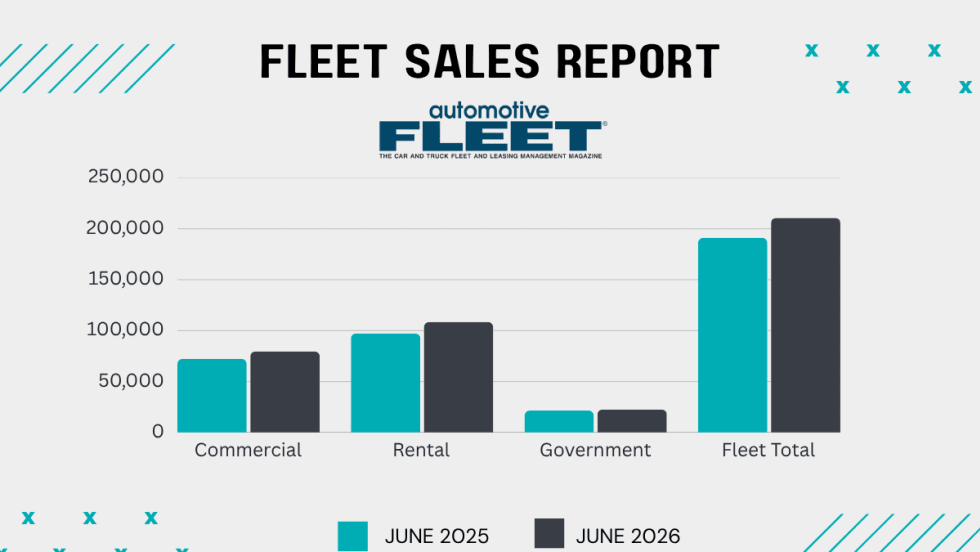
Commercial Fleet Sales Contribute To June, YTD Gains
The fleet sector has boosted its vehicle purchases at a reliable pace in the first half of this year compared with 1H 2025.
Read More →
What Fleet Managers Really Want From Vendors
From customer service frustrations and technology breakdowns to RFQs, change management, and the growing impact of turnover across the industry, this conversation pulls back the curtain on the real operational challenges fleet managers are navigating every day.
Read More →
Fleet Safety Masterclass: Industry Leaders on Storytelling, Strategy & Innovation
In this special masterclass episode, industry leaders break down what it really takes to build safer fleets in today’s increasingly distracted and data-driven world.
Read More →
Integrating Legacy Fleet Systems and Historical Data
In this episode, we bring together fleet and technology leaders to unpack the realities of data integration, system migrations, and the evolving role of AI in fleet management.
Read More →
From Resistance to Results: Change Management Strategies for Fleets
From new technologies and safety programs to evolving regulations, fleets are under constant pressure to adapt. But as Dr. Betz explains, success isn’t about the system you implement—it’s about whether your people actually use it.
Read More →