




DEARBORN, MI – When the all-new Ford Edge arrives in later this year, it will be loaded with an array of standard safety features. The Ford Edge and Lincoln MKX will offer Ford’s exclusive AdvanceTrac with Roll Stability Control (RSC) system, seat-mounted side airbags, and Safety Canopy air curtain system with rollover detection — all as standard equipment. Ford also recently revealed that 2007 models of the Ford Fusion and Mercury Milan will offer side airbags and air curtains as standard equipment beginning this summer. Edge also comes standard with Ford’s Personal Safety System, which includes dual-stage driver and front-passenger airbags, a driver seat position sensor, passenger seat occupant classification sensor, load-limiting safety belts retractors, and pretensioners. Edge also features an energy-absorbing steering wheel and knee bolster for the driver and an energy-absorbing glove box for the passenger. The new Ford Edge is equipped with an all-new, 265-horsepower, 3.5L V-6 engine and 6-speed, automatic transmission. Edge also offers several customer-friendly features such as an MP3-player audio input jack, center console laptop storage, class-exclusive panoramic Vista Roof, and a fold-flat front passenger seat for added flexibility.
New Ford Edge Crossover to Arrive Loaded With Standard Safety Equipment
DEARBORN, MI – When the all-new Ford Edge arrives in later this year, it will be loaded with an array of standard safety features. The Ford Edge and Lincoln MKX will offer Ford's exclusive AdvanceTrac with Roll Stability Control (RSC) system, seat-mounted side airbags, and Safety Canopy air curtain system with rollover detection — all as standard equipment.
More Safety
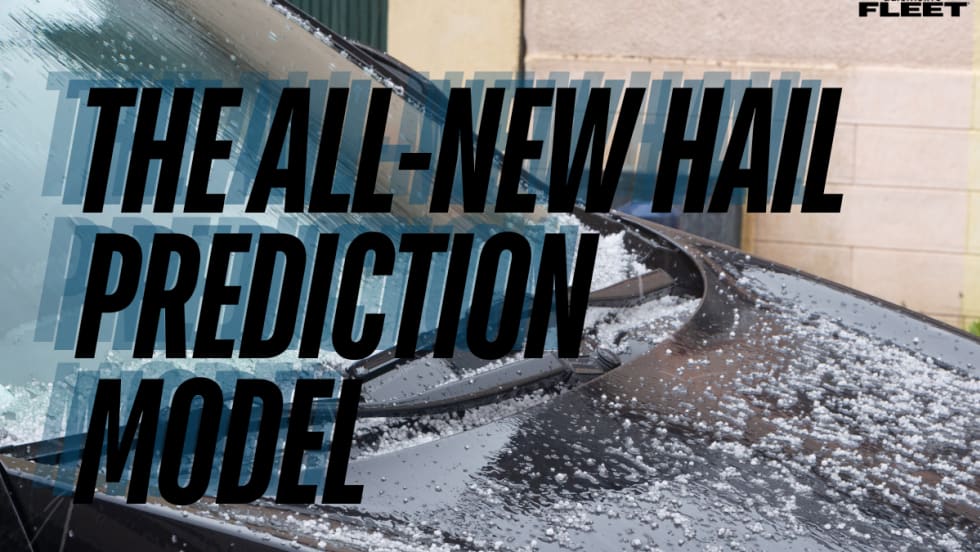
FLASH Weather AI Launches First Deep-Learning Hail Prediction Model With High-Resolution Forecasting
FLASH Weather AI has launched a first-of-its-kind hail prediction model capable of forecasting hail size and arrival time at 1-kilometer resolution up to 55 minutes ahead, giving fleets and insurers critical time to prepare for severe storms.
Read More →
How Coca-Cola United Protects Its Fleet from Growing Legal Risk
As litigation risk rises, vehicles are increasingly targeted. This Coca-Cola bottler shares how it’s reducing exposure through driver training, technology, and a proactive risk management approach.
Read More →
How to Speak the Same Language on Fleet Safety
Drivers, supervisors, and data often speak different safety “languages.” Getting on the same page will drive better results.
Read More →
Fleet Cybersecurity 101: What You Need from Your Technology Vendors
From identity management to third-party certifications, the right technology partner should make security easier to manage. Here are the three building blocks that fleet managers need to stay in control as connected systems scale.
Read More →
Reducing Risk by Eliminating Phone Use Behind the Wheel
Distracted driving remains one of the most persistent risks in fleet operations. New approaches focus on removing mobile device use entirely while adding real-time safety support.
Read More →
Distracted Driving in the Age of Smart Tech – Part 2
As distraction risks evolve, fleets are turning to smarter, more connected technologies to better understand what’s happening behind the wheel. Part 2 explores how these tools are helping identify risky behaviors and improve visibility across operations.
Read More →
Data Rights, Risks, and Responsibilities After a Crash
What fleets capture to improve safety can also expose them in litigation, forcing leaders to rethink how data is managed, stored, and shared.
Read More →
From Distraction to Detection: Strengthening Awareness in Fleet Drivers
Distracted driving is often measured by what we can see—phones in hand, eyes off the road. But what about the distractions we can’t? A recent incident raises a bigger question about awareness, attention, and why subtle risks so often go unnoticed.
Read More →
Lytx 2026 Road Safety Report
While serious crashes are declining, a rise in minor incidents and ongoing risk hotspots underscore the need for continued fleet safety investment.
Read More →
Behind-the-Wheel vs. Classroom Training: What Actually Changes Driver Behavior?
Fleets have more driver data than ever, so why isn't behavior changing? Training requires more than reports and coaching — it requires real-world practice.
Read More →