




New Calif. Driving Laws Go into Effect in 2014
New laws set to go into effect in 2014 regulate everything from commercial drive tests to bicycle passing distance.

A new law on bicycle passing distance will take effect in September 2014. Photo: AAA Foundation for Traffic Safety.

A new law on bicycle passing distance will take effect in September 2014. Photo: AAA Foundation for Traffic Safety.
A number of new laws affecting California drivers will take effect in 2014, including regulations about bicycle passing distance and use of clean-air vehicle decals.
The following laws go into effect on Jan. 1, 2014, unless otherwise noted:
Bicycle Passing Distance (AB 1371) -- This law is known as the Three Feet for Safety Act. A vehicle driver passing a bicycle that’s proceeding in the same direction must maintain a distance of no less than three feet between any part of the vehicle and any part of the bicycle or driver. When three feet is not possible, the motor vehicle must slow to a reasonable and prudent speed and pass only if there’s no danger to the bicyclist. Failing to do so can incur a fine, regardless of whether a collision results. This law will take effect Sept. 16, 2014.
Clean Air Vehicle Decals /HOV Stickers (AB 266, SB 286) – These laws extend sunset dates to Jan. 1, 2019, for single-occupant low-emission and zero-emission vehicles to operate in high-occupancy vehicle lanes (HOV).
Commercial Driver’s License (AB 1047) – This law will allow the DMV to conduct the commercial drive test for the holder of an out-of-state commercial learner’s permit. The department would electronically transfer the information to the motor vehicle department in the applicant’s state of residence. AB 1047 also modifies the license class definitions to require a driver operating a bus weighing more than 26,000 pounds to hold a commercial Class B license and a driver operating a bus weighing 26,000 pounds or less to hold a commercial Class C license.
DMV Vehicle Registration Pilot Program (SB 806) -- This law authorizes the DMV to establish a pilot program to evaluate the use of alternatives to stickers, tabs, license plates and registration cards, subject to certain requirements. It will also enable the DMV to experiment with electronic license plates, as well as facilitate the department’s ability to explore cost-effective alternatives to California’s traditional metal license plate, plastic-coated registration stickers and paper registration cards.
Registration and Vehicle Transfers Between Family Members (AB 443) – This law prohibits the transfer of vehicle ownership to a relative or a revocable living trust until the transferee pays all parking or toll-violation fines and penalties reported to the DMV.
Teen Drivers (SB 194) – This law will prohibit anyone under 18 years of age from reading or sending texts while driving, even if the electronic device used is hands-free.
Veterans License Plates (AB 244) – This law requires the California Department of Veterans Affairs (CalVet) to sponsor a veterans’ special-interest license plate. The DMV must issue the plate if CalVet meets current statutory requirements. The law creates a new program to reissue the veteran design that was available prior to Jan. 1, 2010. The Department of Veterans Affairs must secure 7,500 pre-paid applications in order for the department to implement this plate program.
Additionally, in 2014 the DMV will begin the process of implementing AB 60, the new law requiring the department to issue a driver’s license to an applicant who is unable to submit proof he or she is legally present in the U.S. The department will draft new regulations and prepare field offices to process these new applications. This law becomes operative by Jan. 1, 2015. Applicants will be required to meet all other driver’s license qualifications.
More Safety

Nexar-Nauto Merger Aims to Give Fleets Better Safety Intelligence Through Larger Driving Dataset
Stefan Heck tells Automotive Fleet that combining more than 10 billion miles of driving history with Nexar's AI models will give fleets deeper insights into driver risk and roadway conditions than either company could provide independently.
Read More →
Don't Wait for a Crisis: 5 Ways to Build Mental Health Into Your Fleet Safety Program
For Suicide Prevention Month, fleet and safety leaders have an opportunity to put mental health where it belongs: at the center of workplace safety.
Read More →
How Camera Data Can Strengthen a Fleet’s Insurance Renewal
Insights from a commercial insurance carrier and a broker show how fleets can turn video telematic data, driver coaching, and improved claims results into a stronger case at insurance renewal.
Read More →
The Safest Fleets Aren’t the Ones with the Most Technology
You’ve made the telematics investment. Here’s how to capture the other half of its value and build the safest fleet on the road.
Read More →
Hidden in Plain Sight: Fleet Compliance Risks
Fleet compliance isn't just about having policies — it's about consistently enforcing them. This practical guide reveals six hidden compliance risks common in public sector and shared fleet operations and outlines proven strategies to improve visibility, accountability, and audit readiness
Read More →
NETS Sets 2026 Fleet Safety Benchmark Conference for Indianapolis
The Sept. 15–17 program will feature fleet benchmarking data, case studies, emerging technologies, and implementation strategies while running alongside the NSC Safety Congress & Expo.
Read More →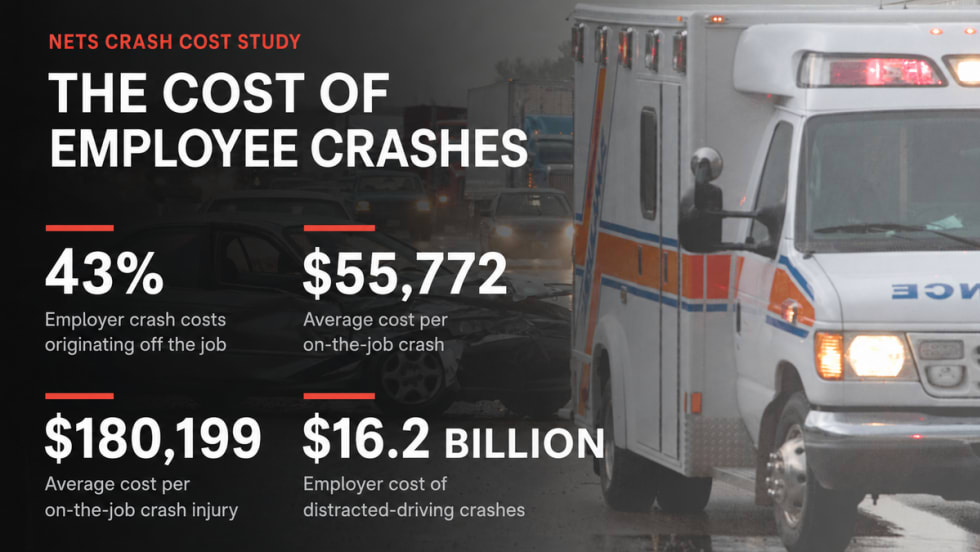
Off-the-Job Crashes Account for 43% of Employers’ $61.7 Billion Crash Burden
NETS quantifies costs dispersed across fleet, risk, HR, and other departments while providing new per-crash benchmarks for employers.
Read More →
Ram Recalls More Than 1.27 Million 1500 Pickups for Seat Belt Anchor Issue
The recall affects certain 2019-2026 Ram 1500 pickups that may have improperly attached second-row seat belt buckle anchors.
Read More →
How Better Visibility Cut Speeding Violations by 48%
Fleet leaders don't need more data, they need clearer visibility into what the data is saying. This case study explores how one utility replaced speeding-event counts with a single metric — miles driven in violation — to strengthen safety and significantly reduce speeding violations.
Read More →
Operation Safe Driver Week: Why the Industry's Oldest Safety Campaign Still Matters to Fleets
A look at how a 2007 enforcement initiative became one of the most consequential weeks on the fleet safety calendar, and what it means for your drivers in 2026.
Read More →