




Mileage Marathon Tests Audi Models
AUBURN HILLS, MI – The Audi Mileage Marathon, now completed, has provided convincing evidence of the efficiency of TDI engine technology.
AUBURN HILLS, MI – The Audi Mileage Marathon, now completed, has provided convincing evidence of the efficiency of TDI engine technology. The fuel consumption of all 23 models in this 7,865-kilometer (4,887-mile) test was excellent. The best Audi A4 3.0 TDI quattro, for example, had an average fuel consumption of 5.3 liters per 100 kilometers (44.38 US mpg); the new Audi Q5 3.0 TDI performance SUV finished the test with a convincing 6.1 l/100 km (38.56 US mpg). In its first tough road test since it was announced, the Audi Q7 3.0 TDI with ultra low emission system performed outstandingly well: the world’s cleanest diesel scored a best average fuel consumption of 7.1 l/100 km (33.13 US mpg). The lowest consumption of all the cars taking part was the 4.7 l/100 km (50.04 US mpg) achieved by the Audi A3 2.0 TDI.
The 23 Audi models crossed the Mileage Marathon’s finishing line on Sunday in Santa Monica, near Los Angeles, after crossing the American continent from the east to the west coast. Since the start in New York, 184 drivers from 15 countries had taken the wheel in these cars, as they completed the total distance of 7,865 kilometers (4,887 miles) in 13 daily stages. The actual driving time for all these vehicles averaged 93 hours.
Fuel Consumption Based on Typical Road Conditions
The route was a realistic combination of typical road and traffic situations. Long sections of highway alternated with stages on regular out-of-town roads. Stop-and-go driving in major cities was included as well as lengthy uphill and downhill gradients, for instance over 3,300-meter (10,826.77 ft) Rocky Mountain passes or in the Sierra Nevada.
As the route shows, the Mileage Marathon was not conceived as an extreme economy run, but as a practical test closely related to typical day-to-day conditions. Nor were the Audi models from the lower end of engine-output scale: many of them featured a combination of powerful three-liter V6 TDI engine, automatic transmission and quattro permanent all-wheel drive.
The low fuel consumption figures recorded by the Marathon vehicles once again confirmed the remarkable efficiency of Audi’s TDI technology. Outstandingly good results across the field of entrants and from all the four Audi model lines taking part in the test – the Audi Q7, Audi Q5, Audi A4 and Audi A3 – began to be recorded on the very first stages, and were confirmed on each successive day. Measurement of the cars’ fuel consumption figures was supervised by an independent body, the US International Motor Sports Association (IMSA).
TDI Technology – Clean and Ideal for Future Needs
The Mileage Marathon was the first tough practical test for the Audi Q7 3.0 TDI with ultra low emission system. This exhaust emission control system reduced oxides of nitrogen by up to 90 percent, and therefore complies with the toughest emission limits so far enforced anywhere in the world – California’s ULEV II BIN 5. It even outperforms the Euro 6 limits that are not scheduled for introduction until 2014. The three-liter V6 TDI is the world’s cleanest diesel and clear proof that TDI technology is the reliable approach for the future.
Technologies from the Modular Efficiency System
The new Audi Q5 “performance SUV” surprised Mileage Marathon participants not only by the way it performed on the road with its 176 kW (240 hp) 3.0 TDI engine, and by the dynamic agility of its precision suspension layout. Its fuel consumption figures, with 6.1 liters per 100 kilometers (38.56 US mpg) as the best value, were even more remarkable. Another key to this apart from TDI engine technology is the outstandingly high efficiency of the S tronic 7-speed dual-clutch transmission.
The Audi A4 too is not only the sportiest mid-size sedan but also convincing in its efficiency. Top fuel consumption values of 5.3 liters per 100 kilometers (44.38 US mpg) in the Mileage Marathon illustrate the economy potential of the technologies in Audi’s modular efficiency module.
They include energy recuperation when the brakes are applied, a regulated cooling circuit and demand-based control of the pumps. Yet all features blend successfully with a high level of sportiness and dynamism: the A4 has a power output of 176 kW (240 hp) and a maximum torque of 500 Nm (368.78 lb-ft).
The lowest fuel consumption of all was achieved, logically enough, by the compact Audi A3 2.0 TDI. The version with 6-speed S tronic transmission regularly finished a Marathon stage with a consumption of under five liters per 100 kilometers (47.04 US mpg). Its best results were in the region of 4.7 l/100 km (50.05 US mpg).
More Operations

Why Reactive Fleet Management Is Becoming Too Expensive to Sustain
Research highlights a growing need for proactive management strategies to address rising costs in fleet operations effectively.
Read More →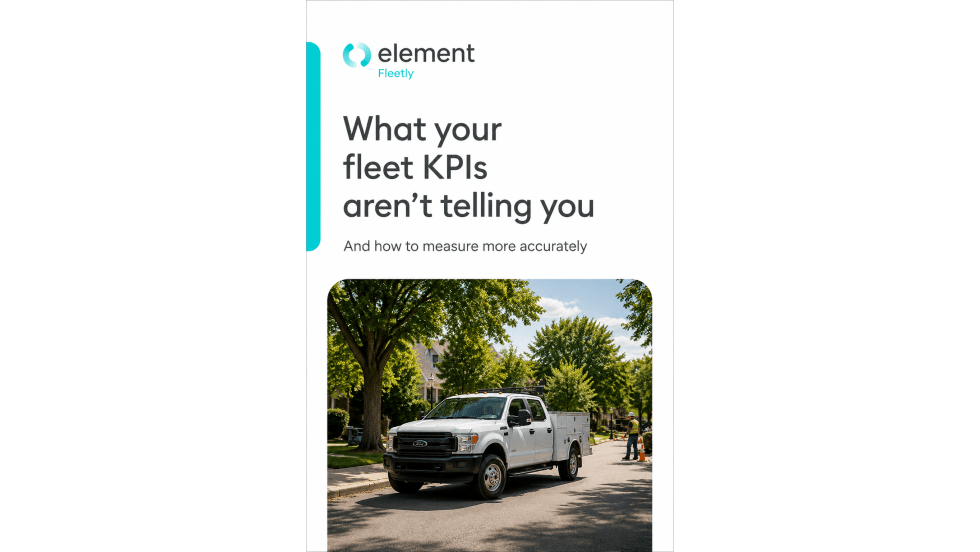
What Your Fleet KPIs Aren’t Telling You
Tracking fleet metrics is only useful when the data leads to better decisions. This guide helps fleet leaders assess cost, utilization, and downtime more accurately, identify performance gaps, and prioritize the actions that can improve operational results.
Read More →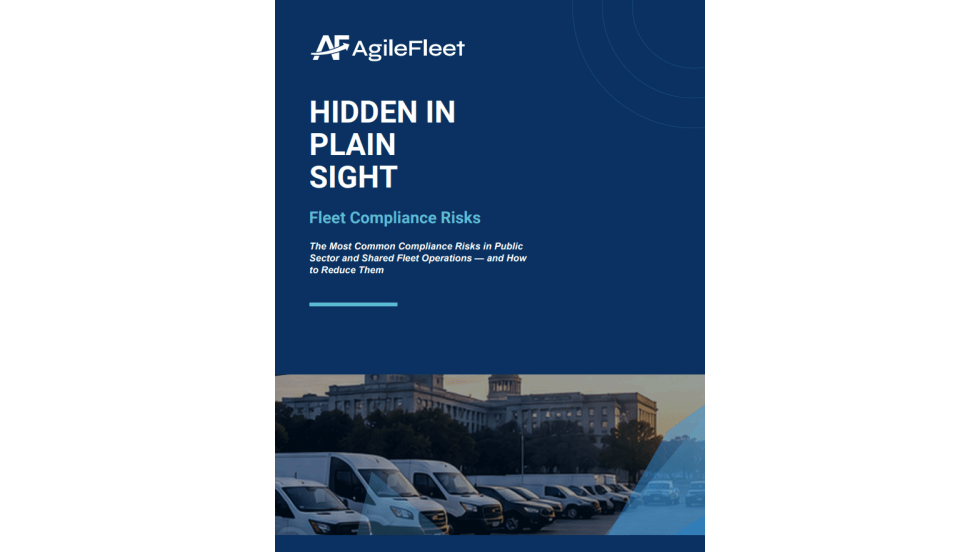
Hidden in Plain Sight: Fleet Compliance Risks
Fleet compliance isn't just about having policies — it's about consistently enforcing them. This practical guide reveals six hidden compliance risks common in public sector and shared fleet operations and outlines proven strategies to improve visibility, accountability, and audit readiness
Read More →


Turning Fleet Payment Data into Executive Insights
Does data alone drive results in operations?
Read More →
Automotive Fleet Opens 2026 Personal Use Survey for Commercial Fleet Managers
Commercial and corporate fleet managers are invited to share how their organizations handle company vehicle personal-use policies, charges, and driver eligibility.
Read More →
Gary Van Orden Retires After Nearly Four Decades in Commercial Fleet
From answering customer calls at Ford Motor Company to leading fleet sales across multiple OEMs and a fleet management company, Gary Van Orden's career reflects nearly four decades of leadership in commercial fleet.
Read More →
How Stellantis Plans to Get Ahead of Fleet Downtime
Vehicle acquisition may grab the headlines, but fleet uptime increasingly determines operating success. Darren Bradshaw of Mopar North America gives the details.
Read More →
Hyundai Releases 2027 Commercial Program Incentives
The 2027 Model Year "Fleet Street Incentives" are available to commercial and government fleets.
Read More →
It's All Downhill from Here! Fleet Industry Raises $22,000 for Skilled Trades Scholarships
Work Truck’s Lauren Fletcher and Automotive Fleet’s Chris Brown turned a friendly racing rivalry into $22,000 for automotive technology and skilled trades scholarships.
Read More →
The Top 300 Commercial Fleets
The Top 300 Commercial Fleets: See the List
Read More →