




Mercedes Updates S-Class With New Safety and Design Features
Mercedes-Benz provided details on its 2014-MY S-Class, with changes to the vehicle including a range of updated safety technologies, a new exterior look, an updated interior with four seat variants, and an adaptive suspension system that adjusts depending on road conditions.

Mercedes used more aluminum in the 2014-MY S-Class' design. Photo courtesy Mercedes-Benz.

Mercedes used more aluminum in the 2014-MY S-Class' design. Photo courtesy Mercedes-Benz.
Mercedes-Benz provided details on its 2014-MY S-Class, with changes to the vehicle including a range of updated safety technologies, a new exterior look, an updated interior with four seat variants, and an adaptive suspension system that adjusts depending on road conditions.
Starting with the S-Class’ body, Mercedes said it is using more aluminum in the body, with the entire outer skin of the S-Class being made of aluminum, including the roof and front section. The automaker is also using structural foams at specific points in the new vehicle lineup.
Under the hood, the S-Class comes with a dual-overhead camshaft (DOHC) V-8 capable of producing 455 hp between 5,250 and 5,500 rpm and 516 lb.-ft. of torque between 1,800 and 3,500 rpm. The automaker hasn’t yet announced EPA fuel economy figures for this engine. This engine is in both S-Class models, the S550 and the S550 4MATIC.
Design-wise, Mercedes made the radiator grille larger and upright and the overall design to slant slightly forward, giving the vehicle better aerodynamic qualities, according to the automaker.
Inside the new sedan, the automaker said it uses wood trim in the dashboard and center console. Mercedes offers rear-seat packages for the S-Class, for example ones that incorporate a business center console that features additional storage compartments and a folding table. The Executive Rear Seat Package variant in the back features a backrest that can be adjusted from 37 degrees up to an angle of 43.5 degrees. Up front, the built-in massage feature has six different “programs” and a warming function. The massage feature is also available for the rear seats. The Executive Rear Seat Package PLUS with rear center console package features thermo-cup holders and two tables that can fold in our out using one hand.

Inside, Mercedes used wood interior trim and created a new console display. Photo courtesy Mercedes-Benz.
Other new features inside the cabin include two high-resolution color displays that make up the new information center in the S-Class. The right-hand display shows and allows control of infotainment and comfort functions. The left-hand display shows instrument cluster information.
The controls in the vehicle feature a touch-sensitive telephone keypad and a “favorites” function with 12 selectable memory slots. The Voice entry with the Enhanced Voice Control System allows a user to say a complete address and have the system recognize it, and the phone and audio systems are voice-controllable. A new feature is the ability of the system to read aloud email or text messages. Another new feature is the Air Balance package, which perfumes and ionizes the air. The armrests and center consoles are electrically heated, which is a new feature.
The new S-Class incorporates nearly 500 LED lights into the design, from the headlamps and taillights to the interior, including ambient lighting. A multi-level lighting function reduces the intensity of the brake lights at night or while waiting at traffic lights.

The rear seats can recline from an angle of 37 degrees up to 43.5 degrees. Photo courtesy Mercedes-Benz.
For the suspension system, Mercedes has a technology on the new S-Class called Road Surface Scan, which uses a stereo camera to detect bumps on the road up ahead. If the system detects changing road conditions, Mercedes’ Magic Body Control technology adjusts the suspension system to provide a smooth ride. This system is optional on the new S-Class. Standard equipment for the new S-Class is the Adaptive Damping System ADS PLUS and an improved version of the automatic’s Airmatic air suspension system.
For its safety systems, Mercedes is using its “sensor fusion” concept to network the different systems and provide improved safety on the road. The new safety functions use the same sensor suite, which includes multi-stage radar sensors and a new stereo camera.
When it comes to new safety features, Mercedes provides two updated assistance systems, Adaptive Highbeam Assist and Night New Assist PLUS. These features are linked to the aforementioned new sensor systems (the multi-stage radar sensors and new stereo camera) give the S-Class 360-degree vision and can better detect potential road hazards, according to Mercedes.
For the individual safety systems on the S-Class, Distronic Plus with Steering Assist helps keep the vehicle centered in the lane. The Brake Assist system with Cross-Traffic Assist can use the new stereo camera to detect crossing traffic and pedestrians and apply additional braking power to what the driver can provide, if needed. Next, Active Lane Keeping Assist can detect when an adjacent lane is occupied by another vehicle and apply the brakes on one side to prevent the S-Class from leaving its lane unintentionally, if necessary.
Attention Assist can warn the driver if he or she is inattentive or drowsy and the last time they had a break. The driver can adjust this system’s sensitivity levels, according to Mercedes.
Night View Assist PLUS is improved with the addition of a thermal imaging camera, and can alert the driver to the presence of pedestrians or animals in unlit areas in front of the vehicle. There is also a spotlight function that can flash any pedestrians up ahead, thereby warning them and the driver.
Next, Mercedes said its Pre-Safe functions, designed to prevent collisions with pedestrians and vehicles in front of the vehicle in city traffic and enhance seat belt protection, offer new features. The Pre-Safe Brake can detect pedestrians and brake autonomously at speeds of up to 31 mph. Pre-Safe PLUS can recognize an imminent rear-end collision and apply the vehicle’s brakes to minimize the risk of whiplash injuries. Next, Pre-Safe Impulse will release the occupants’ seat belts in a controlled way to reduce the amount of pressure on a passenger’s body, thereby potentially reducing the risk and severity of injuries in a front-end collision.
For rear-seat passengers, Mercedes added the seat belt buckle extender, the beltbag, and the cushionbag. For the seat belt buckle extender, Mercedes said an electric motor extends and retracts the belt buckle automatically to reduce slack around a passenger’s pelvis and thorax, thereby securing them. Next, the beltbag is an inflatable seat belt strap designed to lessen the strain on a passenger’s ribcage. The seat belt buckle extender and beltbag are included in the Rear Seat Package.
The cushionbag is part of the Executive Rear Seat Package and Executive Rear Seat Package PLUS and when the rear seat is reclined, the cushionbag, located under the seat cushion upholstery, prevents a seat occupant from sliding beneath the seat belt (“submarining”) during an accident.
More Operations
Managing Fleet Costs in an Era of Permanent Volatility
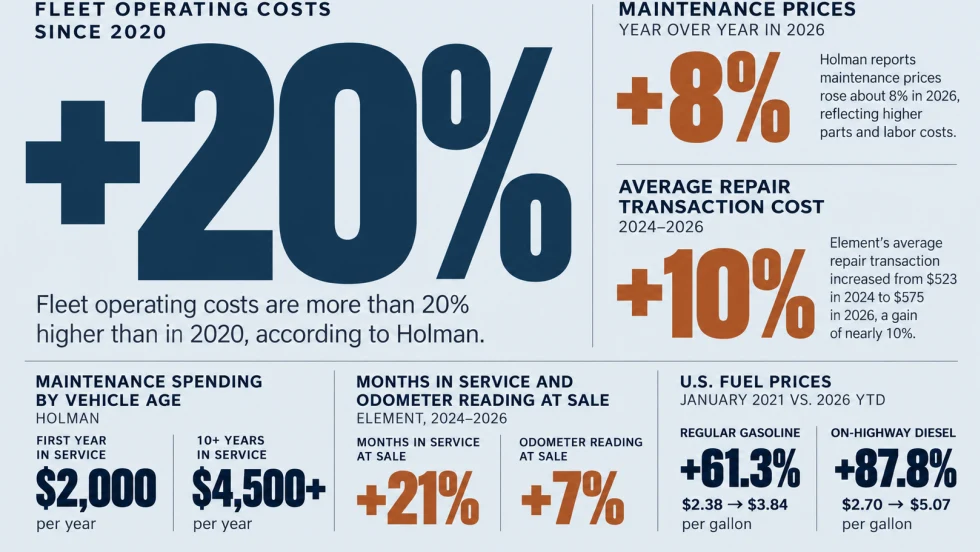
Fleet operating costs have risen more than 20% since 2020, raising a key question: When does extending a vehicle's service life stop making financial sense?
Read More →
The Next Evolution of Fleet Management: Autonomous Operations
This opening keynote session at the Fleet Forward Conference highlights the future of autonomous driving for fleets.
Read More →
How to Reduce the Total Cost of Risk From Catalytic Converter Theft
A stolen catalytic converter can cost fleets far more in downtime and lost productivity than in repairs. A total-cost-of-risk approach can help fleet managers quantify their exposure and prioritize theft prevention.
Read More →

Personal-Use Charges Rise as Vehicle Values Fall | AF News Recap
Personal-use charges are climbing, wholesale used-vehicle values are declining, and commercial fleet sales growth is slowing. This week, we're breaking down the latest fleet data, plus how Element Fleet Management is helping Waymo prepare for its first Canadian robotaxi market.
Read More →
Here's When You Should Make an Exception to Fleet Policy
Fleet policies are designed to create consistency, but not every driver or situation fits neatly within standard rules.
Read More →
AI-Native or AI-Acquired: What Should Fleet Managers Look for in an AI Platform?
Six questions can help fleet managers look beyond AI marketing claims to evaluate integration, data access, and real-world operational performance.
Read More →
A buyer's guide to fleet management software in 2027
Buying fleet management software in 2027 means looking beyond features and price. As fleet operations, technology and expectations evolve, this guide explores what today’s fleet professionals should consider when choosing a system that can deliver value now and adapt to what comes next.
Read More →
What Will Shape the Next Era of Fleet Management?
EVs, AI, and autonomous vehicles are reshaping fleet management. Discover what’s ahead—and how fleet leaders can prepare for the next era.
Read More →
How Fleets Can Recruit and Train Veterans for Technician Roles
Here's how the technician shortage has affected uptime for fleets, and what to do about it.
Read More →
Avis Budget Group Deploys Neology Toll Management Technology Across Major Brands
Neology’s neoFleet platform will manage toll transactions and toll-authority operations for vehicles across Avis, Budget, Payless, Budget Truck and Zipcar.
Read More →