




Mercedes-Benz GLK Makes Global Debut at Auto China
MONTVALE, NJ – Mercedes-Benz has released official pictures and information of the all-new GLK-Class SUV, which debuted at Auto China in Beijing on Apr. 20.
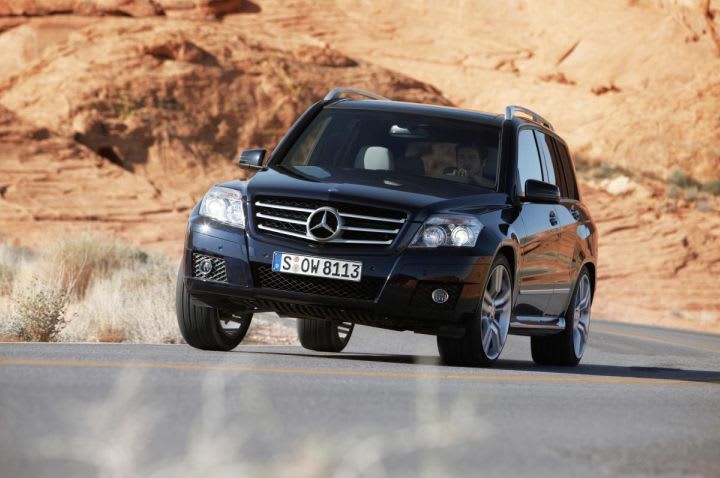
Mercedes Benz GLK350
MONTVALE, NJ – Mercedes-Benz has released official pictures and information of the all-new GLK-Class SUV, which debuted at Auto China in Beijing on Apr. 20. It will make its U.S. dealer showroom debut in January 2009 as a 2010 model.
Powered by a 268-horsepower, 3.5L V-6 engine, the 2010MY GLK350 will form the basis of the U.S. lineup, and will be offered in both 4MATIC and two-wheel-drive versions, riding on standard 19-inch, 10-spoke wheels with 235/50 tires. The GLK features a 108.5-inch wheelbase and boasts unique design language, which sets it apart from the rest of the successful Mercedes-Benz family of SUVs that includes the M-Class, the larger GL-Class, the crossover R-Class, and the iconic G-Class.
Showcasing bold exterior design, generous cargo capacity, and available 4MATIC all-wheel-drive, the GLK350 combines styling, versatility, and performance. The 2010 GLK-Class will be produced exclusively at the Mercedes-Benz plant in Bremen, Germany.
With its poised, confident presence, the GLK-Class leaves no doubt about its intent to conquer the compact premium SUV segment. In sharp contrast to the relatively soft forms of other similar-sized vehicles, the striking, angular profile of the GLK sets it apart from the competition. From the GLK-Class’s steeply-raked windshield to its integrated rear spoiler on its tightly styled roof section, the bullish shape of the new GLK suggests power and agility and echoes the G-Class.
The GLK boasts a long list of standard equipment, including a two-zone automatic climate control system, adjustable steering column, front seats with electrically adjustable height and backrest angle (including seat inclination adjustment), and manual lumbar support with two-way adjustment for the driver’s seat are all standard on the GLK. Standard integrated Bluetooth interface for mobile phones, a microphone for the hands-free system, and a central five-inch color display round out the list of interior appointments.
The 2010 GLK features standard front and side airbags, window air bags, and an available rear-seat entertainment system featuring two eight-inch screens, wireless headphones, and an integrated dual-source DVD player.
Front and rear headroom figures are 39.8 inches and 39.7 inches respectively, while the cargo area boasts 23.3 cubic feet of storage. Cargo capacity balloons to 54.7 cubic feet when the 1/3:2/3-split rear seats are folded forwards.
In combination with the front and rear deformation zones, the GLK’s high-strength passenger cell provides a highly efficient foundation for the occupant protection systems, which include:
Adaptive, two-stage airbags for the driver and front passenger.
Front side-impact airbags.
Windowbags across both seat rows from the A-pillar to the C-pillar.
Active head restraints for the driver and front passenger.
Crash-optimized pedal system.
3-point seat belts for all five seats.
Belt tensioner and adaptive belt-force limiter for the driver and front passenger, belt tensioner, and single-stage belt-force limiter for the outer rear seats.
ISOFIX child seat attachments.
Belt height adjuster for the driver and front passenger.
Belt status indicator for the rear passengers in the instrument cluster.
The GLK features a 3.5L V-6 engine, a seven-speed automatic transmission, and available 4MATIC full-time, four-wheel-drive. All of these components combine to give the GLK350 a 0-60 time of just 6.5 seconds (estimated) while achieving an 23 mpg (estimated) on the highway.
Both the
GLK350 and GLK350 4MATIC are matched with a seven-speed automatic transmission
as standard.
More Operations

Company Vehicle or Reimbursement? How Fleets Are Rethinking Assignments
As fleet costs and insurance pressures rise, fleet managers are taking a closer look at which employees need company-provided vehicles and when a reimbursement program may make more sense.

Fleetio, ASE Launch Scholarship Program for Automotive Technicians
The second annual program will award 15 scholarships totaling $35,000 to support ASE certification, testing fees, and equipment costs.

Reading the Global Signals: What AI and the Energy Transition Mean for Fleets Now
In this opening keynote of the 2026 Fleet Forward Conference, John Rossant, founder of CoMotion, How can fleet managers navigate a never-ending, changing industry landscape?

90% Use Telematics. Are Fleets Getting Safer? | AF News Recap
This week, we're breaking down which industries have the highest rates, how Jamie McKay manages 2,400 vehicles, what's happening with the 2027 fleet awards, and why software-defined vehicles could introduce new costs.

What's Best Handled by an FMC, and What's Better Done Directly?
Fleet managers continue to rely on FMCs for essential services but are taking a closer look at where working directly with suppliers can improve efficiency and responsiveness.

Fleet Meets: Erin Gilchrist
Meet Erin Gilchrist, the inaugural Mike Antich Spirit of Fleet Award winner, as she shares insights on leadership, mentorship, the power of industry connections, and why people remain at the heart of fleet's future.

How 2026 Fleet Visionary Jamie McKay Manages 2,400 Vehicles Across 37 States
How do you keep 2,400 vehicles running across 37 states? Fleet Visionary Award winner Jamie McKay shares how collaboration, flexibility, and a few simple strategies help her tackle fleet management challenges at Aptive Pest Control.

Managing Fleet Costs in an Era of Permanent Volatility
Fleet operating costs have risen more than 20% since 2020, raising a key question: When does extending a vehicle's service life stop making financial sense?

The Next Evolution of Fleet Management: Autonomous Operations
This opening keynote session at the Fleet Forward Conference highlights the future of autonomous driving for fleets.

How to Reduce the Total Cost of Risk From Catalytic Converter Theft
A stolen catalytic converter can cost fleets far more in downtime and lost productivity than in repairs. A total-cost-of-risk approach can help fleet managers quantify their exposure and prioritize theft prevention.