




Mercedes-Benz ESF 2009 Safety Vehicle Makes U.S. Debut at Washington, D.C. Auto Show
MONTVALE, NJ - The Mercedes-Benz ESF 2009 is showcasing the future of automotive safety. The ESF 2009 (Experimental Safety Vehicle 2009) provides a sneak peak into what Mercedes-Benz safety specialists are currently developing
MONTVALE, NJ - The Mercedes-Benz ESF 2009 is showcasing the future of automotive safety. The ESF 2009 (Experimental Safety Vehicle 2009) provides a sneak peak into what Mercedes-Benz safety specialists are currently developing - with a time horizon extending well into the future. A pioneer in automotive safety, Mercedes-Benz recently celebrated several anniversaries in this field: in August 1939 the safety pioneer Béla Barényi started his work in Sindelfingen. He invented, for example, the principle of the crumple zone, a trailblazing innovation which entered series production at Mercedes-Benz in 1959. With the help of its in-house accident research department, which was founded in 1969, Mercedes engineers in the following years have developed several groundbreaking innovations in passenger car safety.
The ESF 2009 is the first Experimental Safety Vehicle to be built by Mercedes-Benz since 1974. Like its historic predecessors, this dramatic showcar illustrates trailblazing innovations in the field of safety and makes the progress achieved clearly visible. These amazing but by no means unrealistic ideas include inflatable metallic sections which give more stability to structural components within fractions of a second, as well as the so-called "Braking Bag". This airbag housed within the vehicle floor is deployed when a crash is deemed to be unavoidable, and uses a friction coating to support the vehicle against the road surface.
"Safety is a central element of the Mercedes-Benz brand. In this respect we have been setting the pace in the market for almost 70 years. For the benefit of our customers and for motorists in general. The ESF 2009 shows that we still have plenty of ideas and the absolute will, to lead the automobile industry in this field even in future", says Dr. Dieter Zetsche, Chairman of Daimler AG and CEO of Mercedes-Benz Cars.
The ESF 2009 was developed and built completely in the test vehicle workshops in Sindelfingen, Germany. This safety research vehicle based on the Mercedes S400 HYBRID features more than a dozen safety innovations, most of which are fully functioning in demonstration mode. "With the ESF 2009, we have chosen this particular time to clearly demonstrate the innovative strength of Daimler. Anybody examining the ESF 2009 in detail will recognize that more safety and improved energy efficiency are not necessarily a contradiction in terms. We want
to make progress in both fields with new, trailblazing ideas ", says Dr. Thomas Weber, the member of the Daimler Executive Board responsible for corporate research and development at Mercedes-Benz Cars.
The following five innovations are among the highlights of the ESF 2009:
PRE-SAFE Structure: The inflatable metal structures save weight or increase the stability of structural components. When at rest, the metal section is in a folded state to save space. If its protective effect is required, a gas generator builds up an internal pressure of 10 to 20 bar within fractions of a second, causing the section to unfold for significantly more stability.
Braking Bag: This auxiliary brake accommodated in the vehicle floor is a new type of PRE-SAFE® component. If the sensor system concludes that an impact is unavoidable, the Braking Bag is deployed shortly before the crash and stabilizes the car on the road surface by means of a friction coating. The vehicle's vertical acceleration increases the friction, and helps to decelerate the vehicle before the impact occurs.
Interactive Vehicle Communication: The ESF 2009 is able to communicate directly with other vehicles, or via relay stations. Using "ad hoc" networks and WLAN radio technology, it is e.g. able to receive and transmit warnings of bad weather or obstacles in the road.
PRE-SAFE Pulse: This further development of PRE-SAFE® is able to reduce the forces acting on the torsos of the occupants during a lateral collision by around one third. It does this by moving them towards the centre of the vehicle by up to 50 millimeters as a precautionary measure. As an active restraint system, it uses the air chambers in the side bolsters of the seat backrests.
Spotlight lighting function: This partial LED main beam specifically illuminates potential hazards. If the infrared camera of Night View Assist PLUS e.g. detects deer at the roadside or pedestrians on the road, these can be briefly illuminated beyond the normal area covered by the headlights, as if by a spotlight.
More Operations

How to Manage Conflict for Your Fleet Operations
Conflict management is becoming a core leadership skill. Here are five strategies fleet leaders should know.
Read More →
Turning Connected Vehicle Data Into Decisions That Matter
Fleet leaders have more data than ever, but turning that data into clear, actionable decisions remains a challenge. This white paper shows how leading organizations are using connected vehicle data to improve safety, reduce costs, and optimize fleet performance. Learn how to turn insight into action across your fleet.
Read More →
Cameras, Safety and Insurance: From Reactive Claims to Real-time Prevention
Commercial auto remains one of the most challenging and costly lines of coverage for fleet operators and insurers alike. Learn more about how to effectively address these issues from Onur Aksan, Enterprise Business Development Executive, Geotab.
Read More →

Are You Tracking Your Fleet's True Total Cost of Ownership?
Bobit Business Media surveyed 190 fleet professionals and found that while most fleets are tracking costs, fragmented systems and data gaps are keeping true TCO visibility out of reach. With rising pressure to control spend in an increasingly volatile environment, the gap between what fleets think they know and what the data actually shows is wider than you might expect. See how your peers are managing costs today and where the industry still has room to improve.
Read More →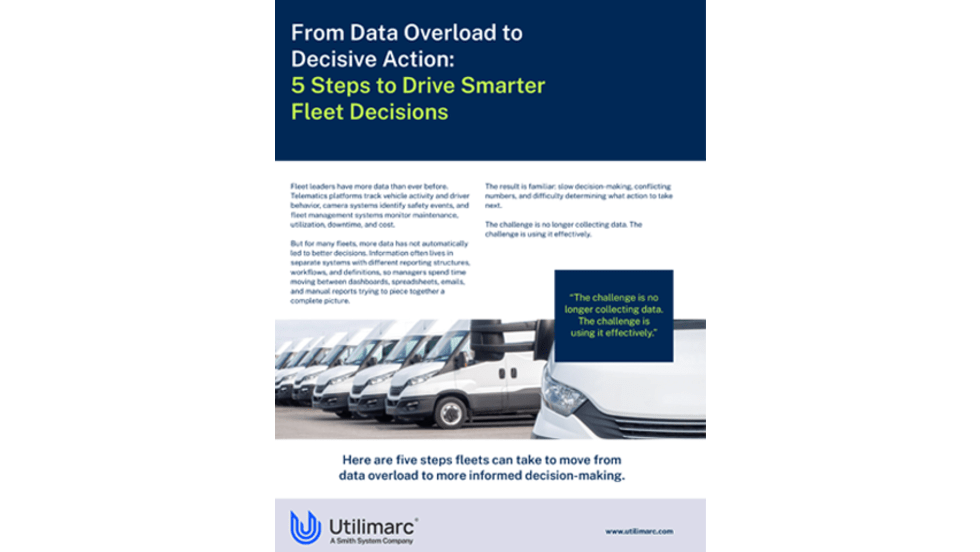
Turn Fleet Data Into Smarter Decisions
Fleet leaders have access to more operational data than ever, but disconnected systems and unclear metrics often slow decision-making instead of improving it. This article outlines five practical steps fleets can take to transform fragmented data into actionable insights that improve planning, safety, utilization, and long-term performance.
Read More →
Hybrids: Electrification Without the Challenges
For fleet managers, fuel is one of the biggest line items in the budget — and it's one hybrids can shrink without changing how your people work. Download the eBook to see the numbers, understand the technology, and get a step-by-step guide to making the switch.
Read More →
How NOV Uses Telematics to Improve Fleet Safety Across 160 Locations
James Victory of NOV discusses how the company manages fleet safety, maintenance, and telematics across more than 150 locations supporting oilfield operations throughout the U.S.
Read More →
Fleet Meets: Steven Santostasi
This edition of the Fleet Meets series features Steven Santostasi, the current TSP channel manager for Ford Pro.
Read More →
Why Fleet Managers Are Replacing Departmental Vehicles with Shared Motor Pools
Departmentally assigned vehicles often create hidden costs through underutilization, poor visibility, and increased administrative burden. This white paper explores how shared motor pool strategies help fleets reduce costs, improve accountability, and optimize vehicle utilization.
Read More →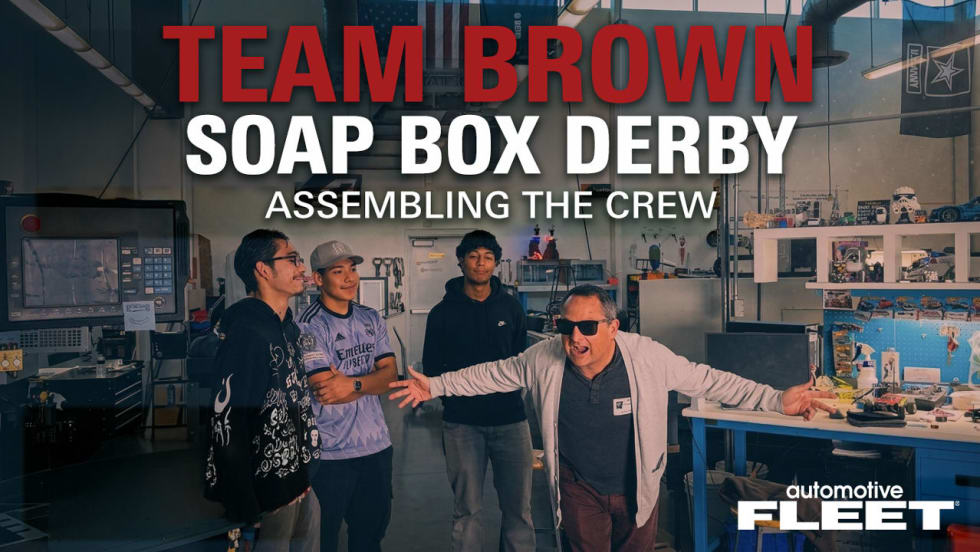
Soap Box Derby Challenge: Assembling the Crew
Meet Gabriel, Matthew, and Angel — the team helping bring this soap box derby build to life.
Read More →