




Mass. State Police Offers Winter Driving Advice
The law enforcement agency provides eight tips to help motorists stay safe during snowy weather conditions.
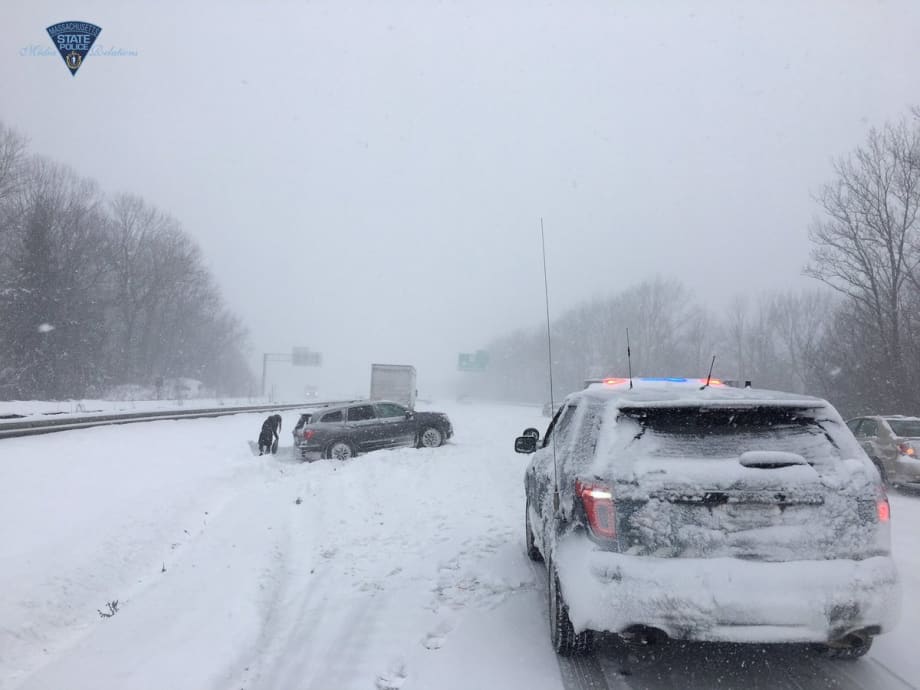
Photo courtesy of the Massachusetts State Police.
Photo courtesy of the Massachusetts State Police.
With Winter Storm Niko hammering the Northeast, the Massachusetts State Police is reminding drivers to take extra measures to stay safe in snowy weather. When driver visibility is low, of course, that means staying off roads entirely.
The law enforcement agency offered these basic strategies for winter weather driving:
Follow Police Agencies on Social Media for Updates — @MassStatePolice, for example, posts road closures and traffic advisories on Twitter regularly. The Massachusetts Emergency Agency's twitter account is @MassEMA. State and some local agencies are also using the hashtag #MAsnow and #MAwx while posting weather-related updates.
Take Note of the Local Forecast — The State Police encourages motorists to check local forecasts and plan accordingly for adverse weather conditions. (Motorists can dial 511 for current traffic and road conditions on Massachusetts highways.)
Vehicle Preparation —With a forecast of inclement weather, motorists should ensure that their vehicles are well maintained and properly equipped for winter driving. Check fluid levels, particularly washer fluid and anti-freeze, to make sure they're at adequate levels. Inspect tires to verify they're properly inflated and have sufficient tread depth. Equip vehicles with a snow shovel, ice scraper, jumper cables, flares, a flashlight and some warm clothing and blankets. Additionally, motorists should completely clear their vehicles of snow and ice prior to driving, including all lights. Clearing vehicles of snow and ice enhances the safety of all motorists by providing an unobstructed view and preventing snow and ice from flying off at high speeds. Motorists should also carry a charged cell phone.
Reduce Speed —Anticipate delays. Most snow- and ice-related crashes are caused by spinouts and vehicles sliding off the road because they're traveling at speeds too great for the road and weather conditions. Posted speed limits are set for driving under optimal, dry conditions. If road and weather conditions are adverse, motorists should travel at a speed well below the posted limit.
Leave Extra Space Between Vehicles —Under optimal driving conditions, motorists should leave at least one car length for every 10 miles per hour between them and the vehicle in front of them. If the road and weather conditions are adverse, that distance should be significantly increased to allow for greater stopping distances.
Beware of Black Ice —Transparent ice may form on the roadway. If you notice ice forming on any objects, assume that it's forming on the road surface as well. Bridges are usually the first surfaces to freeze. Drive slowly and, if possible, avoid driving on iced-over surfaces.
Buckle Up —Ensuring everyone in your vehicle is properly restrained is the single most effective action you can take to keep everyone safe.
Dial 911 in Roadway Emergencies —In any weather conditions, motorists who become disabled or encounter an emergency on the roadways should dial 911. Maintain awareness of your location, noting the route you're traveling on and the number of the exit you most recently passed.
More Safety

Nexar-Nauto Merger Aims to Give Fleets Better Safety Intelligence Through Larger Driving Dataset
Stefan Heck tells Automotive Fleet that combining more than 10 billion miles of driving history with Nexar's AI models will give fleets deeper insights into driver risk and roadway conditions than either company could provide independently.
Read More →
Don't Wait for a Crisis: 5 Ways to Build Mental Health Into Your Fleet Safety Program
For Suicide Prevention Month, fleet and safety leaders have an opportunity to put mental health where it belongs: at the center of workplace safety.
Read More →
How Camera Data Can Strengthen a Fleet’s Insurance Renewal
Insights from a commercial insurance carrier and a broker show how fleets can turn video telematic data, driver coaching, and improved claims results into a stronger case at insurance renewal.
Read More →
The Safest Fleets Aren’t the Ones with the Most Technology
You’ve made the telematics investment. Here’s how to capture the other half of its value and build the safest fleet on the road.
Read More →
Hidden in Plain Sight: Fleet Compliance Risks
Fleet compliance isn't just about having policies — it's about consistently enforcing them. This practical guide reveals six hidden compliance risks common in public sector and shared fleet operations and outlines proven strategies to improve visibility, accountability, and audit readiness
Read More →
NETS Sets 2026 Fleet Safety Benchmark Conference for Indianapolis
The Sept. 15–17 program will feature fleet benchmarking data, case studies, emerging technologies, and implementation strategies while running alongside the NSC Safety Congress & Expo.
Read More →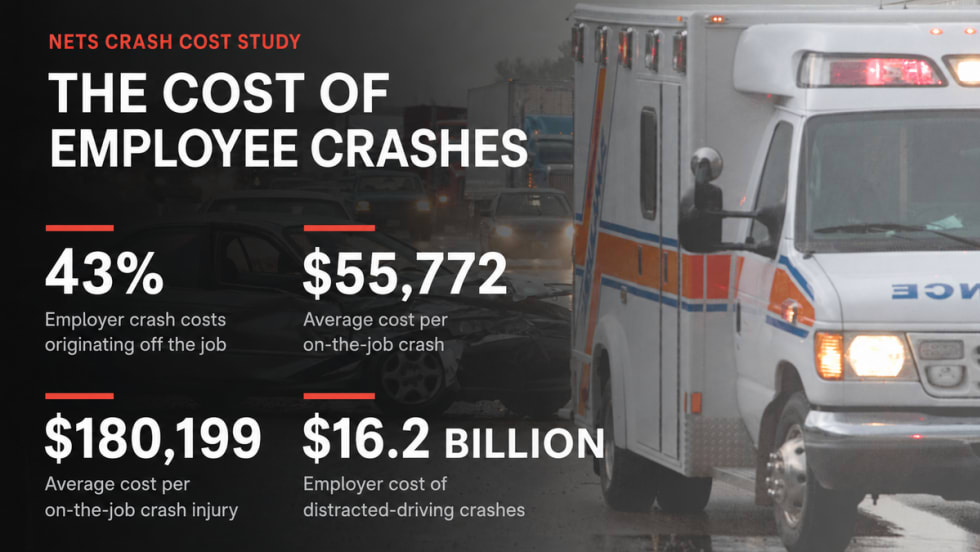
Off-the-Job Crashes Account for 43% of Employers’ $61.7 Billion Crash Burden
NETS quantifies costs dispersed across fleet, risk, HR, and other departments while providing new per-crash benchmarks for employers.
Read More →
Ram Recalls More Than 1.27 Million 1500 Pickups for Seat Belt Anchor Issue
The recall affects certain 2019-2026 Ram 1500 pickups that may have improperly attached second-row seat belt buckle anchors.
Read More →
How Better Visibility Cut Speeding Violations by 48%
Fleet leaders don't need more data, they need clearer visibility into what the data is saying. This case study explores how one utility replaced speeding-event counts with a single metric — miles driven in violation — to strengthen safety and significantly reduce speeding violations.
Read More →
Operation Safe Driver Week: Why the Industry's Oldest Safety Campaign Still Matters to Fleets
A look at how a 2007 enforcement initiative became one of the most consequential weeks on the fleet safety calendar, and what it means for your drivers in 2026.
Read More →