




Mass. Provides Alt-Fuel Fleet Grants
Massachusetts will provide state grants to help municipal fleets replace gasoline and diesel-powered vehicles with electric vehicles and add EV charging infrastructure, Gov. Deval Patrick announced this week.
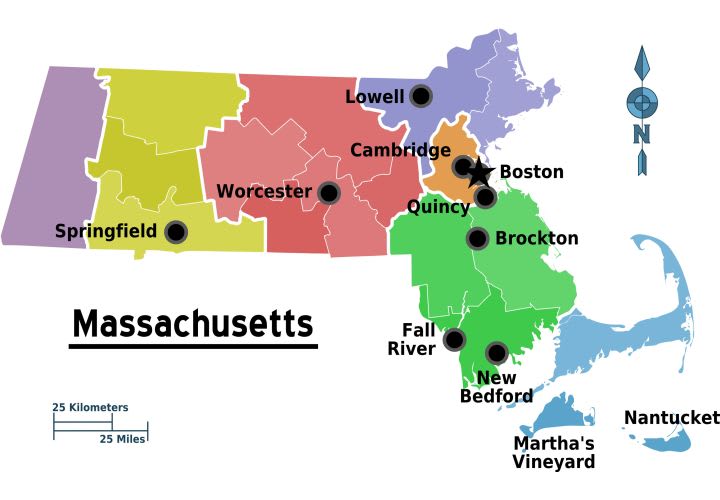
Map image via Wikimedia.
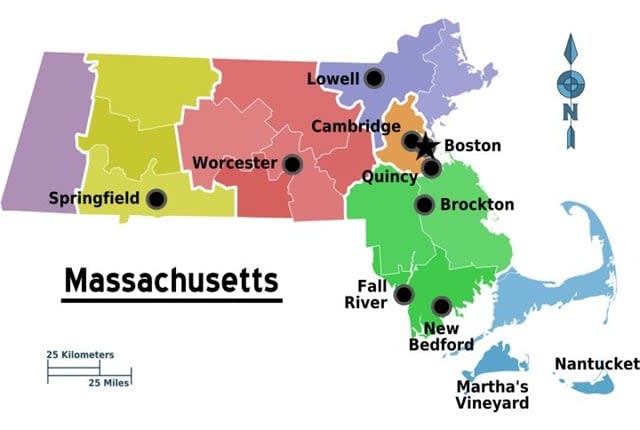
Map image via Wikimedia.
Massachusetts will provide state grants to help municipal fleets replace gasoline and diesel-powered vehicles with electric vehicles and add EV charging infrastructure, Gov. Deval Patrick announced this week.
The electric-vehicle initiative will be the second Massachusetts alt-fuel initiative available to fleets, following the 2013 Clean Vehicle Project, which aims to replace more than 200 public and private fleet vehicles. That initiative includes a state allocation of $11.7 million for electric vehicle initiatives, according to a spokeswoman for Gov. Patrick.
The Massachusetts Electric Vehicle Incentive Program (MassEVIP) is a competitive incentive program that provides funds to cities to acquire electric vehicles and install Level 2 charging stations. The program is administered by the Massachusetts Department of Environmental Protection (MassDEP) and funded with $2.5 million from the Motor Vehicle Inspection Trust Fund.
"With MassEVIP, the Commonwealth demonstrates its commitment to increase the deployment of EVs in municipal fleets, encourage demand for electric vehicles in Massachusetts, reduce smog forming emissions and greenhouse gases, and help the Commonwealth meet its air quality and Global Warming Solutions Act goals," according to a statement from Gov. Patrick.
MassDEP has awarded two phases of MassEVIP grants, including $555,000 to 20 municipalities for 21 plug-in hybrid electric vehicles, 26 battery-electric vehicles, and 17 Level 2 dual-head charging stations in the first phase.
The second phase was open to municipalities, colleges, state agencies and car share operators. The state awarded $600,000 to 19 entities for the purchase or lease of electric vehicles and Level 2 charging stations.
The state also plans to convert diesel medium-duty trucks or shuttle buses to operate with plug-in battery-electric drivetrains and replace diesel shuttle buses with battery electric shuttle buses with wireless charging.
Under the Clean Vehicle Project, the state will also add fast-charging stations on major arteries to enable publicly-accessible highway charging. The chargers, which can fully charge most electric vehicles in less than 30 minutes, will support the eight-state Northeast Electric Vehicle Network.
"The Patrick Administration is committed to using innovative strategies that reduce greenhouse gas emissions, bolster our energy independence and grow our clean energy economy," said Rick Sullivan, Massachusetts Energy and Environmental Affairs secretary. "Electric fleets advance our goals and show that alternative fuel vehicles are a win-win for the environmental and economic bottom line."
The Clean Vehicle Program is funded by the Congestion Mitigation and Air Quality (CMAQ) improvement program sponsored by the U.S Department of Transportation's Federal Highway Administration.
By Paul Clinton
More Green Fleet

EV Charging Use Is Outpacing Infrastructure Growth
ChargePoint’s 2026 Charging Forward Report points to rising charger use, higher-powered charging, commercial vehicle electrification, and energy-management technology. Here’s what fleets should know.
Read More →
Merchants Fleet Reports 290M EV Miles as Fleets Navigate Changing Electrification Market
From millions in operating savings to hundreds of millions of EV miles, Merchants Fleet’s latest report reveals what’s working and what’s changing in fleet electrification.
Read More →
The EV Breakdown Nobody's Talking About: Why Most Electric Vehicle Roadside Calls Aren't Mechanical Failures
Here's why EV breakdowns are widely misunderstood.
Read More →
ChargePoint Now Available in Energy Pass
ChargePoint and additional planned charging network integrations were added to GM's Energy Pass.
Read More →

First Look: Slate Auto's Electric Fleet Pickup
Could an affordable, modular EV pickup make electrification more practical for fleets?
Read More →
Slate Debuts Colorful, Unique EV Models
A recent media and client event, studded with electric vehicles dressed up on platforms, planted a new position for the manufacturer in the wider EV market. Fleets will find cost-saving advantages.
Read More →
Slate Electric SUV, Pickup Switchable Model Aims For Light-Duty Fleets
Everything about this EV is counterintuitive and understated, making it stand out from the crowd.
Read More →
Inspiration Mobility Acquires Key Electrada Assets
Inspiration Mobility Group has acquired select assets of Electrada, adding the fleet electrification provider's team, technology, and charging infrastructure development capabilities to its energy management business.
Read More →
Turning Connected Vehicle Data Into Decisions That Matter
Fleet leaders have more data than ever, but turning that data into clear, actionable decisions remains a challenge. This white paper shows how leading organizations are using connected vehicle data to improve safety, reduce costs, and optimize fleet performance. Learn how to turn insight into action across your fleet.
Read More →