




Jaguar Land Rover Showcases Self-Driving Tech
The automaker is making strides in developing prototype technologies designed to execute complex driving maneuvers, such as multi-point turns in tight quarters.
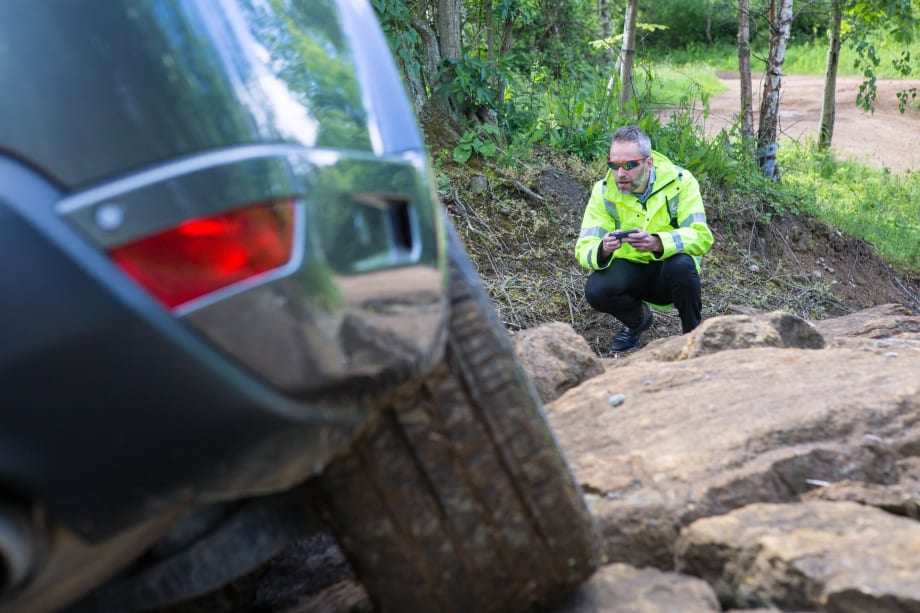
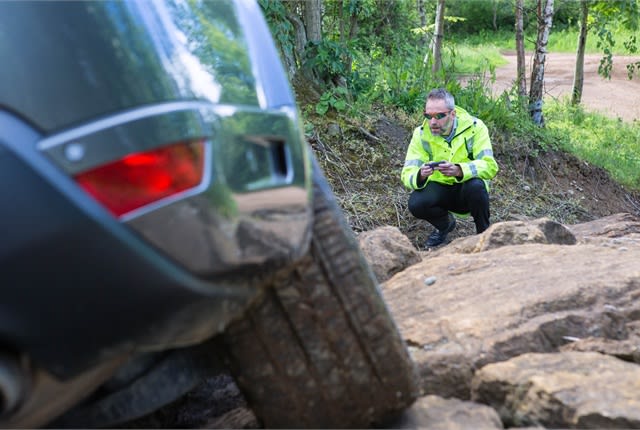
VIDEO: Jaguar Land Rover Autonomous Car Technology
U.K.-based researchers at Jaguar Land Rover are developing new sensing and autonomous driving technologies designed to handle some of the most challenging driving situations, and the automaker recently showcased those capabilities.
Ever enter a small, cramped parking lot, only to discover all the spaces are occupied and you have to somehow turn around because the parking aisle dead-ends with no alternate exit? Or have you ever returned to your parked car to find another vehicle parked so close that the thought of backing up to leave creates anxiety? Even if you answered no to these questions, it’s a safe bet many of your fleet drivers would answer yes. And these are the kind of driving dilemmas that Jaguar Land Rover researchers are tackling.
Jaguar Land Rover’s U.K.-based research team has built a Remote Control Range Rover Sport test vehicle, which a driver can control outside the car using a smartphone. The driver can walk alongside the vehicle and use the phone app to control steering, brakes and throttle while monitoring the precise positioning of the vehicle, the automaker said. In this mode, the car travels at a maximum speed of 4 mph.
Additionally, the Multi-Point Turn Range Rover Sport test vehicle is capable of autonomously maneuvering through 180 degrees. The system takes over gear selection, steering, braking and acceleration to make as many forward and backward movements necessary to complete the maneuver.
“Getting a car out of a tricky parking maneuver can be a stressful experience for any driver,” said Dr. Wolfgang Epple, director of research and technology for Jaguar Land Rover. “A Remote Control car, or a vehicle that can autonomously turn in the road, demonstrates how we could use these technologies to reduce the tedious parts of driving and improve road safety.”
Such research not only helps advance autonomous vehicle technology; it also promises to “make real driving safer and more enjoyable,” Epple said. “The same sensors and systems that will help an autonomous car make the right decisions will assist the driver and enhance the experience to help prevent accidents. Autonomous car technologies will not take away the fun of driving.”
Jaguar Land Rover, part of the U.K. Autodrive consortium, is evaluating semi-autonomous driving features in a Range Rover research vehicle and is developing human machine interface (HMI) systems in autonomous transport pods.
To view a video demonstrating these technology advances, click on the photo or link below the headline.
More Global Fleet

Proven Ways to Reduce Work Truck Downtime
The age-old problem of downtime will always be a reality, but with new strategies at hand, fleets have more ways to keep trucks on the road longer.
Read More →
The Top 300 Commercial Fleets
The Top 300 Commercial Fleets: See the List
Read More →

Cameras, Safety and Insurance: From Reactive Claims to Real-Time Prevention (Part 2 of 2)
Part Two: Commercial auto remains one of the most challenging and costly lines of coverage for fleet operators and insurers alike. Continue learning more about how to effectively address these issues from Onur Aksan, Enterprise Business Development Executive, Geotab
Read More →
Cameras, Safety and Insurance: From Reactive Claims to Real-time Prevention
Commercial auto remains one of the most challenging and costly lines of coverage for fleet operators and insurers alike. Learn more about how to effectively address these issues from Onur Aksan, Enterprise Business Development Executive, Geotab.
Read More →
Why Fleet Managers Are Replacing Departmental Vehicles with Shared Motor Pools
Departmentally assigned vehicles often create hidden costs through underutilization, poor visibility, and increased administrative burden. This white paper explores how shared motor pool strategies help fleets reduce costs, improve accountability, and optimize vehicle utilization.
Read More →
Fleet Costs Are Rising: Here’s How Leaders Are Responding
Fleet leaders are under pressure to reduce costs, adapt to economic uncertainty, and make smarter decisions. See how peers across North America are responding with real data, proven strategies, and forward-looking insights. Download the 2026 Market Pulse Report to benchmark your strategy and uncover where you can gain an edge.
Read More →
Enterprise Fleet Management Surpasses 900,000 Vehicles in U.S. & Canada
Enterprise Mobility connects with mobility solutions around the globe
Read More →
Automotive Fleet's Guide to Fleet Electrification
Unlock the secrets to a successful transition to electric fleets with Automotive Fleet's comprehensive Fleet Electrification Guide!
Read More →
Sumitomo Rubber Industries to Acquire Viaduct
Viaduct will join Sumitomo as an independent subsidiary. Partnership strengthens global reach and accelerates AI-driven innovation for fleets and manufacturing.
Read More →