




How Will Plug-and-Charge Technology Benefit Fleets?
The technology allows charging electric vehicles on public networks to be billed by simply plugging into a charger, without a card or RFID tag. But there’s a catch.

Tritium CTO James Kennedy says the technology will be “as simple as how we charge our phones, but with the added benefit of charging our bank accounts at the same time.”
Photo courtesy of Tritium
Since the advent of paying via credit, we’ve been conditioned to swipe a card or a fob at a fuel pump and enter a pin or a zip code. Easy enough.
As the electric vehicle market developed, however, charging at public stations became more complicated. Electric vehicle drivers would have to sign up for proprietary networks’ systems to access and pay for the charging session with either a card or an RFID tag, adding time to the stop and creating a potential multitude of accounts to manage.
New technology eliminates the card swipe altogether — when the driver plugs in the vehicle to charge, the user’s account is automatically billed. The system, named Plug and Charge, was developed by Australia-based Tritium, makers of fast-charge technology. Tritium currently holds 15% to 20% of the western global market for DC fast chargers.
The technology automatically and simultaneously charges both the battery and the user’s account the moment a Tritium charger connects to an electric vehicle, without the need for a card or RFID tag and regardless of the charging network operator.
“There’s no need for any interaction by the driver at all, apart from plugging in,” says James Kennedy, chief technology officer and cofounder of Tritium.
The technology uses the ISO 15118 standard, an international standard that outlines the digital communication protocol that an EV and charging station should use to recharge the EV’s battery.
The Catch
The technology has been trialed in the field with existing and emerging EVs from OEMs in Europe and is available immediately. Tritium says it’s the first to market with the offering, which is available immediately for charge point operators to deploy on Tritium’s PK350kW DC High Power Chargers.
What is required for the technology to hit critical mass, says Kennedy, is buy-in and adoption on a large scale from charge point operators.
Plug and Charge uses cryptographic certifications between the vehicle and the charger. Electric vehicles will also need a way to secure the vehicle-side “cryptographic key” which will become commonplace with emerging models.
“The vehicles will need to have the storage technology built in, in much the same way as paying for something with your smartphone requires NFC technology,” says Kennedy. “Once that becomes the norm, as NFC has, you will see the incidents of Plug and Charge payments skyrocket.”
“Every charge point operator will soon look to do this; we see it from a payments perspective as no different to using a particular bank card at a competitor’s ATM,” he says. “It’s taking the friction and hassle away from the experience and operators will benefit from this seamless experience.”
Kennedy says the Tritium Plug and Charge system is more secure than the former card swipe or RFID tag payment method. “You’re more likely to lose a card and have someone swipe it somewhere than by someone being able to access account details via our Plug and Charge technology,” he says.
For fleets especially, the technology streamlines the recharging experience and surpasses the ease of fueling gas- or diesel-powered vehicles, with the potential to streamline billing.
“It’s going to be as simple as how we charge our phones, but with the added benefit of charging our bank accounts at the same time,” Kennedy says.
More Fleet Forward

Chad Edmondson Named 2026 Fleet Safety Award Winner
The VSC Fire & Security fleet director oversees more than 1,100 assets nationwide. His approach to improving driver safety emphasizes collaboration, employee engagement, and building trust with the people behind the wheel.
Read More →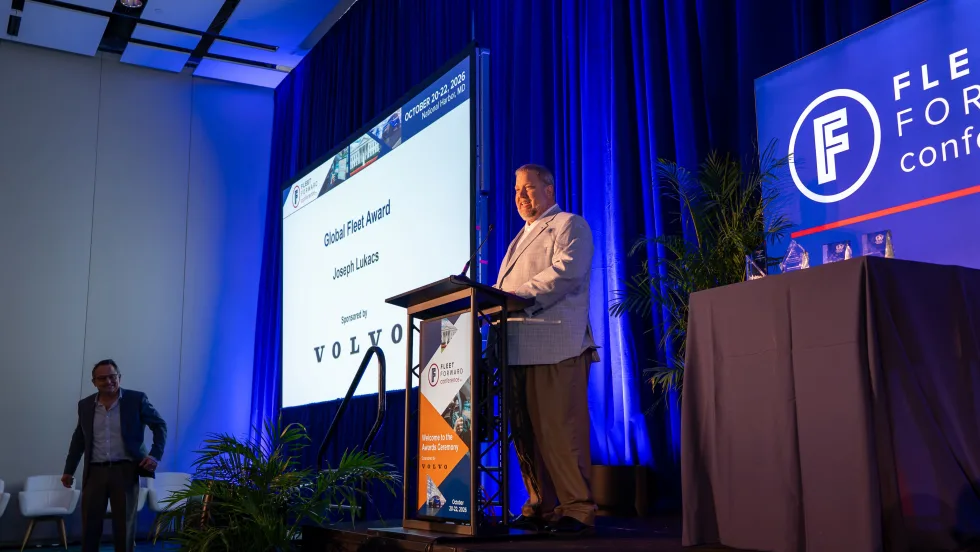
Joseph Lukacs Wins 2026 Global Fleet Manager of the Year
The Sherwin-Williams fleet leader adds another industry honor to his career after being named the 2025 Edward J. Bobit Professional Fleet Manager of the Year.
Read More →
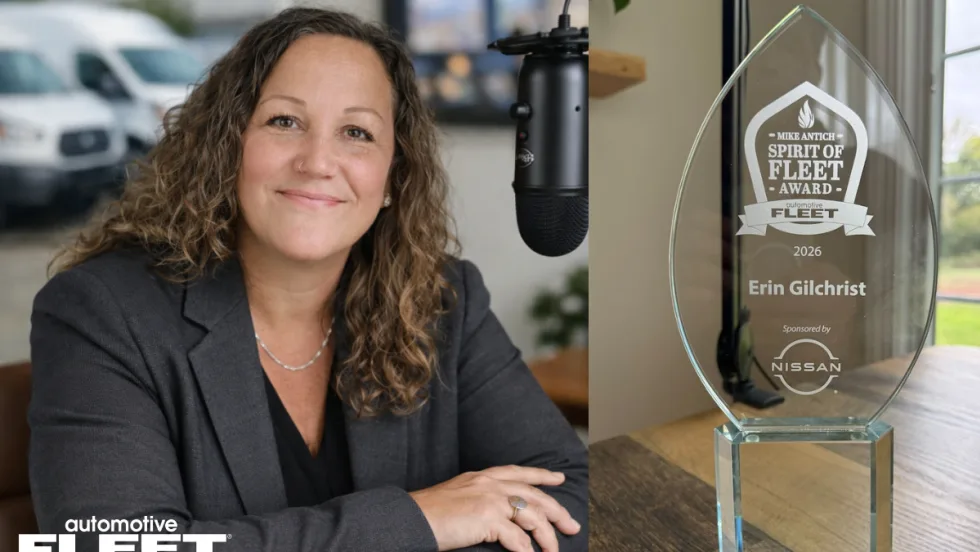
Erin Gilchrist Receives Mike Antich Spirit of Fleet Award
Last week at AFLA in Vegas, Erin Gilchrist received the inaugural, brand-new Spirit of Fleet Award.
Read More →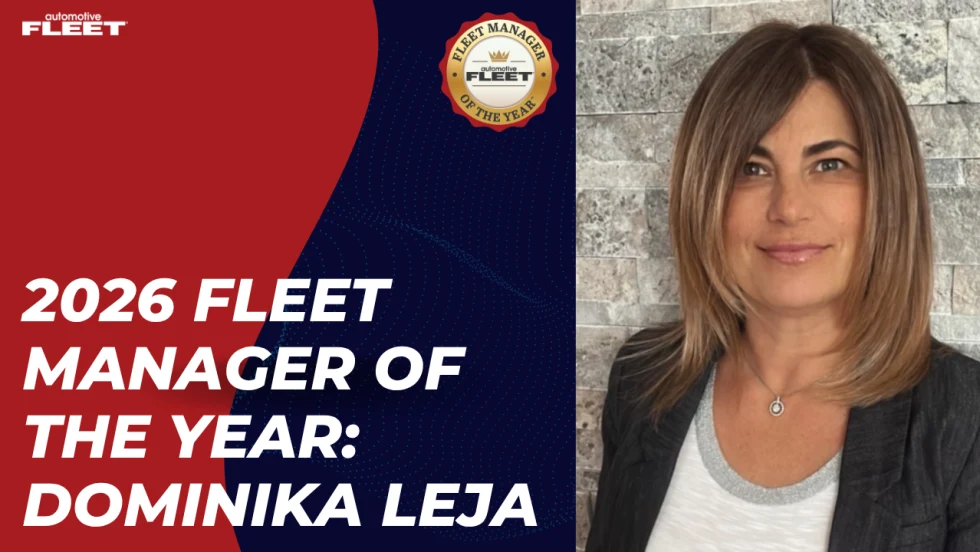
Dominika Leja Named the 2026 Fleet Manager of the Year
The AstraZeneca associate director of fleet was recognized for her leadership in fleet electrification, cost savings, and operational transformation.
Read More →
Jamie McKay Named the 2026 Fleet Visionary Award Winner
The Aptive Pest Control fleet manager was recognized for her approach to operations, data, lifecycle management, and driver needs.
Read More →
Fleet Forward Conference Introduces One-Day Passes for 2026
New one-day registration gives fleet professionals the flexibility to attend Tuesday, Wednesday, or Thursday, with passes available for $199 through Sept. 18.
Read More →
Vibe Coding: When Fleet Managers Become Software Builders
Five fleet professionals — none with programming skills — discuss how they’re using AI to build fleet solutions in-house and in a fraction of the time.
Read More →
Fleet Forward Conference Tackles Fleet Industry’s Growing Leadership Gap
This session will examine succession planning, knowledge transfer, and the skills the next generation of fleet leaders will need as veteran professionals leave the industry.
Read More →
2026 Fleet Manager of the Year Finalists Announced
Who are the 2026 Fleet Manager of the Year finalists?
Read More →